






For some time now, reporting around Apple’s folding phone has coalesced around two beliefs: the device is set to drop this fall, and it will have a significantly less visible display crease than previous folding devices.
That sounds like a typically Apple feature to prioritize, and it could well explain why the company is late to the category. Folding phones are cool, but the creases in their inner screens are undeniable imperfections. Whether it’s capacity with music players, user interface with smartphones, or the overall form factor with tablets, Apple tends to avoid making products with clear compromises in their defining elements.
But is it even possible to make a crease-free folding phone? There are huge engineering challenges to making a phone with a glass display that bends back and forth and flattens seamlessly, much less one that stays that way over time.
{“blockType”:”mv-promo-block”,”data”:{“imageDesktopUrl”:”https:\/\/images.fastcompany.com\/image\/upload\/f_webp,q_auto,c_fit\/wp-cms-2\/2025\/12\/multicore.png”,”imageMobileUrl”:”https:\/\/images.fastcompany.com\/image\/upload\/f_webp,q_auto,c_fit\/wp-cms-2\/2025\/12\/multicore-mobile.png”,”eyebrow”:””,”headline”:”\u003Cstrong\u003E\u003Cstrong\u003ESubscribe to Multicore\u003C\/strong\u003E\u003C\/strong\u003E”,”dek”:”Multicore is about technology hardware and design. It\u0027s written from Tokyo by Sam Byford. To learn more visit \u003Ca href=\u0022https:\/\/www.multicore.blog\/\u0022\u003Emulticore.blog\u003C\/a\u003E”,”subhed”:””,”description”:””,”ctaText”:”SIGN UP”,”ctaUrl”:”https:\/\/www.multicore.blog\/”,”theme”:{“bg”:”#f5f5f5″,”text”:”#000000″,”eyebrow”:”#9aa2aa”,”subhed”:”#ffffff”,”buttonBg”:”#000000″,”buttonHoverBg”:”#3b3f46″,”buttonText”:”#ffffff”},”imageDesktopId”:91454027,”imageMobileId”:91454030,”shareable”:false,”slug”:””}}
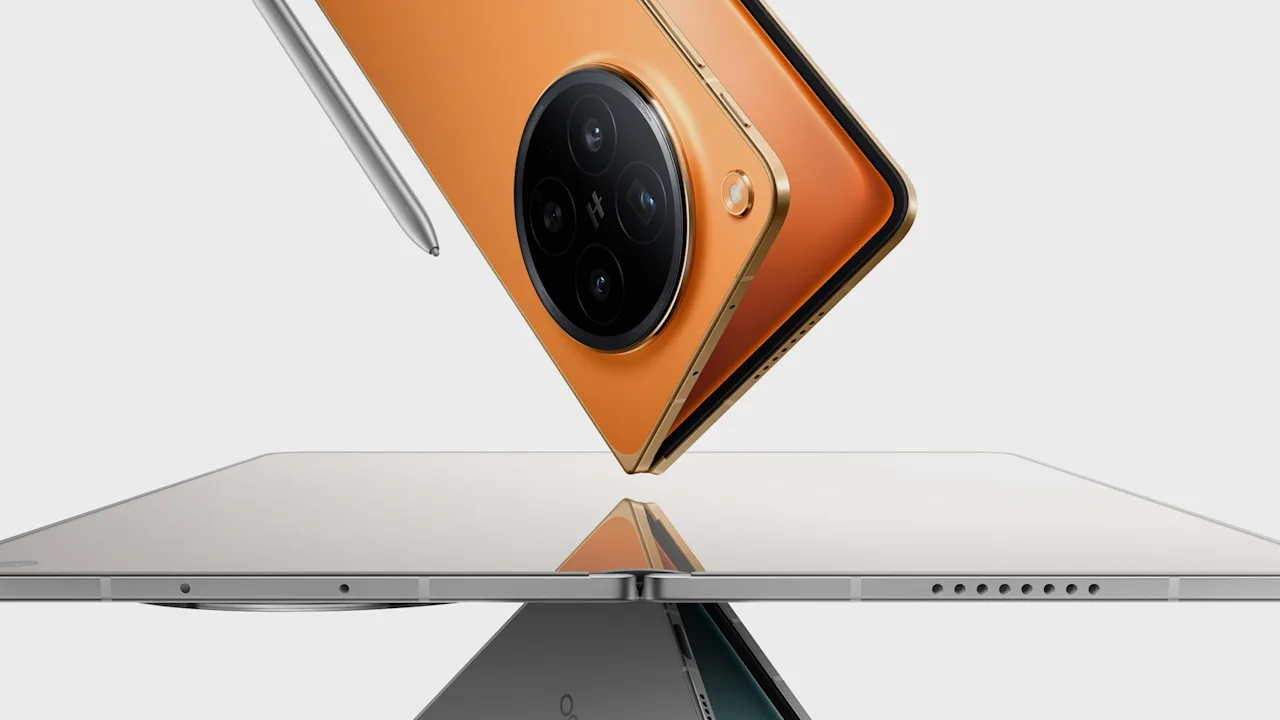
Well, a new phone announced today might well have upstaged Apple. Oppo, one of China’s biggest phone brands, has revealed details of how its Find N6 is addressing the crease; a full launch will follow next week.
Close to zero crease
I thought last year’s Find N5 was the best foldable phone on the market, at least if you could get your hands on it — Oppo only sold it in China and South East Asia. At launch it was the thinnest smartphone available anywhere, and Oppo made some bold claims about its “almost invisible” crease. That was broadly true unless you turned the screen off or tried to use the phone outside; you could also still physically feel the crease in the middle of the panel.
This time Oppo is marketing the Find N6 as having a “Zero-Feel Crease.” I’ve been using this phone for a week, and I would still say “zero” is an exaggeration — but only a slight one.
The N6’s screen is a big improvement on the N5’s, which was already well ahead of competitors. The crease is very difficult to see unless you’re really looking for it, and it’s also hard to feel in actual use. It’s clearly there if you press deeply against the screen and run your finger across it, but this is the first time I’ve felt like it was truly unobtrusive and unlikely to ever bother me in a real-world situation.
Oppo isn’t necessarily reinventing the technical wheel here. The company says it achieved the new crease by refining its existing design, including by widening the “waterdrop”-style hinge by 11% to avoid acute stress on the display.
Oppo is also using liquid 3D printing with photopolymer droplets to smooth out individual imperfections in every manufactured hinge. According to the company, the industry standard for height variance in folding hinges is 0.2mm, but this technique has reduced it to just 0.05mm in the Find N6 — less than the width of a human hair.
‘Exceptionally flat’
While it’s impossible to test these claims right now, it’s also worth noting that Oppo says the Find N6 will remain in its pristine, flat state for significantly longer than other foldables. The company says it should stay “exceptionally flat” through 600,000 folds, while the phone has been certified by TÜV Rheinland to remain functional for more than a million.
The results are impressive, but Apple is unlikely to take the same technical approach. Oppo has been iterating on its folding phone design for a long time — the first Find N came out in late 2021 after more than three years of development — whereas Apple is coming in fresh.
Well-connected analyst Ming-chi Kuo has suggested that the folding iPhone will make use of a new type of metal plate to distribute bending stress across the panel and thereby reduce the impact of the crease. The solution is said to have been developed by Samsung Display, which itself showed off a demonstration “Advanced Crease-less” panel at CES 2026 in January.
The Apple response
Apple rarely takes off-the-shelf solutions, however, and if there’s one thing I’d expect from its design team, it would be to relish the opportunity to come up with a mechanically novel kind of hinge. It would be surprising if there wasn’t something unique to the new iPhone that Apple could tout in its marketing, even if it does substantially rely on technology from a partner like Samsung Display.
What matters, though, is that Apple’s desired outcome has more or less already been achieved by someone else. With the Oppo Find N6, the crease is no longer a serious drawback to usability or aesthetics. That means that whatever Apple was planning to compete with before, there’s now a new benchmark to judge the first folding iPhone by when it eventually gets announced.
On one hand, this is good news for Apple fans: the prospect of a truly crease-free iPhone seems more plausible than ever before. On the other, it might be bad news for Apple — this new iPhone could be less differentiated than the company might have hoped for. Oppo has left some room for improvement with the Find N6’s screen, but not a whole lot.
{“blockType”:”mv-promo-block”,”data”:{“imageDesktopUrl”:”https:\/\/images.fastcompany.com\/image\/upload\/f_webp,q_auto,c_fit\/wp-cms-2\/2025\/12\/multicore.png”,”imageMobileUrl”:”https:\/\/images.fastcompany.com\/image\/upload\/f_webp,q_auto,c_fit\/wp-cms-2\/2025\/12\/multicore-mobile.png”,”eyebrow”:””,”headline”:”\u003Cstrong\u003E\u003Cstrong\u003ESubscribe to Multicore\u003C\/strong\u003E\u003C\/strong\u003E”,”dek”:”Multicore is about technology hardware and design. It\u0027s written from Tokyo by Sam Byford. To learn more visit \u003Ca href=\u0022https:\/\/www.multicore.blog\/\u0022\u003Emulticore.blog\u003C\/a\u003E”,”subhed”:””,”description”:””,”ctaText”:”SIGN UP”,”ctaUrl”:”https:\/\/www.multicore.blog\/”,”theme”:{“bg”:”#f5f5f5″,”text”:”#000000″,”eyebrow”:”#9aa2aa”,”subhed”:”#ffffff”,”buttonBg”:”#000000″,”buttonHoverBg”:”#3b3f46″,”buttonText”:”#ffffff”},”imageDesktopId”:91454027,”imageMobileId”:91454030,”shareable”:false,”slug”:””}}
Source link

