


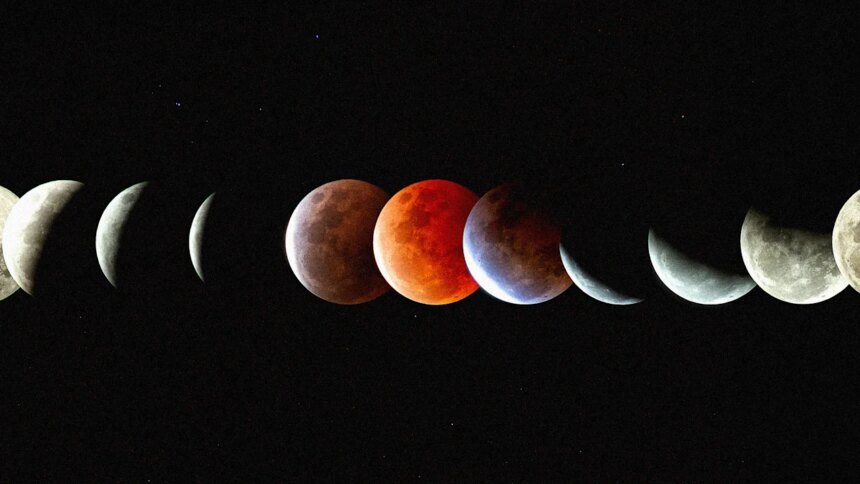

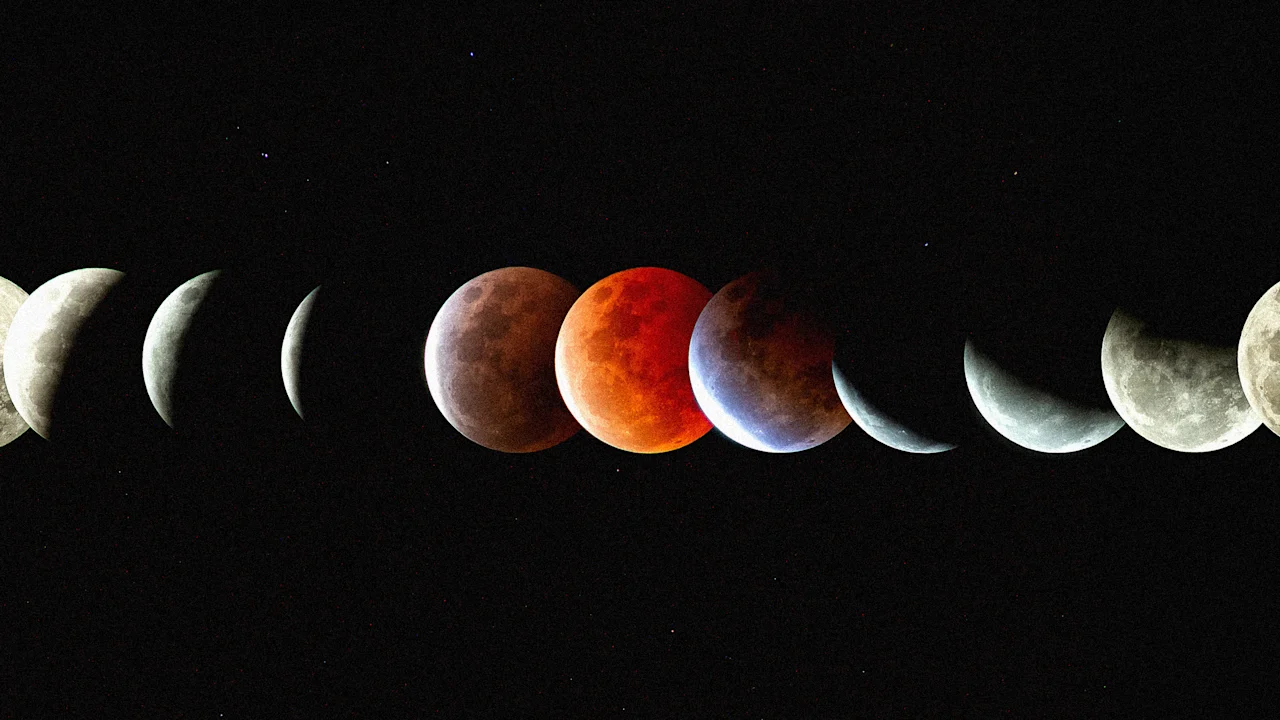
Next week, a rare celestial event will take to the skies. On March 3, amateur astronomers will get to witness a blood moon and a worm moon all at once.
According to Space.com, a blood moon occurs during a total lunar eclipse, as the Earth passes directly between the Sun and Moon and casts a shadow across the moon’s surface. The moon appears red due to the way the Earth’s atmosphere filters sunlight. “This effect, known as Rayleigh scattering, is the same reason that the sky takes on magnificent shades of red and orange around sunset,” the site explains.
While different seasons often bring exciting astrological events, this one is exceptionally rare. According to NASA, a blood moon can only occur during the full moon phase. But the blood moon also coincides with March’s full worm moon, named for the time of year when the Earth begins to thaw (which the worms appreciate).
When can I see the blood moon?
The eclipse, which will be visible across most of the U.S., is set to begin at 3:33 a.m. EST on March 3. The eclipse won’t begin to enter totality until around 6:04 a.m. EST, reaching its “greatest point at 6:33 a.m. ET, just minutes before the Full Moon peak,” explains Almanac.com.
Do I need to wear protective glasses?
Luckily, you won’t need any special equipment to view the event. It’s safe to look directly at a lunar eclipse (unlike a solar eclipse, which you need to wear protective eyewear to safely view, minus during complete totality). Still, NASA says that, if you want an even better view, binoculars are a good idea.
“For a more dramatic observing experience, seek a dark environment away from bright lights. Binoculars or a telescope can also enhance your view,” it explains.
What other celestial events are coming up?
After the dramatic show next week, the event will not take place again until New Year’s Eve 2028–2029. That means, if you’re hoping to catch the show, you better make sure you’re looking up. Especially because constellations may appear brighter, too, as the moon’s light is dimmed.
But another exciting astrological event will take place just days later. Space.com says on March 8, a “conjunction” of Venus and Saturn will appear in the sky. While the planets are, in fact, very far apart, as Venus “passes one degree to the upper right of Saturn,” they’ll appear closer than ever from Earth.

