
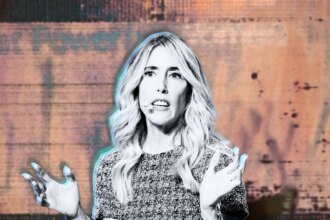

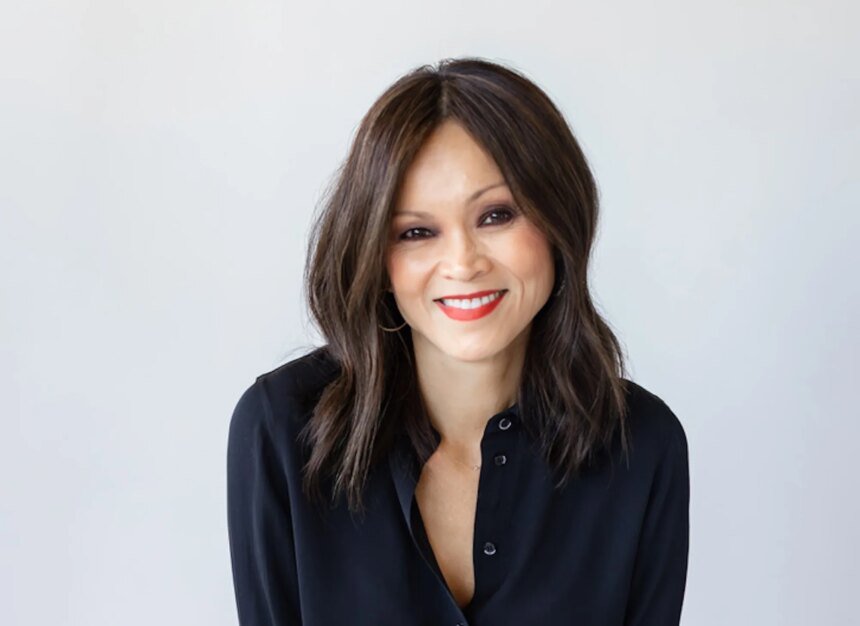

When Soon Hagerty was just five years old, she spent 12 days crammed on a boat with about 40 people, fleeing Vietnam for a refugee camp in Indonesia. Her family arrived in America with just $300 and nine mouths to feed. Since then, she’s launched a luxury PR firm, co-founded a global communications agency, opened The Good Bowl restaurant in northern Michigan and created Boundless Futures Foundation, which gives female founders $50,000 grants. Her secret? She says it’s not about being fearless — it’s about taking action even when you are filled with fear.
Your journey in life and business is quite remarkable. Can you share how you came to America?
My dad fought in the Vietnam War alongside the South Vietnamese and American armies. After the fall of Saigon, those who opposed communism were forced to join a re-education camp. And as you can imagine, there’s no education happening there. So my parents knew they had to leave. We faked Chinese passports, we spent 12 days on a boat, and we ended up at a refugee camp in Indonesia for six months. I was five. My mom was several months pregnant. My uncle literally saved $500 a month for four years cleaning offices to pay for our paperwork. We landed in America with $300 in our pocket and nine people. So it was a rough, humble beginning.
How did your family get by?
My mom missed home, so she started growing Asian fruits and vegetables in our backyard. To help make ends meet, she would sell them door to door, which meant that I would help sell them door to door. Then we did farmers’ markets. After several years, we saved enough to start a farm, Mai’s Produce. I remember this Tiffany-blue van. We’d drive three hours from Fresno to San Jose every Wednesday, and my parents would knock on grocery doors and say, “We have bitter melon today. We have eggplant today.” They did that for forty years.
Hard work is table stakes. My mother didn’t build Mai’s Produce by outworking everyone in Fresno. She noticed that no one was growing the vegetables our community missed, so she grew them herself. The ones who break through see around corners others can’t and learn how to knit things together.
How did that influence your career path?
I worked at a PR agency for seven years on luxury and automotive accounts like Lamborghini. I was VP, and my boss and I had been talking for months about me taking over. Then he got cold feet in the very meeting where it was supposed to happen. I had never quit a job in my life, and I quit on the spot. I went home and cried for 24 hours, and my mentor called me and said, “Stop your crying. You’re gonna start your own business.” Forty-eight hours later, I started my first agency. I’ve trained my brain to ask the same question about every obstacle: What can I leverage from this? Can I create something of value, or at least a great lesson learned?
Then came the restaurant. It seems like you connected with your mom’s need to eat something you craved.
The restaurant was my ultimate thank-you to my parents. They gave up everything for us. When I moved to northern Michigan from LA, I missed pho. There wasn’t anything here. I was smart enough to know restaurants are tough. But a friend said, “Start the restaurant, donate some of the proceeds to charity, because it connects all the things you love.” So it’s called The Good Bowl, and we donate a dollar per bowl to charity. I could complain or I could create. Good entrepreneurs spot a gap. Great ones spot a gap that can grow into a meaningful business.
You had zero experience in restaurants. How did you figure it out?
My advice to anybody, especially in a business you don’t know, is to get rid of the ego. I’d already started two businesses, and I said, “Wow, this is like a foreign language.” The P&L is so different. The margins are so thin. I had to bring in somebody to help me look through the financials and learn from other restaurant owners. The founders who last stay curious and are disciplined enough to put what they learn to work. If the rate of growth on the outside is faster than the rate of growth on the inside, you’re in trouble.
What have you learned about pushing through self-doubt?
I think confidence is overrated. You only gain confidence through action. Nobody says, “I have confidence I’m gonna be a great tennis player.” You have to show yourself that you can do it. And there’s no such thing as being fearless. It’s courage. You do it despite fear.
As a founder, everything comes back to you. The most important person you’ll ever manage is yourself. Every morning I spend ten minutes meditating and journaling before I touch a device. My thinking is sharper, and the way I communicate is clearer. It’s changed my life.
Give us an overview of your foundation.
Boundless Futures Foundation is really about providing financial and leadership resources for female founders. We give $50,000 grants, plus a $2,500 learning grant to go to a conference, get a mentor, take classes. If they want to grow, they have to grow themselves. The first step is that they meet with our financial guru, because you don’t have a business until you have your books in order. There are two giving cycles a year, spring and fall, with a year of access to our Advisory Circle, like experts on speed dial. You need help with scaling and production? Leadership? PR? We have an expert for that. Most grantees say the money is great, but the mentorship is much more valuable.
When Soon Hagerty was just five years old, she spent 12 days crammed on a boat with about 40 people, fleeing Vietnam for a refugee camp in Indonesia. Her family arrived in America with just $300 and nine mouths to feed. Since then, she’s launched a luxury PR firm, co-founded a global communications agency, opened The Good Bowl restaurant in northern Michigan and created Boundless Futures Foundation, which gives female founders $50,000 grants. Her secret? She says it’s not about being fearless — it’s about taking action even when you are filled with fear.
Your journey in life and business is quite remarkable. Can you share how you came to America?
My dad fought in the Vietnam War alongside the South Vietnamese and American armies. After the fall of Saigon, those who opposed communism were forced to join a re-education camp. And as you can imagine, there’s no education happening there. So my parents knew they had to leave. We faked Chinese passports, we spent 12 days on a boat, and we ended up at a refugee camp in Indonesia for six months. I was five. My mom was several months pregnant. My uncle literally saved $500 a month for four years cleaning offices to pay for our paperwork. We landed in America with $300 in our pocket and nine people. So it was a rough, humble beginning.
How did your family get by?
My mom missed home, so she started growing Asian fruits and vegetables in our backyard. To help make ends meet, she would sell them door to door, which meant that I would help sell them door to door. Then we did farmers’ markets. After several years, we saved enough to start a farm, Mai’s Produce. I remember this Tiffany-blue van. We’d drive three hours from Fresno to San Jose every Wednesday, and my parents would knock on grocery doors and say, “We have bitter melon today. We have eggplant today.” They did that for forty years.

