






For Publicis CEO Arthur Sadoun, Working With Cancer isn’t a side project. The initiative, launched at the World Economic Forum in Davos three years ago to eradicate the stigma of cancer in the workplace, is inseparable from his role as CEO.
“I want to erase the stigma of cancer in the workplace,” he said.
On Wednesday (Feb. 4), World Cancer Day, Publicis Groupe announced it has expanded the initiative with new peer-reviewed research and an AI-powered coach designed to help employees, managers, and companies navigate cancer at work: safely, privately, and without replacing human judgment.
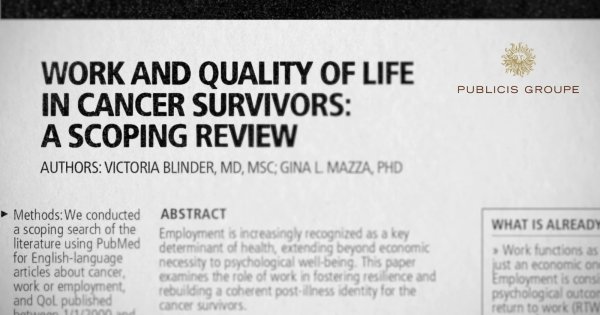
The research, led by Memorial Sloan Kettering Cancer Center and the Mayo Clinic, examines the relationship between employment and long-term quality of life for people diagnosed with cancer.
Conducted by oncologist Dr. Victoria Blinder at Memorial Sloan Kettering and Dr. Gina Mazza, a biostatistician at the Mayo Clinic, the review analyzed 25 years of data across 20 countries. It found that, under the right conditions, sustained employment or a supported return to work is associated with better physical functioning, lower rates of anxiety and depression, and improved overall quality of life for cancer patients.
The research does not argue that everyone should work during treatment. Instead, it reinforces choice as well as the importance of supportive conditions.
“What this study does is give scientific credibility to what was previously intuition,” said Nannette Lafond-Dufour. “It’s not work or no work. It’s how people can continue to contribute in ways that support their health, dignity, and identity.”
AI coach
Grounded in that research, Publicis is introducing an AI-powered coach available to all companies that sign the Working With Cancer pledge. The tool is designed to translate company policies into personalized guidance for employees with cancer, their managers, and colleagues.
In a demo video accompanying the launch, a worker asks the AI what accommodations they might request from their manager. Instead of delivering generic advice, the system asks clarifying questions about the person’s role and environment before offering tailored suggestions—illustrating the program’s emphasis on nuance over one-size-fits-all solutions.
The launch is paired with a global campaign film featuring working professionals who describe how continuing to work under flexible, supportive conditions helped them cope with diagnosis and treatment. The film also highlights research showing that roughly three-quarters of U.S. workers with cancer say returning to work helped them regain a sense of normalcy and empowerment.

