



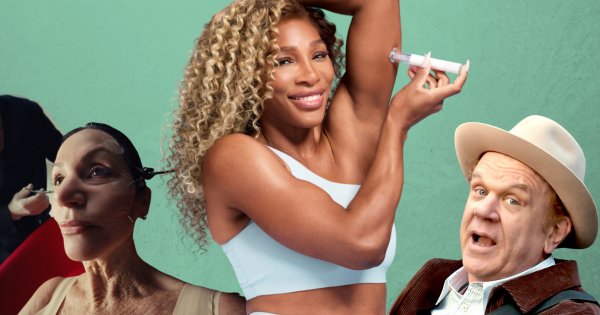

Twelve percent of American adults are now using GLP-1, with U.S. patients spending $40 billion on appetite-suppressing drugs in 2024—a figure that is projected to triple by 2030, according to Grand View Research.
At this year’s Super Bowl, GLP-1 brands are seizing on that demand by battling for brand awareness. Each spent upwards of $10 million on 30 and 60-second commercials designed to raise awareness of the medication and tackle the stigma around it.
Zepbound maker Eli Lilly hedged its bets on a pre-game spot.
Elsewhere, its biggest rival, Novo Nordisk, which makes Wegovy and Mounjaro, spent its advertising dollars on an in-game ad featuring DJ Kahled and John C. Reilly, among a bevy of other celebrities.
Telehealthcare provider Ro, meanwhile, tapped Serena Williams to front its Big Game ad. Elsewhere, Hims and Hers returned for the second year, flicking at the blockbuster drugs without explicitly featuring them.
As these brands prepare for a GLP-1 bowl all of their own, ADWEEK has rounded up the ads they are airing on Super Bowl Sunday.
Hims & Hers says it’s Unfair Rich People Live Longer
Hims & Hers returned to the Super Bowl during the fourth quarter this year with a “hard-hitting and unconventional” message spotlighting America’s wealth and health gap.
“Rich people live longer,” the ad’s voiceover, delivered by Grammy and Academy Award-winning artist Common, stated bluntly in its opening moments.
The national spot leaned into surrealism to make its point: In one scene, surgeons pull back the skin on a seemingly affluent older person’s face, as if tightening it. Elsewhere, a wealthy-looking figure blasts off into space.
This creative direction didn’t mention the GLP-1s that Him and Hers sells, marking an evolution from the brand’s Super Bowl 59 appearance. Last year’s ad centered heavily on the brand providing access to compounded GLP-1 weight-loss drugs, prompting a backlash and debate around telehealth marketing and the boundaries of pharmaceutical advertising.


