





We’ve partnered with industry icon Mark Ritson on the ADWEEK MiniMBA in Marketing, a program that helps you become the best marketer you can be. The next course begins April 7 — sign up now (or consider it for one of your team members).
In early February, Scott Galloway declared war on the American economy.
His grievance was specific: The tech CEOs of Silicon Valley had spent the weeks since Donald Trump’s inauguration attending White House dinners, funding inaugural balls, dismantling their own DEI programs and generally conducting themselves with the enthusiasm of men who have just discovered that proximity to power is more profitable than any prior principle they may have held.
These, Galloway argued, were not the actions of neutral business leaders. These were the actions of enablers.
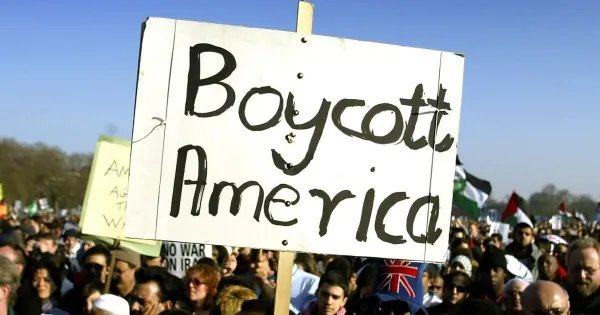
His response was the Resist and Unsubscribe campaign, launched with righteous confidence and 250,000 pageviews on day one. Trump, Galloway correctly observed, is largely unmoved by citizen outrage, court challenges, or media criticism. He responds to one thing: markets.
And who controls the markets? The same tech CEOs now eating at the White House. “The most radical act you can perform in a capitalist society,” Galloway declared, “is non-participation.”
His targets were Amazon, Apple, Google, Microsoft, Netflix, Meta, Uber, OpenAI and X. Cancel your subscriptions, because Wall Street watches subscriber numbers, and when they dip, share prices follow.
He even did the maths: A single canceled ChatGPT subscription at $240 a year translates, at a 40x revenue multiple, to roughly $10,000 of lost market capitalization.
But getting people to cancel one subscription is hard enough. Canceling nine simultaneously is the digital equivalent of joining the Amish while your family are on a ski vacation. It is not going to happen. I have $20 that says even Galloway is still backing up his iPhone photos and watching Stranger Things 5.
The uncomfortable truth, which any marketing professor with access to a university library should have known before going on CNN, is that Resist and Unsubscribe won’t work.
Not because boycotts sometimes fail. Because boycotts almost always fail, and the academic record on this is consistent, comprehensive and apparently invisible to everyone who has ever launched one.
Albrecht, Gerken, and Tscheulin tracked individual boycott participation across four separate real-world contexts and found the same pattern every time: initial outrage driven by expressive emotion, followed by a predictable return to prior behavior once the dopamine hit of moral performance wears off.
Chavis and Leslie studied the American boycott of French wine during the Iraq War and found that wine sales returned to pre-boycott levels within eight months, as though nothing had happened.

