





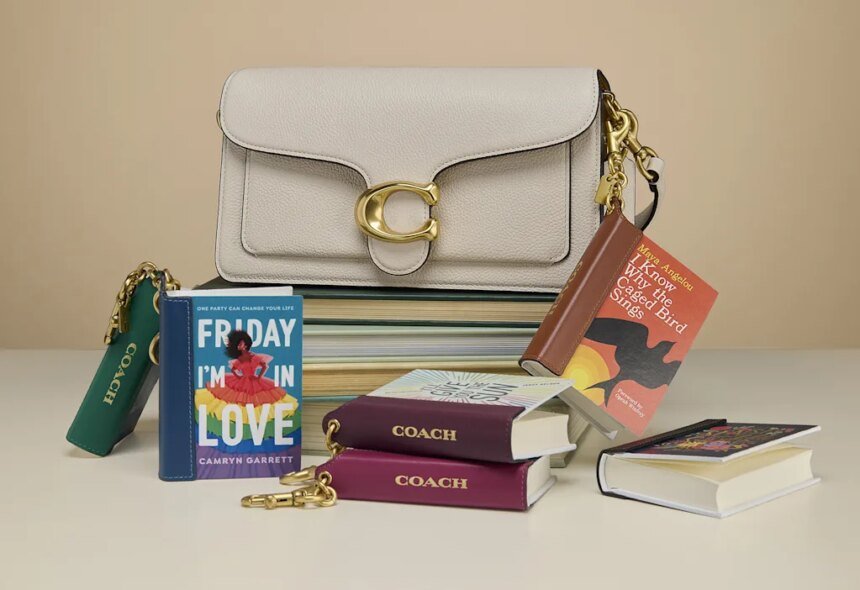

The devil might’ve worn Prada in 2006, but two decades later, the fashion elite are wearing books. Case in point: Coach’s hot new accessory is a keychain made out of literal hardcovers.
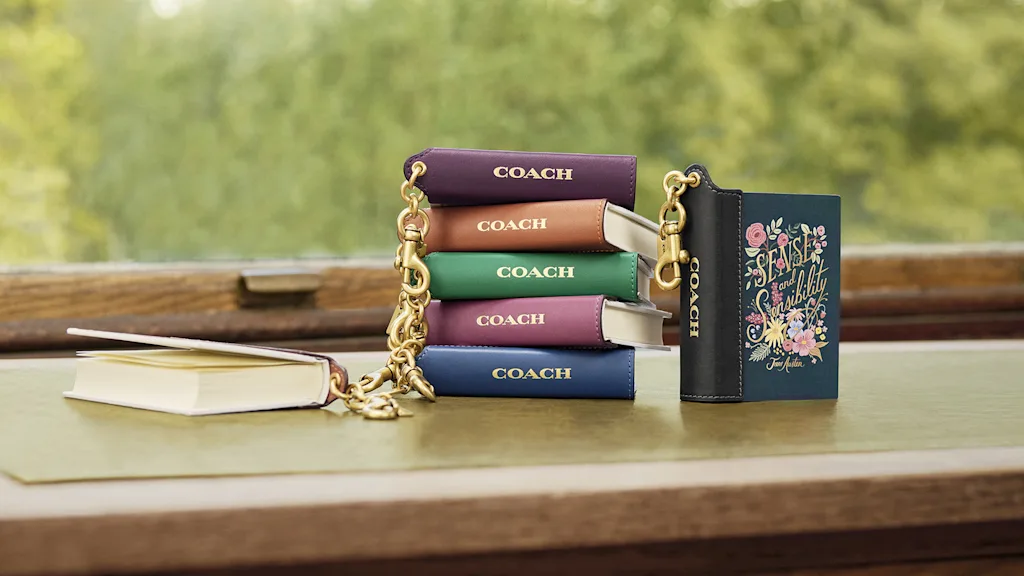
Coach revealed the new “book charms” in a series of social posts on February 25. Created in collaboration with the publisher Penguin Random House, the charms include adorably teeny, fully readable versions of classics like Sense and Sensibility by Jane Austen and I Know Why the Caged Bird Sings by Maya Angelou, alongside more recent titles like Untamed by Glennon Doyle and A Forest of Wool and Steel by Natsu Miyashita. The book bag charms will be available for $95 on the Coach website in early March.
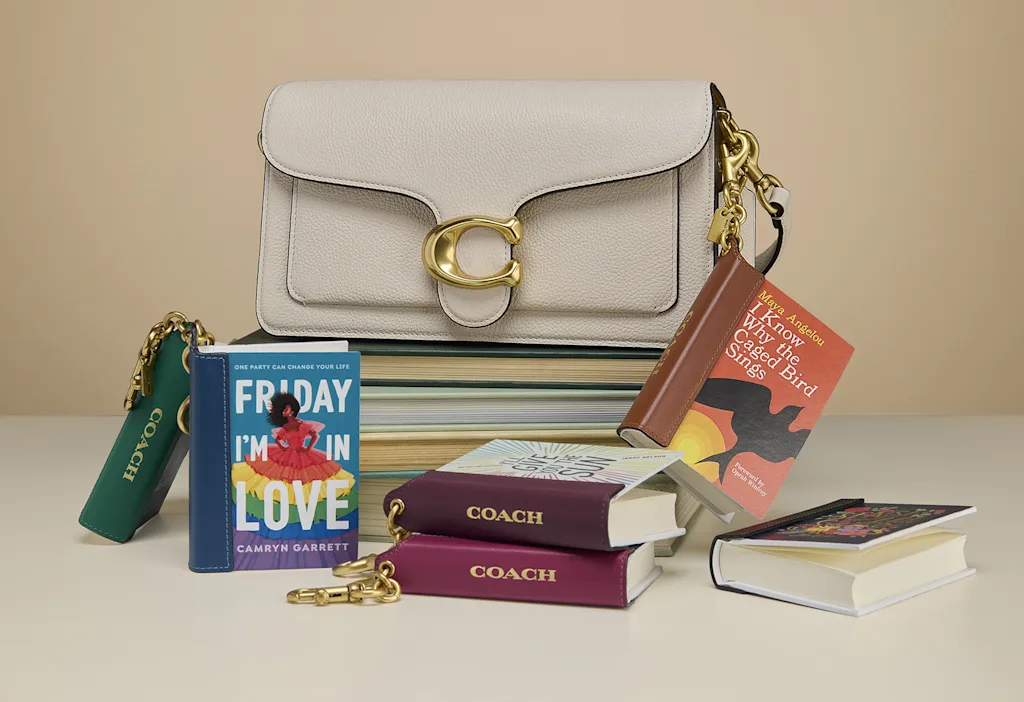
The charms represent an evolution of a broader trend: Physical books are making a comeback, both in the cultural zeitgeist and in the fashion world. Gen Zers are flocking to reading as a hobby, largely driven by online communities like BookTok and BookTube. Meanwhile, interest in the craft behind physical media is on the rise as more and more daily tasks shift online in the AI era.
These converging winds are turning the humble book into a kind of intellectual status symbol—one that can be worn as a bag, toted around as part of a “performative male” ensemble, or, in Coach’s world, converted into a charming keychain.
Why the hot new accessory is a book
It would be difficult to miss the recent resurgent cultural interest in reading. Since 2023, Barnes & Noble has staged a massive comeback, which it attributes in large part to Gen Z’s online communities. BookTok and BookTube are driving interest in genres like romance and fantasy, while celebrity book clubs like Dua Lipa’s Service95, Kaia Gerber’s Library Science, and Reese Witherspoon’s Reese’s Book Club are making reading an aspirational hobby.
Inevitably, this trend has spilled over into fashion. In 2024, Saint Laurent opened its own bookshop. Last year, brands including Prada, Miu Miu, and Valentino all hosted literary-themed events or campaigns. And in January, Dior launched an extremely Instagrammable line of tote bags inspired by books. The brand advertised the bags with an Instagram Reel highlighting their detailed manufacturing process, drawing a clear parallel between the physical craft of bag-making and the intellectual craft of literature.

Coach, it seems, is attempting something similar. In a press release, CMO Joon Silverstein explained that the concept for the brand’s book charms came from the insight that in a world shaped by “fragmentation” and “digital overload,” many Gen Zers are turning to long-form storytelling as a kind of refuge.
“The future of brand building isn’t about broadcasting messages. It’s about building cultural relevance through participation,” Silverstein told Fast Company, noting that Coach shaped the campaign with collaborators who “helped define the insight, craft the narrative, select the books at its core, and determine how it shows up across culture.” (It also features Gen Z spokespeople such as the WNBA’s Paige Bueckers, Oscar-nominated actress Elle Fanning, Emmy-winning actress Storm Reid, and Chinese pop singer Shan Yichun, among others.)
How book and accessories design team up
To design the actual charms, Coach prioritized selecting books across a range of topics and aesthetics to capture different readers. While the first consideration was the stories themselves, cover designs were also a factor. Since the books were destined to be charms, the team tended to prefer bold colors and visually forward, distinctive designs that would be eye-catching at a glance (à la BookTok).
Each charm has a colorful leather spine embossed with the Coach logo: The cool-toned image of a planned community on Celeste Ng’s Little Fires Everywhere, for example, is complemented with a deep green; while Camryn Garrett’s rainbow-hued Friday I’m in Love cover pops with a rich navy. Gold hardware (a loop and clip) makes each piece easily attachable to a purse or backpack.
And to clarify, these charms are fully readable, miniature books—not just inspired by them.
Adam Royce, executive creative director at Penguin Random House, tells Fast Company that the project represents a “broader shift” in how people engage with books. “For many readers, storytelling is part of how they signal identity and values,” he explains. “Partnering with Coach allows us to bring books into a space where personal expression is already central.”
In 2026, reading isn’t just a pastime. It’s a statement piece.

