





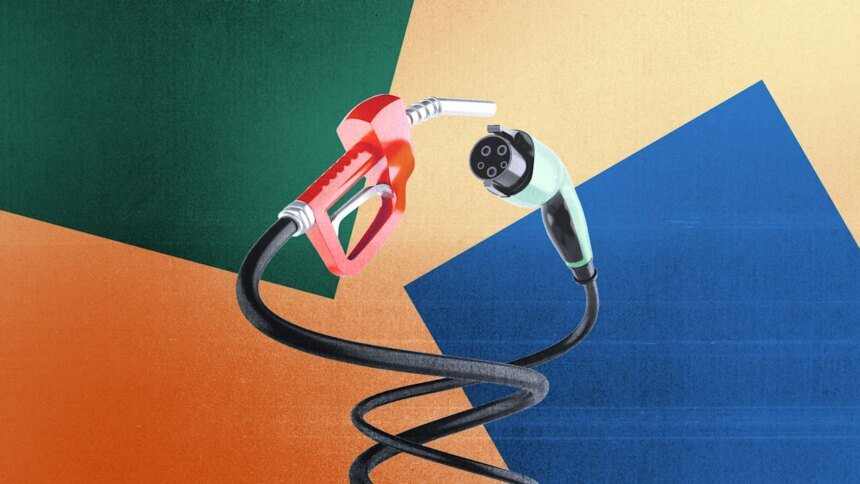

Oil prices have surged after the U.S. attack on Iran, and gas prices, in turn, are beginning to rise. It’s not clear yet how high they’ll go; that depends in part on how long the war lasts, how much the energy trade is disrupted, and how quickly we burn through the current oversupply of oil. But with the situation predicted to drag on for weeks, if not months, it’s possible that high gas prices could eventually nudge more consumers to choose EVs.
In the past, high gas prices have pushed buyers toward different cars. During the 1970s oil crisis, Americans shifted to smaller, more fuel-efficient cars. In 2008, as prices surged again because of global oil demand and supply constraints, sales of more fuel-efficient cars also temporarily grew. By 2022, when Russia’s attack on Ukraine spiked gas prices, electric vehicles were finally widely available, and rising fuel costs helped push EV sales.
Unsurprisingly, the higher gas prices get, the more interested consumers become in electric cars. In one 2022 study in California that looked at pre-pandemic data, when gas prices went up, so did EV sales. Parts of the state with higher gas prices also saw bigger increases in sales of EVs.
“When gasoline prices tend to rise and people are looking for a new vehicle, they tend to prioritize vehicles that historically were higher fuel-economy vehicles. But in more recent times, there are vehicles that might run on other fuels than gasoline,” says Erich Muehlegger, an economics professor at the University of California, Davis, and one of the authors of the study. (In the study, the price of electricity didn’t have a similar effect, possibly because it’s harder to track how much you’re paying for electricity at a given time.)
After the pandemic, the situation got more complicated. “The data has been messier since 2020 due to externalities—supply shortages; waiting lists for new models; federal incentives, then no federal incentives; and a range of gas prices,” says Andrew Garberson, head of growth and research at Recurrent, a company that analyzes EV data. “We haven’t seen a consistent rational reaction to gas prices in recent years.”
After the end of federal incentives last September, EV sales sank in the last quarter of 2025. Manufacturers stopped making some models—from the Ford F-150 Lightning to Volkswagen’s ID. Buzz camper van. But supply chain issues have largely resolved, and even without federal tax credits, EVs can make financial sense, especially with added pressure from high gas prices. Sales of used EVs have been growing this year as buyers prioritize affordability: Used EVs are now the cheapest cars of any kind to own. Even new EVs typically have a lower lifetime cost of ownership than equivalent gas-powered vehicles.
“What we’re watching is the EV payback math,” Garberson says. “It’s totally different from 2020. The pre-owned EV market is four times bigger in 2026 than 2020. Plus 56% of used EVs are under $30,000. Even factoring for some of the highest electricity rates in the country, the financial equation is much more lopsided in favor of EVs than it was a few years ago for most buyers.”
Recurrent’s market data suggests that the financial advantages of buying a used EV will improve even more. “Hundreds of thousands of EVs leased under the Inflation Reduction Act are scheduled to be returned and hit the used car market this year,” Garberson says. “That should continue to drive down the up-front cost of ownership and shorten the payback period. It’ll take time for people to realize these opportunities, but they exist today, and they will only become more attractive with time and fluctuating gas prices.” Beyond lower costs for fueling, EVs are also more affordable to own because they need less maintenance.
Even as automakers have stopped manufacturing some EVs, more than 30 new EV models are launching in the U.S. this year despite the policy challenges—from the BMW iX3 to the $30,000 redesigned Chevy Bolt. In theory, a prolonged rise in gas prices might convince some automakers to lean in more.
“Over time, if prices stay elevated like this, the automotive manufacturers are going to relook their product cycle plans,” says Ellen Hughes-Cromwick, a senior visiting fellow at the public policy think tank Third Way and former chief global economist at Ford Motor Co. “And they’ll say, ‘Do I want to put my customers in a position of being exposed to this kind of uncertainty?’”

