





Throughout his presidency, Donald Trump has hindered the growth of renewable energy and instead propped up fossil fuels like oil and coal.
That has made the country more vulnerable to the effects of geopolitical conflicts like the U.S. military action in Iran—and risks putting the U.S. even further behind, experts say, in terms of renewable and battery developments.
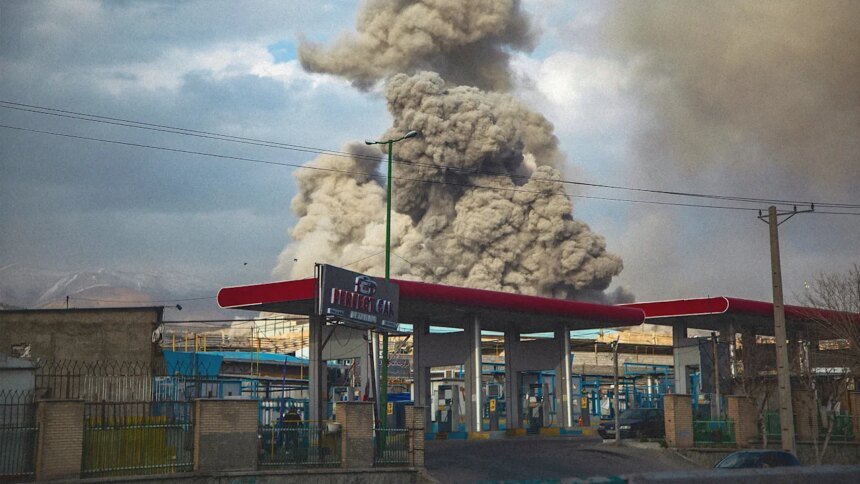
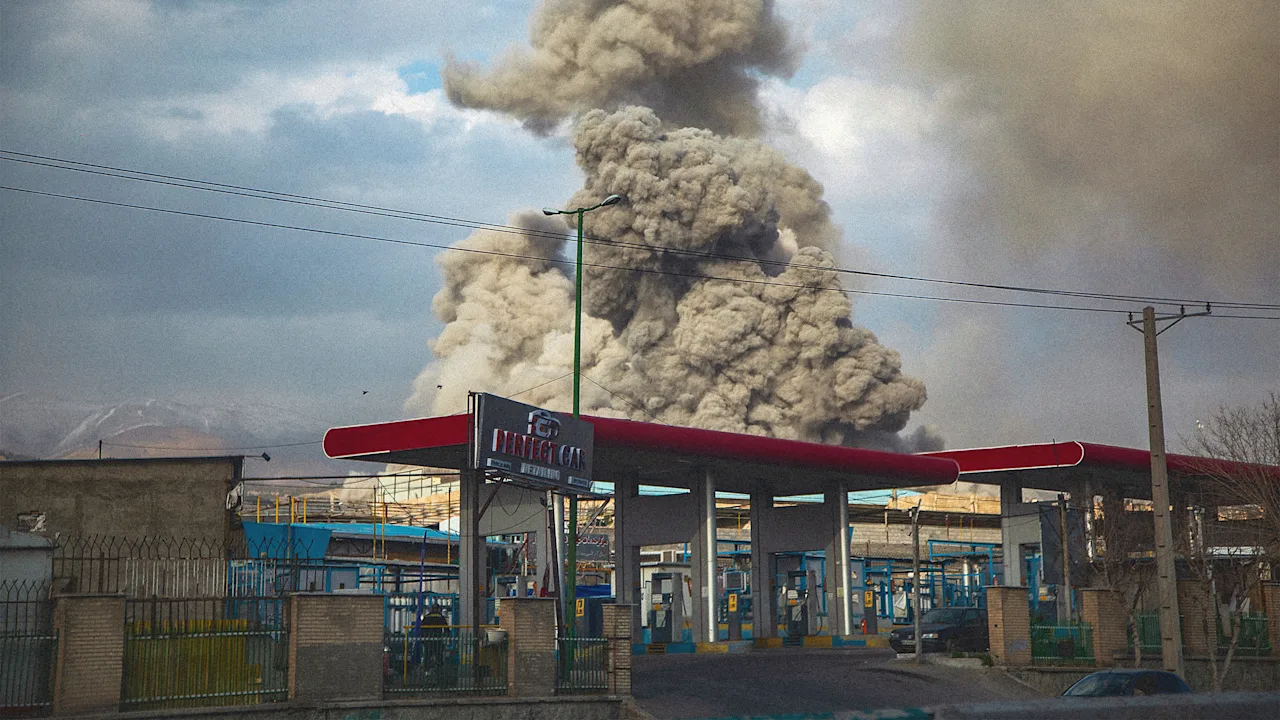
Trump acknowledged this week that America’s attacks on Iran are likely to cause oil prices to spike. We’re already seeing that effect: the average price for a gallon of gas in the U.S. jumped 11 cents overnight into Wednesday, and experts say oil prices could reach $100 a barrel.
That effect isn’t only felt in the United States. European natural gas prices surged “by as much as 50%,” the New York Times reported, after the conflict prompted Qatar to halt production of liquefied natural gas. UK gas prices hit their highest level in three years on Tuesday.
A ‘higher than average’ cost due to Trump
Some of these places, however, may be better prepared to weather this instability thanks to their reliance on renewable power and batteries.
Oil and gas are global commodities, meaning their prices are affected by global factors. But just how much the Iran war impacts a country’s energy market depends on how much that country is dependent on fossil fuels.
Unfortunately, Trump has made the U.S. increasingly dependent on these dirty, unstable sources of energy. His administration has slashed incentives for wind, solar, and battery development. It also blocked or canceled such projects, while providing tax incentives and fast-tracked permits for oil and gas drilling.
“The costs of Trump’s war to the average American will be higher than it could have been because of the assault of the GOP and Trump administration on renewable energy projects,” Peter Gleick, a member of the US National Academy of Sciences, says via email.
“Because of the failure to accelerate renewable energy and electric vehicle production, the US has a deeper dependence on fossil fuels than if we had, like other countries, embraced renewable energy,” he adds. “The Trump administration and the GOP have done all they could to slow renewable energy development in the U.S., to the sole benefit of oil and gas producing companies and countries.
Renewables are a ‘buffer’
The world has seen geopolitical effects on fossil fuels before. When Russia invaded Ukraine in 2022, oil prices surged 50% over a few weeks, and gas prices hit $5 a gallon.
That triggered an energy crisis for multiple countries—and actually pushed some of them to ramp up their renewable power generation so they would be less dependent on risky fossil fuels.
In Pakistan, where energy prices skyrocketed after that attack, residents began to add solar panels to their roofs in droves. In 2024, Pakistan imported double the amount of solar power gigawatts as the year before, and that year became one of the world’s “largest markets for new solar installations,” according to energy think tank Ember.
“You can now go to Google Earth and look at a random spot in Pakistan, and you will see that a lot of the houses, a lot of the buildings, have solar panels,” says Jenny Chase, lead solar analyst at BloombergNEF.
Something similar happened across Europe, she adds, which particularly saw a demand in battery storage.
Just as geopolitical conflicts raise fossil fuel prices, they can also raise capital costs for renewable projects, because higher energy prices can lead to inflation, raising interest rates. But that effect is minimal compared to the surge in fossil fuel costs, Chase adds—and increasing renewables has long term benefits, too.
“Solar and storage tech, they are a buffer against the impacts of being dependent on fossil fuels,” she says. “That feels really good when the price of fossil fuels goes up.”
American consumers are losing out
There are a lot of unknowns with the conflict in Iran and its impacts. It’s not clear how long it will last, or just how much fossil fuel prices will be affected.
In the short term, Gleick says, the impacts, particularly on American consumers, will be “severe.”
“The biggest short-term losers of the war will be U.S. consumers of oil and gas, as prices of energy rise,” he says. “The three biggest short-term winners are fossil-fuel-company profits, Russian fossil-fuel revenue, and Chinese sales of renewable energy and electric vehicles.”
The long-term impacts are harder to predict, but if the impacts continue, it will highlight just how behind the rest of the world the U.S. is (and how behind Trump is keeping us) when it comes to clean tech like solar panels, battery storage, and electric vehicles.
“If the price of fossil fuels remains high, U.S. consumers will demand more renewables and EVs, but U.S. industry won’t be able to provide them,” Gleick adds. “So again Chinese and other producers will benefit and, again, the clear losers in the long run will be American consumers and U.S. industry.”
That could also push places like Europe to turn to China to get this clean tech, and be hesitant to buy any energy from America in the future.
“The U.S. acting like a bully in the global market makes, particularly those of us who are neither the U.S. or China, think, ‘okay, being dependent on China sounds bad, but I could buy solar panels now and not buy anything else from them for 25 years,” Chase says. “Whereas if I look into buying [fossil fuels] from the U.S., I’ll have to pay them every month.”
Global shocks highlight renewable benefits
If the war creates a prolonged risk for fossil fuels, that could also end up making renewables look less risky, Chase notes, which could turn investor attention to solar, wind, and batteries.
“A shock like this turns an investment like a battery or solar plant from looking like a very high risk investment to an actual medium one,” she says. “Particularly if you’re a company that buys electricity, what you might do is sign a contract to buy solar and storage power at a price which maybe isn’t the lowest you can get, but you know that it won’t go up.”
These vulnerabilities associated with fossil fuels aren’t going away. Experts have repeatedly said that renewables are key to energy security, and that fossil fuels make us more vulnerable to price instability and energy concerns.
The conflict is just one example of that, but it won’t be the last.
And what becomes “more pronounced with every one of these shocks,” Chase adds, “is that renewables are not that expensive anymore . . . Renewables are now the cheapest source of new megawatt hours anywhere.”

