




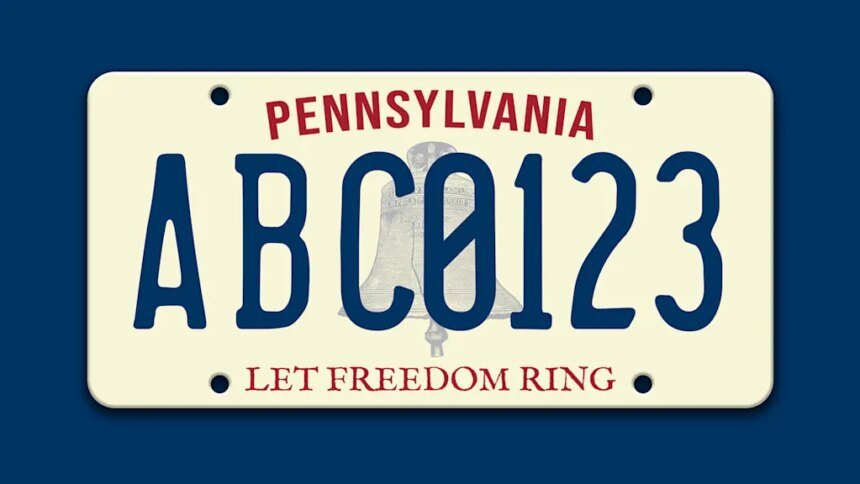

The numbers on a new patriotic Pennsylvania license plate were designed to be easy to read, but they’ve actually introduced a new point of confusion.
Pennsylvania Governor Josh Shapiro announced the “Let Freedom Ring” specialty license plate last summer to promote the commonwealth’s role in America’s founding 250 years ago. The cream-colored plate depicts a dark blue Liberty Bell in the background, along with the previously mentioned slogan and commonwealth’s name in red. None of that is at issue, though: The problem is the style of the zero.
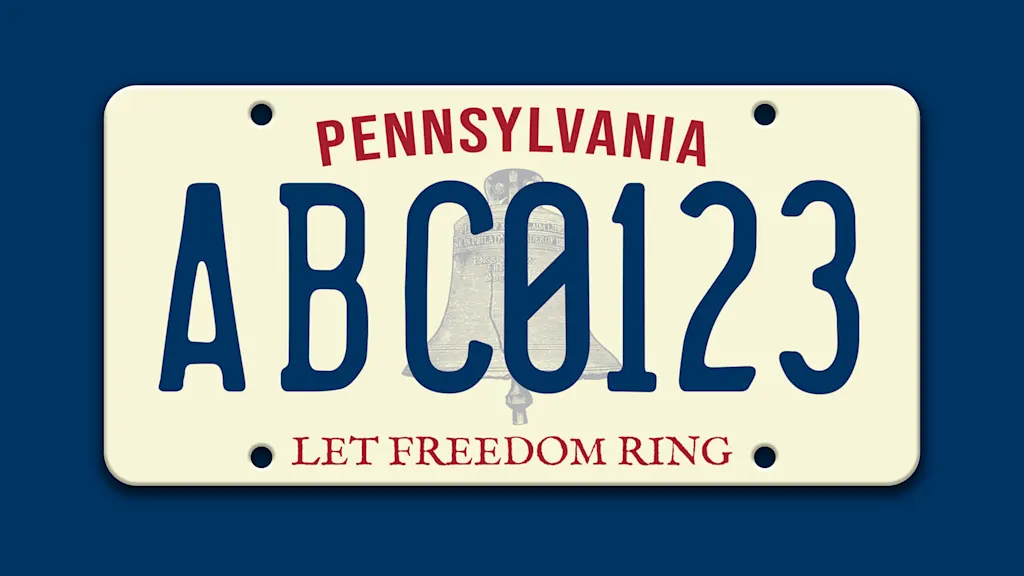
The number has a slash through its counter to prevent confusion with the letter O. Now, however, Pennsylvania toll cameras—not to mention locals—are confusing the zero for an eight.
The mix-ups are occurring even though the lettering follows industry best practices to differentiate characters that can sometimes look alike.
“The addition of the slash through the zero was intended to help differentiate between the zero and the letter O, which both the license plate readers and human eye have had difficulty differentiating on past registration plates,” the Pennsylvania Department of Transportation said in a statement to ABC affiliate WPVI, the Philadelphia network that first reported the new plate’s design problem.
The diagonal slash was added in accordance with license plate recommendations from the American Association of Motor Vehicle Administrators (AAMVA), a Virginia-based trade group for state and province motor vehicle divisions in the U.S. and Canada.
The design passed other tests, too. PennDOT says the plate met its production and legibility requirements, and that it was developed in consultation with Pennsylvania State Police and the Pennsylvania Turnpike, its toll roads commission.
But those precautions didn’t prevent one motorist who contacted WPXI in Pittsburgh from receiving a toll-by-plate invoice for a car that wasn’t theirs. A camera mistook an “08” in their license plate for “88.”
Easily confused characters
Similar characters—like A and R; 8 and B; 0, O, and Q; 1 and 7; D and O; and Z and 2—can be misread by image processing tools, so AAMVA recommends characters be made distinct and identifiable. That’s easier said than done, apparently. One tolling authority found the misread rate of its automated license plate readers was 20%, per AAMVA’s 2012 recommendations.
To reduce confusion, some states limit the use of the most easily confused characters. Arizona doesn’t print I, O, Q, or U on standard license plates, while Arkansas doesn’t even offer Q for personalized license plates.
Pennsylvania solved one problem only to introduce another—but at least officials say misreadings are not widespread. They hope their systems will get better at distinguishing the new character over time. Turnpike Commission spokesman Crispin Havener told NBC affiliate WPXI that the agency is working with its software vendor to improve accuracy, but that machine learning is not perfect yet and improvements won’t be immediate.

