





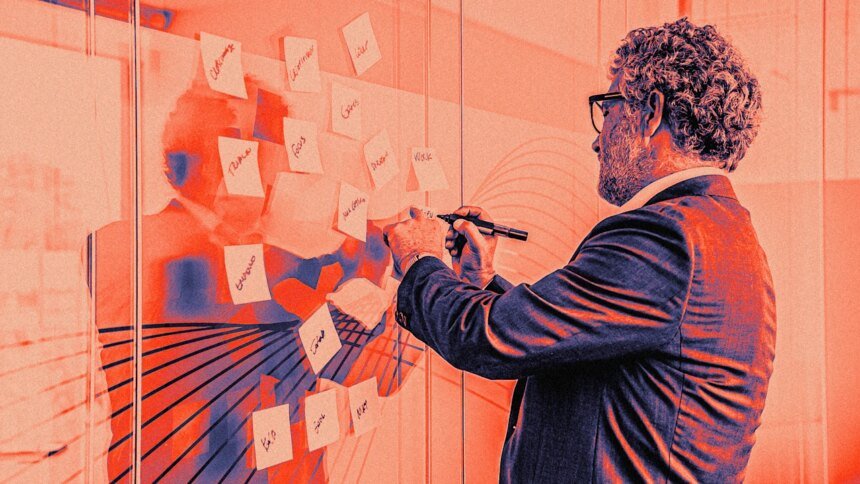


Tomorrow is the quarterly staff meeting, and project director Ann knows she needs to be ready. The agenda is familiar. At 3 p.m. she opens PowerPoint, pulls up the last deck, swaps in tomorrow’s date, and starts updating the numbers.
By 5:30 pm, the slides are done. But is she ready? She has a deck, not a message. She has data, not direction.
Communicating like a leader isn’t about updating presentations—it’s about shaping moments. And those moments are won or lost long before you step to the front of the room. Here are seven ways managers can ensure they’re making the most of their moment.
1. Know your plan
Ann’s preparation went sideways the moment she opened PowerPoint. The first move isn’t to start with software, but intention. Take out a pen and answer three questions:
- What do I want them to think?
- How do I want them to feel?
- What do I want them to do?
If you can’t articulate those answers in plain language, no design template will save you. Slides should support the message, not substitute for it.
2. Prepare like it matters
Athletes practice all week for a game. Musicians rehearse before a show. Meanwhile, leaders sometimes convince themselves that winging it is authentic. (A spoiler: it’s not.)
Preparation isn’t about memorizing slides. It’s about constant testing: rehearsing transitions, knowing what comes next so well that nothing surprises you on screen, timing the flow, and practicing the opening until it feels natural.
When leaders skip this step, they default to reading slides aloud, something I call Business Karaoke. No one bought a ticket for that.
Preparation is a form of respect: when you rehearse, you signal that the moment deserves your full effort. The most effective communicators do not just review content. They rehearse presence, think about pacing, decide where to pause, and choose where to lower their voice instead of raising it. In effect, they design moments that create clarity.
3. Sweat the details
It’s your job to eliminate friction before your audience feels it. If it’s in person, know where you are standing. Decide whether you need a microphone. Make sure the text is legible.
If it’s virtual, update the platform. Check your lighting. Test your camera. Years into the Zoom era, people still speak from the shadows or search for the unmute button. Details aren’t about making you look polished, but look prepared.
4. Know your strengths
Do an honest assessment of how you show up. If you aren’t naturally funny, don’t force jokes. If you thrive in small groups, consider breaking the audience into intimate sessions.
Years ago, Tiger Woods led the PGA Tour in nearly every category except sand saves. His coach didn’t focus on improving bunker play, but driving accuracy. The goal was simple: stay out of the sand.
Know your sand traps. Design around them and play to your strengths instead.
5. Remove distractions
Your audience walked in with phones buzzing in their pockets. You are already competing for attention. Don’t add to the noise.
Leave your phone on your desk and take off your watch. The vibration on your wrist while someone else is speaking is not subtle. It is a signal that something else might matter more. Attention is a gift; treat it that way.
6. Focus your energy
Think about a concert. If the performer’s energy is a 10, the audience might respond with a 9. If the performer shows up at a 6, the audience will not magically climb to a 9. They’ll drift lower.
No one cares more about your message than you do. If you sound tired of it, they’ll be too—but if you sound convinced, they’ll lean in.
7. Open your mind
Communication is not a monologue; it’s an exchange. Great leaders read the room. They look for raised eyebrows, folded arms, silence that signals confusion. They invite questions and then listen to the answers.
You can’t change minds if you are unwilling to adjust your framing. The goal is not to get through your presentation, but to connect.
Stepping forward the right way
When a leader stands in front of a room, there are no guarantees. But there are ways to improve the odds: clarity before slides, preparation before performance, details before delivery, and energy before expectation.
Leadership is rarely about the deck you build. It is about the trust you build while delivering it.

