






The U.S. and China are racing to define the future of technology, with very different ideas about how fast it should arrive and how tightly it should be controlled.
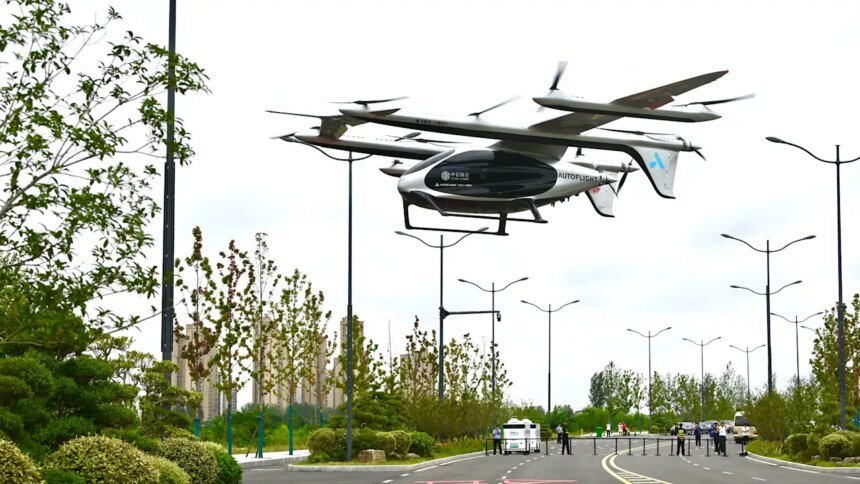
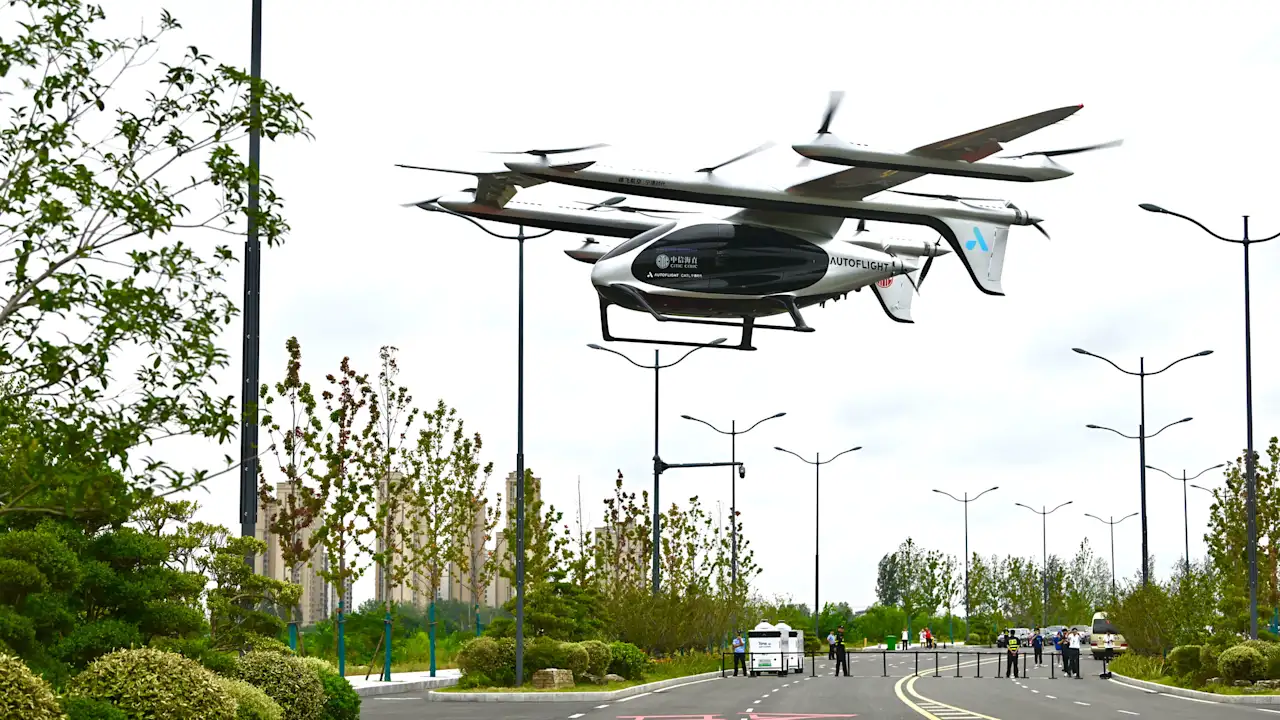
The urgency is no longer abstract. In recent weeks, China approved the world’s first commercial brain-computer interface medical device and unveiled a five-ton class electric vertical takeoff and landing aircraft that has already completed a public flight. At the same time, U.S. agencies are scrambling to speed up approvals in areas like aviation and biotech, even as layoffs and political pressure threaten to thin out oversight.
In both Washington and Beijing, senior officials are no longer hedging: This is, they openly say, a race for technological supremacy. Last year, Michael Kratsios, the science advisor to the president, called China the U.S.’s “most formidable technological and scientific competitor.” More recently, the White House’s Office of Science and Technology Policy has similarly described a global race for tech supremacy.
Beijing sees the same contest. During a February visit to an information technology innovation park, Xi Jinping said self-reliance and strength in science and technology are “key” to building China into a modern socialist power. The country, he added, must “seize the commanding heights in sci-tech competition and future development.”
The competition is already playing out across multiple fronts. The U.S. and China continue trading the lead in AI, with successive model releases displacing one another. But the real divide is emerging in how each country approaches risk. One system is willing to move faster and sort out consequences later. The other moves more cautiously, with heavier guardrails that can slow deployment.
That difference carries real stakes. It shapes which technologies reach the public first, how safely they are introduced, and who ultimately sets the global standards that other countries follow.
“Most Americans do not realize that by multiple different metrics, China already exceeds the United States in a number of different fields, in terms of science and technology, artificial intelligence, quantum internet and biomanufacturing,” says Margaret Kosal, a professor in technology strategy at the Georgia Institute of Technology.
Part of the answer comes down to approach. “While the U.S. focuses on advancing the cutting edge and Europe on regulations, China’s view on new technology is very pragmatic,” says Chengyi Lin, professor of strategy at INSEAD. It boils down to two words, he explains: “Market adoption.” China’s industrial policy also imagines broader applications for emerging tech, including surveillance uses for BCI.
Lin recounts a case in which a European industrial tech company found a Chinese firm using its intellectual property without authorization. The firm’s response, he says, framed the technology as underused and offered to license it retroactively, an example of the kind of pragmatic, speed-first approach that sets China apart. “It is very distinct from U.S. and European practices,” he says.
Regulation is another fault line. Kendra Schaefer, a partner at Beijing-based consultancy Trivium China, notes that while Chinese regulators can be cautious, “they’re already faster than U.S. regulators by a mile.”
In the U.S., that contrast is becoming harder to ignore. The Federal Aviation Administration has launched a program to accelerate the safe deployment of eVTOL aircraft, while Joby has only recently begun flying its first FAA-conforming production aircraft. Meanwhile, recent federal layoffs hit Food and Drug Administration staff reviewing Neuralink, potentially giving Musk’s BCI company more room to move.
“We have in the United States a rhetoric of complaints about regulation, some that are valid, some that are very not valid, that are driving to reduce regulation,” warns the Georgia Institute of Technology’s Kosal.
China is not operating without rules. Samm Sacks, a research scholar at Yale Law School’s Paul Tsai China Center, says Beijing is “not monolithic” in how it approaches the risk of a race to the bottom. Instead, she describes a government trying to “thread a needle,” balancing pressure to compete in AI with a parallel push to introduce regulations that address emerging risks.
Speed, in other words, comes with tradeoffs. Rapid innovation can deliver short-term gains, but it may complicate global competition. “Counterintuitively, the heavy regulations have more than protected many western companies as they make it harder for Chinese companies to enter European markets,” Lin says.
Which leaves a final tension hanging over the race: If both sides feel pressure to move faster, who decides where the limits are?

