




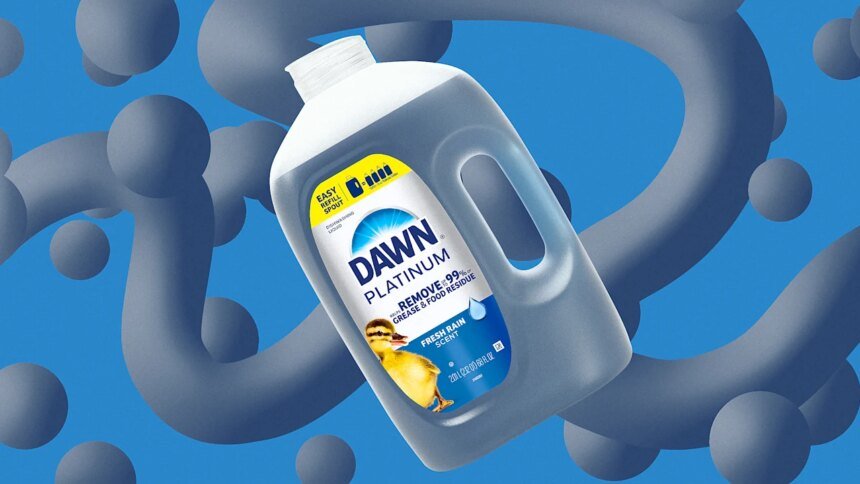

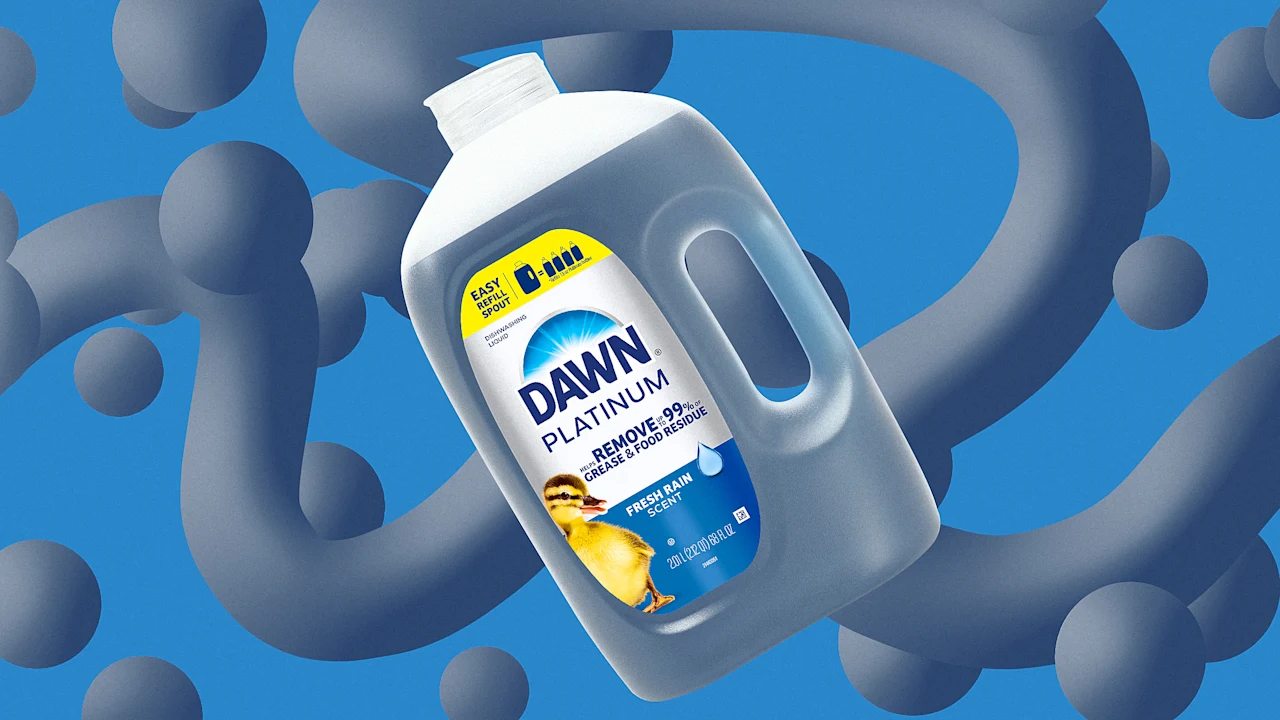
To boost adoption of its dish soap refill jugs, Dawn redesigned them so they would be less messy, pour faster, and be easier to hold. Call it an ergonomic makeover.
The top-selling dish soap brand in the U.S., Dawn, owned by consumer goods giant Procter & Gamble, is known for its use in wildlife cleanup after oil spills, something it reminds consumers of with the duckling on its packaging.
And though the company’s refill jugs save money (P&G’s suggested retail price for the 90-ounce jug is $11.88—cheaper than three 24-ounce bottles for more dish soap), they’re also messy. After finding that just 12% of households use refill jugs, P&G put a redesign in motion.
The old Dawn refill jug had a standard circular mouth that glugs when it pours out unevenly. One wrong move and that dish soap could end up all over the kitchen counter.
Pouring is now a smooth process, thanks to an EZ-Pour spout that P&G says was specifically engineered to be compatible with Dawn EZ-Squeeze bottles, and the liquid now pours 37% faster.
“We redesigned the new Dawn Platinum refill jug to make the process much quicker and cleaner,” Angelica Matthews, P&G brand VP, said in a statement.
The new jugs also have a bigger, more ergonomic handle and a new formula, and the corresponding EZ-Squeeze bottles have a “time to refill” line on the packaging to visually prompt consumers to opt into the brand’s refill system.
The jug redesign is part of a wider play by P&G to increase household penetration as the company faces slow growth and weak consumer spending. P&G announced quarterly net sales of $22.21 billion in January, which was below estimates, and last year it announced it would cut 7,000 jobs over two years.
U.S. consumers have responded to years of high inflation by trading down to private-label brands, putting big-name national brands like P&G’s Bounty paper towels, Crest toothpaste, and Gillette razors at a disadvantage among cash-strapped shoppers. P&G CFO Andre Schulten said on the company’s last earnings call that its opportunity was in improving the value proposition of its products for consumers without raising prices.
For Dawn, that value proposition means not only saving consumers money on dish soap, but saving on time. “Time is valuable,” Matthews said, “and the last thing anyone needs is a slow, messy refill process standing between them and a clean kitchen.”

