




Opinions expressed by Entrepreneur contributors are their own.
Key Takeaways
- British footballer David Beckham came out with supplement brand IM8 in November 2024.
- Since launch, the brand has achieved $120 million in ARR within the first year and does $10 million in monthly revenue.
- Much of the credit for the brand’s growth goes to Beckham’s cofounder, Danny Yeung.
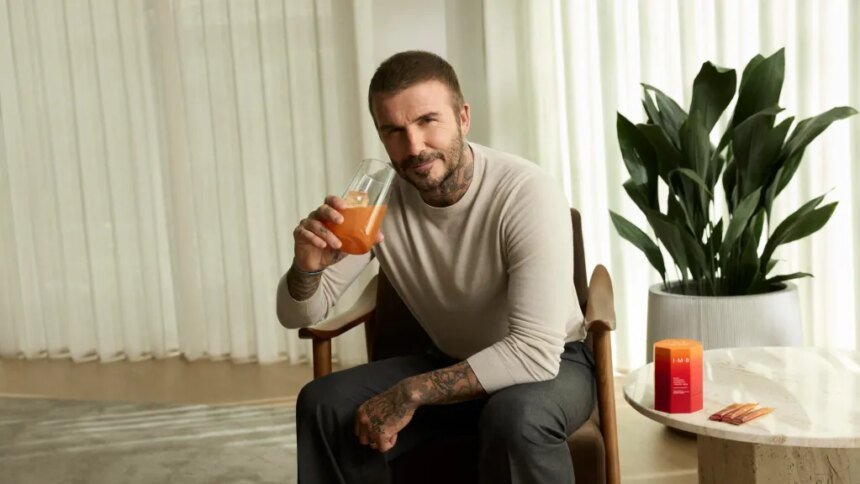
It’s probably no shocker that when “Golden Balls” David Beckham came out with a supplement brand in November, 2024, it took off. The British footballer has north of 88 million followers on Instagram, not to mention a household name.
But $120 million in ARR within the first year? $10 million in monthly revenue? The No. 1 world female tennis player, Aryna Sabalenka, as an ambassador? There’s clearly something else going on. No matter who you are, cutting through the thick traffic of the supplement market, jammed with products and skepticism, is daunting. Not to mention all the supplements already backed by celebrity athletes—Tom Brady, Venus Williams, Lebron and Arnold (James and Schwarzenegger) to name a few. A lot of the credit goes to Beckham’s cofounder Danny Yeung.
When they first met in London via a mutual friend, on the face of it, the two had nothing in common. Yeung was founder of Prenetics, a Hong Kong Covid testing startup, and his biggest win in sports had been selling baseball cards at age 12. Beckham, of course, was Beckham. But they connected on the topic of supplements—Beckham because he was sick of taking so many pills every day and Yeung because he saw the potential for using science to stand out in an unregulated market filled with questionable products. They walked out of the meeting on the way to founding IM8.
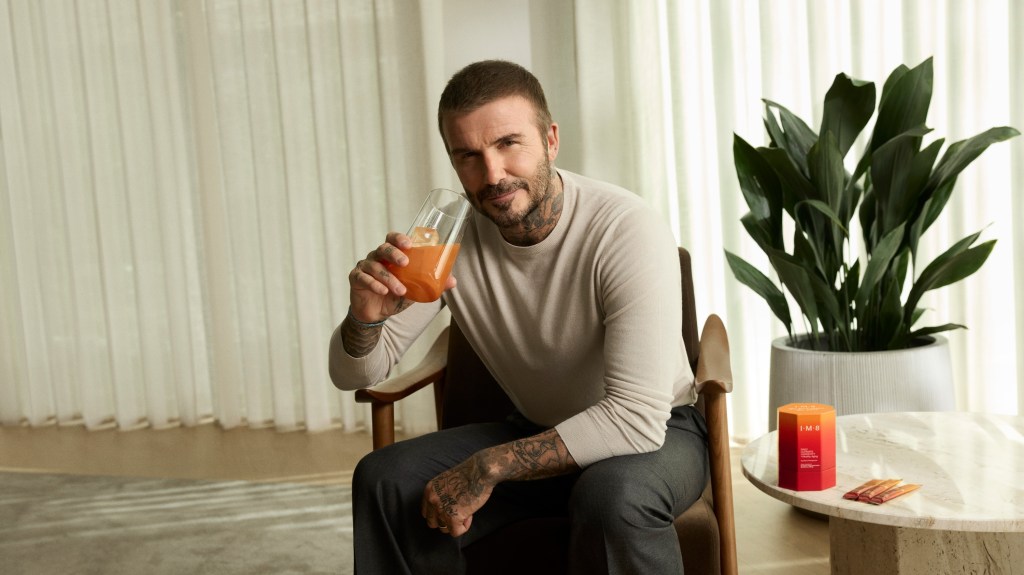
“From the start, Danny and I shared in the frustration of an overly complicated supplement market,” says Beckham. “Our partnership is founded on a willingness to invest in time and resources to do this right, through clinical trials, scientific testing, and a world-class Scientific Advisory Board.”
Identify the weakness in the market
Yeung isn’t the type of entrepreneur to stay in his lane. His first company sold furniture to hotels; the second offered daily deals online and was acquired by Groupon. With a decent exit and a lot of marketing under his belt, he wanted a new challenge and saw an opportunity in genetic testing and diagnostics, launching Prenetics in 2014. Despite not having any science background, he managed to partner with people who did—a skill he would draw on with IMB. During Covid, Prenetics’ PCR test helped it grow to 1,300 people and brought in more than $800 million in revenue over three years, all of which helped Yeung take the company public in 2021.
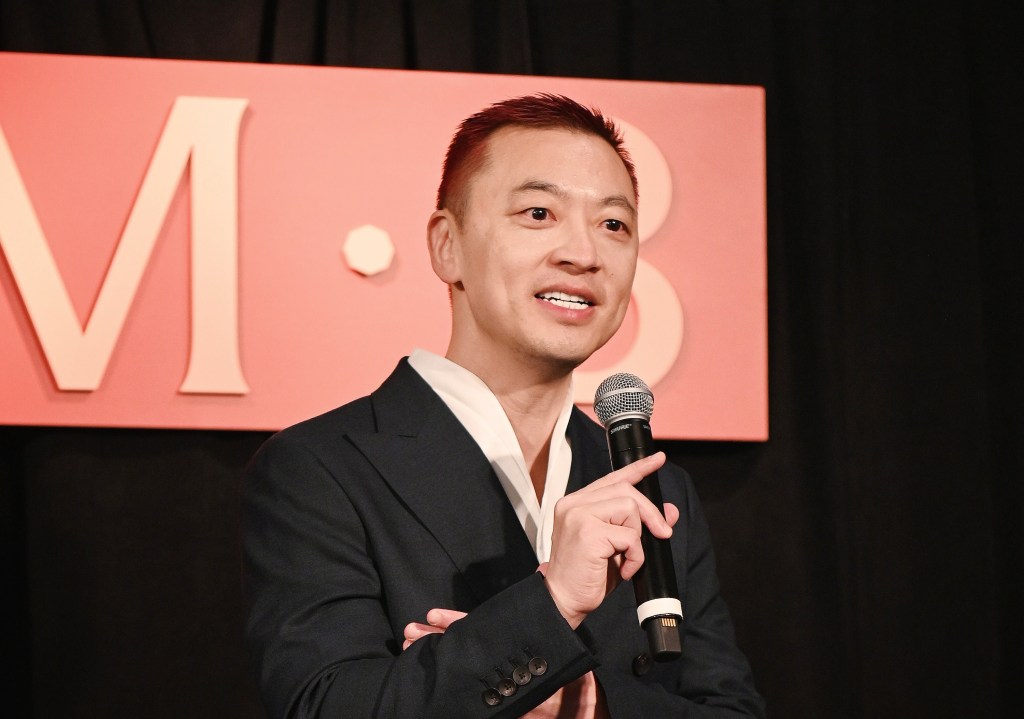
But as the world emerged from the pandemic, business slowed to a drip. Yeung was eyeing a pivot when he met Beckham. “So many people told me not to get into the supplement industry,” he says, “Number one, it’s so competitive. And two, there are just lots of bad apples given that it’s unregulated.” But Yeung saw those market weaknesses as sign posts for how IM8 could win. “We came into it asking ‘How do we create a new standard of excellence?’”
Right off the bat, the two founders agreed that they would not lean on the footballer’s fame but rather on whether the product actually works. It’s a smart gambit, according to Bill Giebler, director of content and insights at the Nutrition Business Journal (NJB). “Celebrity affiliation is excellent for brand discovery. Long-term success, however, will depend on product quality, efficacy and consumer satisfaction.”
Focus on your unique selling proposition
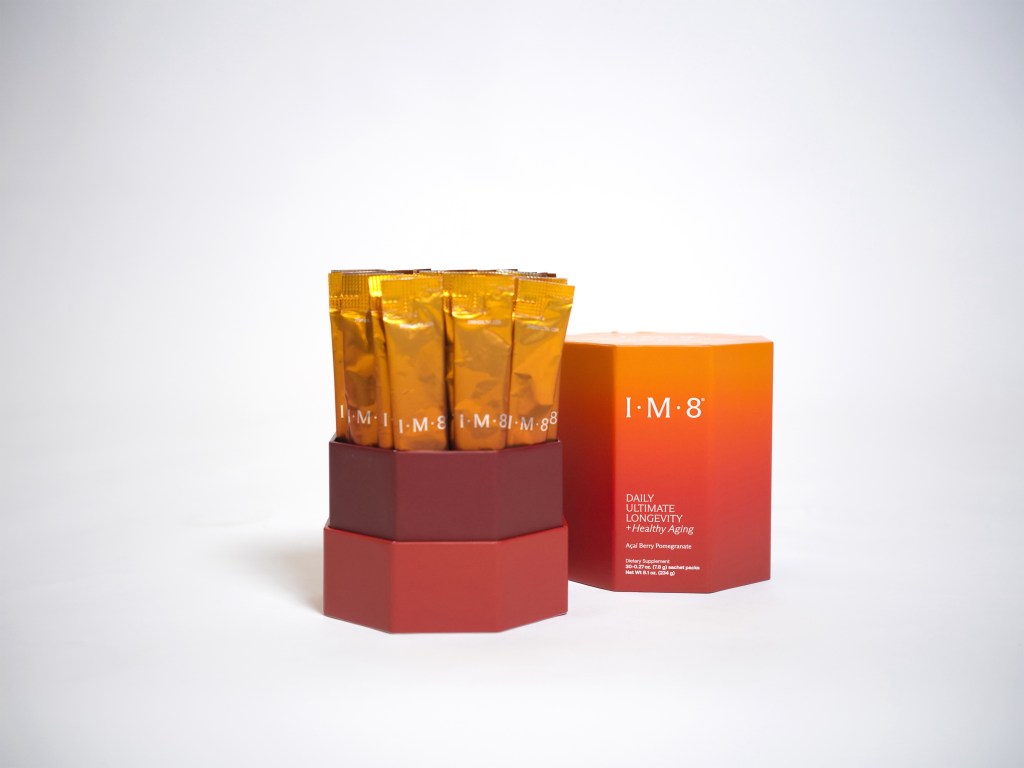
IM8’s first product would be an answer to Beckham’s wish: an all-in-one daily supplement powder to meet every nutritional need. To develop it, the brand would apply similar metrics as Prenetics’ other products. Then Yeung would market it with hard-hitting science branding.
He set about building a scientific advisory board aiming for the top pros. “Supplement companies have reached out to me for years and I would just delete, delete, delete, delete,” says Dawn Mussallem, founder of the Mayo Clinic Integrative Breast Oncology Program who left after 25 years in December to become chief medical officer of Fountain Life. “But this was a very well written, compelling email. There was nothing about David Beckham, which was good because I would not do a celebrity brand. What they did share was the science, and that Prenetics had originally started with early cancer detection, which automatically I was eyes wide open—and they said, ‘we would like just to meet with you to hear some of your aspirations, wellness goals.’” She got on the phone with Yeung at 4:00 am the next day during an Uber ride to the airport. “It was one of the most transformational calls in my life.”
Yeung also persuaded the director of Cedars-Sinai Human Microbiome Research Institute and a former chief scientist of NASA to join the advisory board, along with five other prominent doctors and researchers. Once the supplement was developed, IM8 paid for a clinical trial to be done by the San Francisco Research Institute, which the company featured on its website. The site also highlighted how every batch is third-party tested to verify that the ingredients and dosage match what’s on the label and that it’s free of 280 banned substances for pro athletes. Customers just have to click to read the reports. This, says NJB’s Giebler, is “far from the norm.” According to the journal’s research, scientific backing and transparency are increasingly important to consumers. “How deeply they understand the rigor of the science is another question but seeing that the company has performed some studies goes a long way.”
Build engagement
Yeun’s marketing strategy was to launch IM8 exclusively DTC “because you’re able to control the narrative and customer experience,” he says. “Our product is about $100 and so we can explain why better online than if someone is quickly looking on the shelf.”
To deepen the connection with customers, Yeun set up an option where members get access to the advisory board members via master classes. For example, the Mayo Clinic’s Mussallen offers a powerful personal story about resilience along with health advice. She was told a few weeks into medical school that she had stage IV lymphoma and less than two years to live, even with treatment. She defied that prognosis but the chemo, radiation and bone marrow transplant left her with advanced heart failure, and she ultimately needed a heart transplant. “I was so sick. I didn’t think I was gonna make it,” she says. Not only did she survive, but she ran a full marathon a year later.
In October, IM8 added a longevity supplement. It’s a category, according to NJB, that grew 14.3% in 2025 compared to the overall industry growth of 5.6%. And Yeun says the product is doing well. He projects that this year IM8 will do roughly $180 to $200 million in revenue.
“Reaching the first year of any business is a significant milestone,” says Beckham, who has been involved in his share of them. But even so, he adds, this success is notable. “What was once a personal dilemma – figuring out which supplements I should take – is now an all-in-one solution that we’ve made available worldwide.”
For Yeun this first year has sharpened some of the lessons his other companies taught him. “First, whatever industry that you’re in, you have to establish trust and credibility,” he says. “Second, consumers need to understand why they should buy from you. Because there’s always options—and that’s true especially in the supplement space. So be very clear about what your unique selling proposition is and why it is better than others. For us, we’ve been very clear about that from day one.”
Key Takeaways
- British footballer David Beckham came out with supplement brand IM8 in November 2024.
- Since launch, the brand has achieved $120 million in ARR within the first year and does $10 million in monthly revenue.
- Much of the credit for the brand’s growth goes to Beckham’s cofounder, Danny Yeung.
It’s probably no shocker that when “Golden Balls” David Beckham came out with a supplement brand in November, 2024, it took off. The British footballer has north of 88 million followers on Instagram, not to mention a household name.
But $120 million in ARR within the first year? $10 million in monthly revenue? The No. 1 world female tennis player, Aryna Sabalenka, as an ambassador? There’s clearly something else going on. No matter who you are, cutting through the thick traffic of the supplement market, jammed with products and skepticism, is daunting. Not to mention all the supplements already backed by celebrity athletes—Tom Brady, Venus Williams, Lebron and Arnold (James and Schwarzenegger) to name a few. A lot of the credit goes to Beckham’s cofounder Danny Yeung.
When they first met in London via a mutual friend, on the face of it, the two had nothing in common. Yeung was founder of Prenetics, a Hong Kong Covid testing startup, and his biggest win in sports had been selling baseball cards at age 12. Beckham, of course, was Beckham. But they connected on the topic of supplements—Beckham because he was sick of taking so many pills every day and Yeung because he saw the potential for using science to stand out in an unregulated market filled with questionable products. They walked out of the meeting on the way to founding IM8.

