


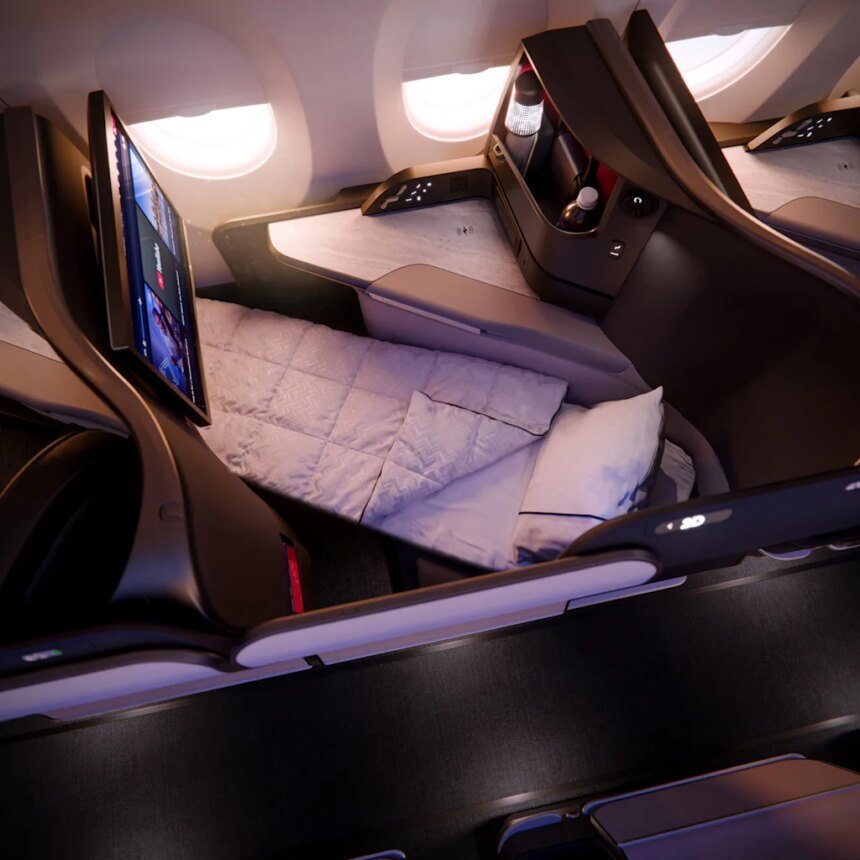

Delta just unveiled the new version of its most premium seat, and it’s designed to let passengers stretch out just like they would in their bed at home.
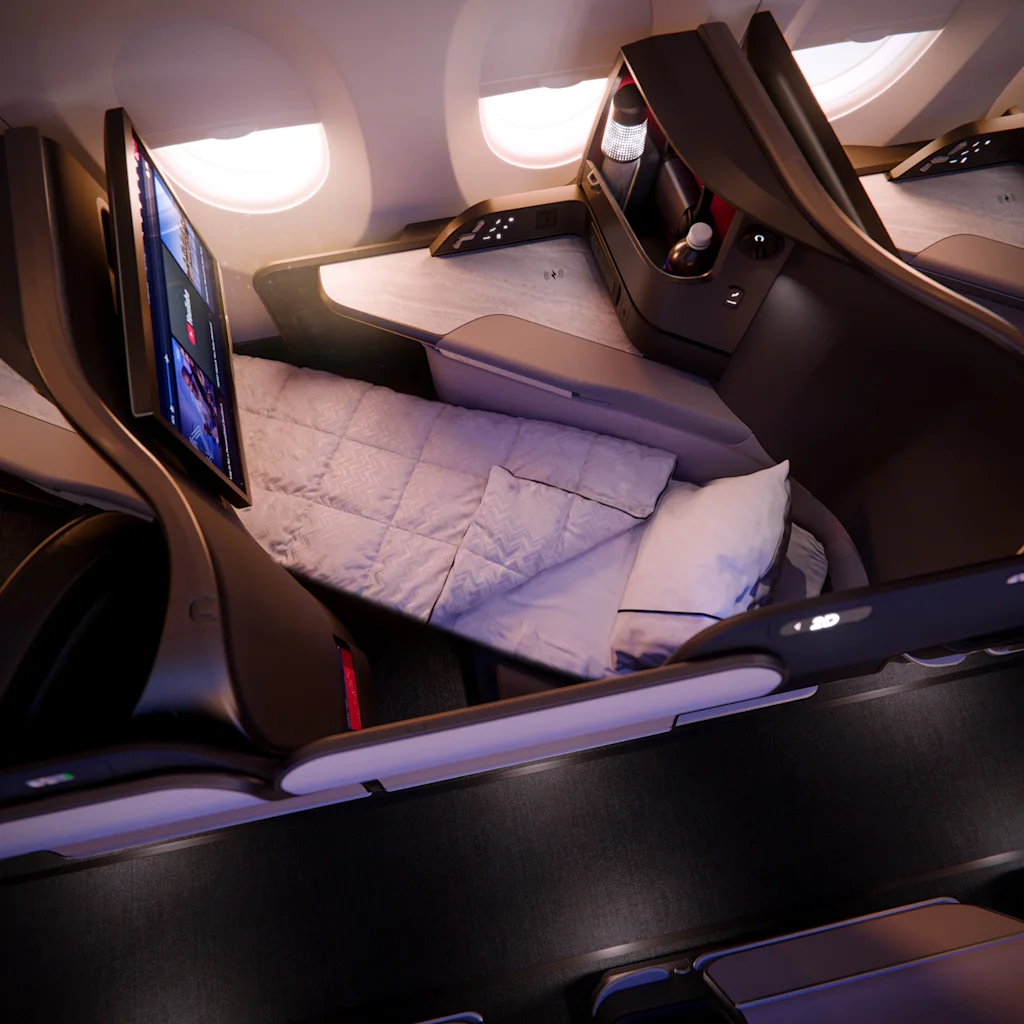
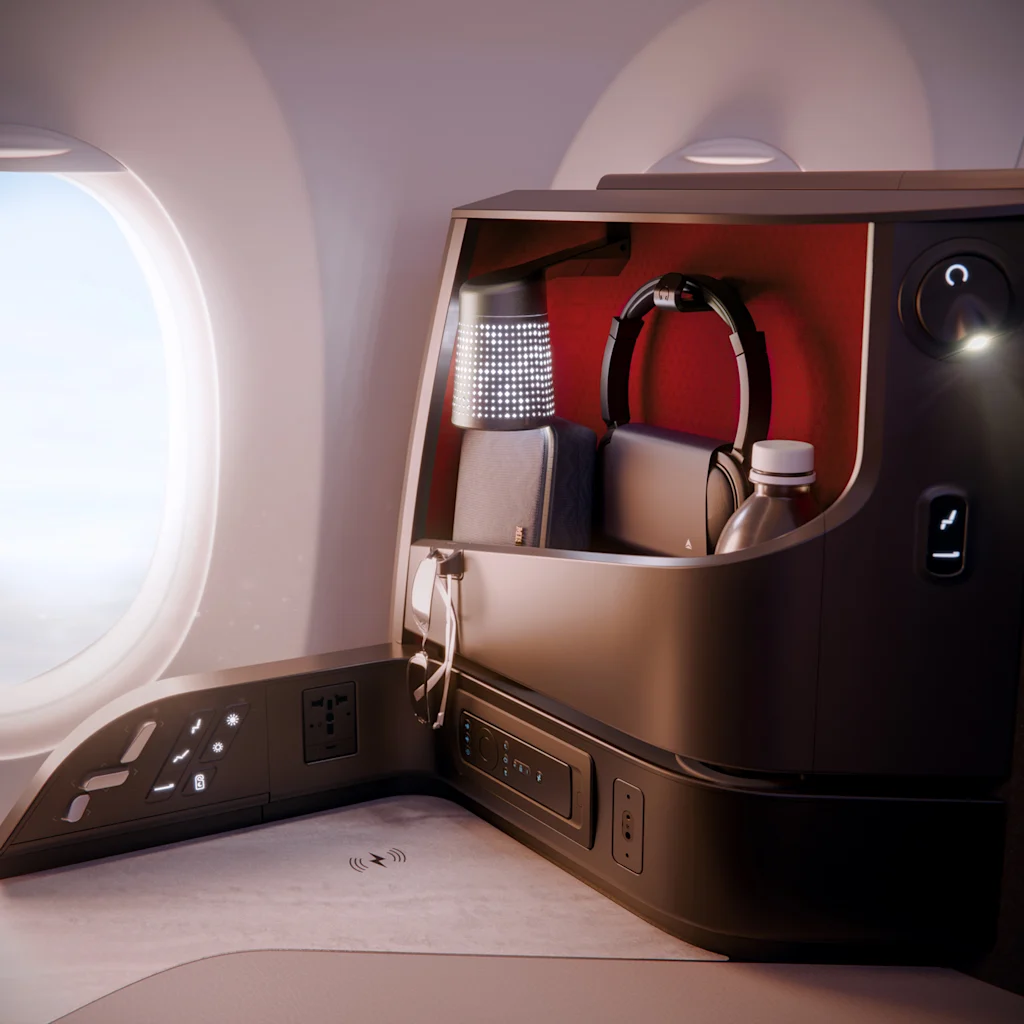
On April 13, the company announced that the “next generation” of its Delta One suites, which are made for long-haul international and domestic flights, will debut in early 2027 on new Airbus A350-1000 aircraft. The updated design will include a flat bed that’s been expanded by more than three inches, a custom cushion to act like an in-air mattress, and a new cubby to store shoes.
Delta’s announcement comes just weeks after United (the second-largest airline by revenue behind only Delta itself) officially debuted its new Polaris Studio, an ultra-luxe seating option that’s 25% larger than its previous top-tier seat.
Both of these moves are part of a broader focus on premiumization in the airline industry, aimed to attract and retain high-income fliers. As the sector’s biggest players double down on the most luxe in-flight experience possible, the race to design the most comfortable lie-back seat is officially on.
Inside the airline industry’s ultra-premium seats race
For the past several years, Delta has been on a mission to, as CEO Ed Bastian put it to Fast Company in 2024, “distinguish around service and having a premium brand.”
So far, that effort is paying off: After the company began rolling out a more premium, redesigned cabin across its fleet in 2025, its total premium ticket revenue (which includes Delta First, Delta One, Delta Premium Select, Delta Comfort) was $22.1 billion, a 7% year-over-year increase, according to a press release. And in 2026, despite increased jet fuel prices due to the U.S.-Israel war in Iran, Delta hit a record March quarter revenue of $14.2 billion. The achievement was driven in large part by premium ticket revenue, which has almost overtaken the company’s main cabin revenue for the first time ever. It also recently raised checked bag fees.
In an April interview with Fortune, Bastian explained, “Delta is not a low-cost airline. We can’t win by trying to provide the cheapest. We have to be able to win by providing the best.”
Delta isn’t the only airline living by that philosophy. Recently, experts have posited that we’re squarely in the midst of a K-shaped economy—basically, an economic recovery model in which higher-income individuals rise while lower-income consumers fall behind.
And, as Fast Company has written before, that trend is becoming increasingly glaring in the airline industry: At the same time that carriers are piling on heaps of added fees for lower-income fliers, they’re dedicating even more effort to making their “premium” seating more attractive to high-income customers.
One way to do that is with new amenities, like luxury lounges and in-flight treats (both of which Delta has already invested in). Another is to double down on ultimate seat comfort—and several airlines have already made strides in that arena.
In 2021, Jet Blue debuted new business class seats designed by a mattress start-up. United’s new Polaris Studio (available in ultra-limited quantities of eight to a plane) comes with expanded leg room, the largest touchscreen on any U.S. airline, and complementary caviar. This month, United also announced a new economy seat class, called Relax Row, that lets passengers lie back on a set of three seats with added bedding (for an extra cost). Now, Delta is catching up with its new Delta One suite design.
Caviar is nice, but comfort is king
Over the past few months, Delta has enticed customers to Delta One with a series of new airport lounges featuring steak tartare, shower suites, buffets, as well as in-flight perks like amenity bags and bedding designed by Missoni. All of those bells and whistles certainly can’t hurt—but the new Delta One suite design demonstrates that, at the end of the day, what passengers really want is a comfortable seat.
“Customers are clear that comfort is their number one priority when flying Delta One—97% say Delta’s flat-bed is the reason for choosing the cabin,” Mauricio Parise, Delta’s vice president of Brand Experience, said in a press release. “This led us to a new design that, when combined with our current mattress pad and luxury bedding from Missoni, makes for an incomparable sleep at 30,000 feet.”
The new suites deliver on what is probably the most oft-cited pain-point for fliers: leg and knee room. The lie-flat seat, designed in collaboration with the company Thompson Aero Seating, has been expanded by more than three inches, bringing its total length to more than six-and-a-half feet.
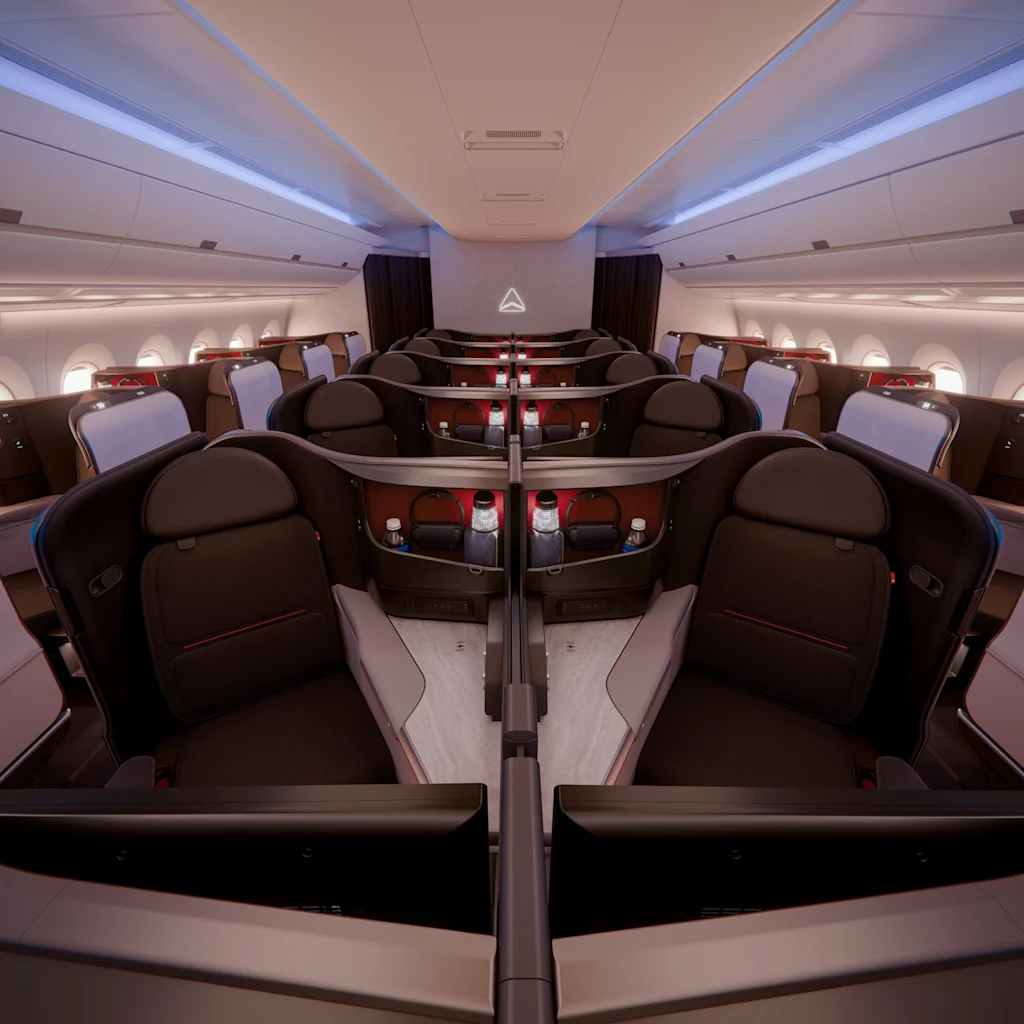
According to Michael Steinfeld, Delta’s senior manager of onboard product, this modification was made specifically to help accommodate side-sleepers, which Delta’s research found make up most of the population. To accommodate this added room, Delta’s design team opted to arrange the suites in a reverse herringbone configuration, which maximizes the Airbus A350-1000’s wide floor plan.
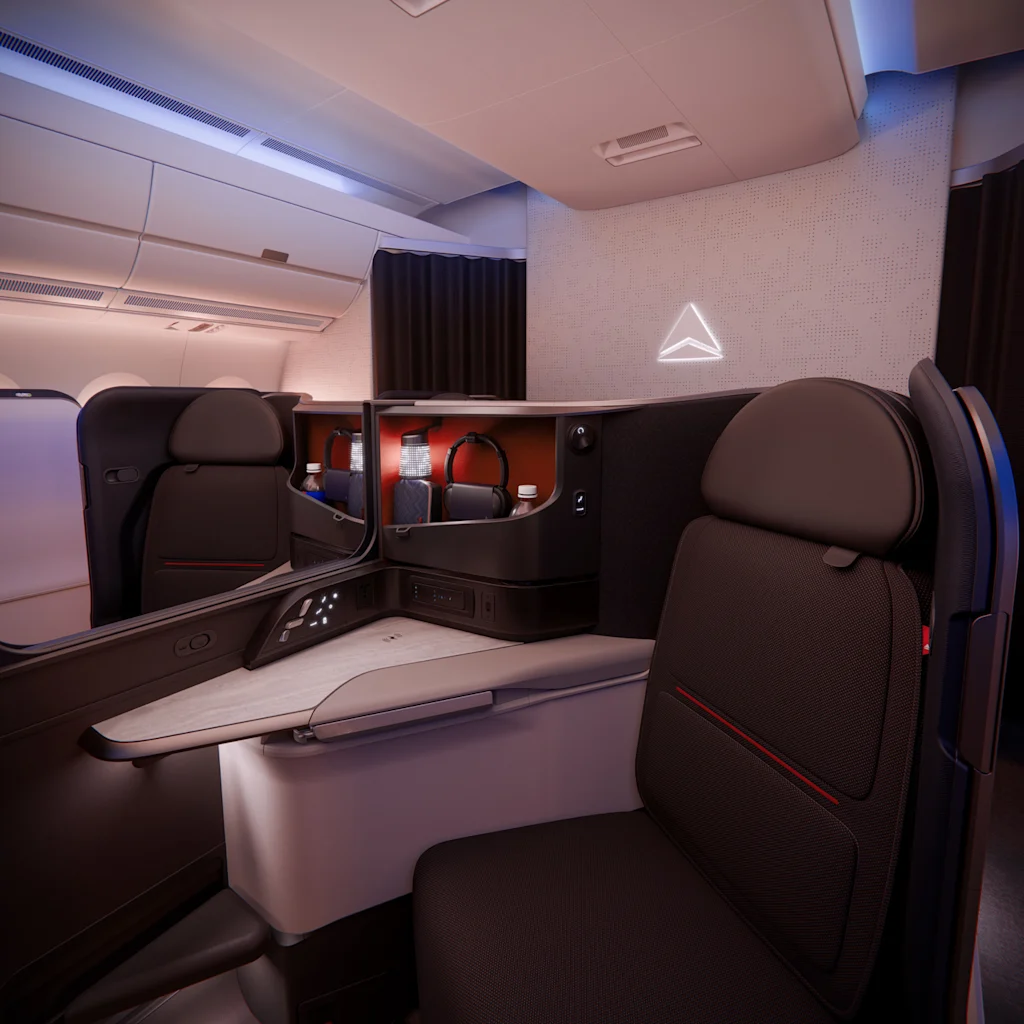
On top of the existing mattress pad and sheets, Delta designed a custom pillow-top cushion to make the seat feel more like an actual bed. “As we reviewed customer insights and pressure-mapping data from our existing Delta One seat cushions, we had an idea to design a plush top layer which can make the suite feel more like a bed, especially at the hips where most business class seats have a small gap between the back and bottom cushions,” Steinfeld says. Delta tested multiple prototypes of the design to ensure that the cushion would move and stretch with the seat during the flight.
The spokesperson says the two-year design process involved a year of creating concept sketches and holding workshops, more than 40 development tests to validate the design, and multiple tests with employees to make sure that operational tasks like replacing components and programming seat controls ran smoothly. For a final test, Steinfeld’s team slept overnight in the seats before approving the design.
As airlines battle it out for premium supremacy, the winner may not be which carrier can offer the most perks, but the one that can most accurately replicate passengers’ bedrooms for the skies.

