




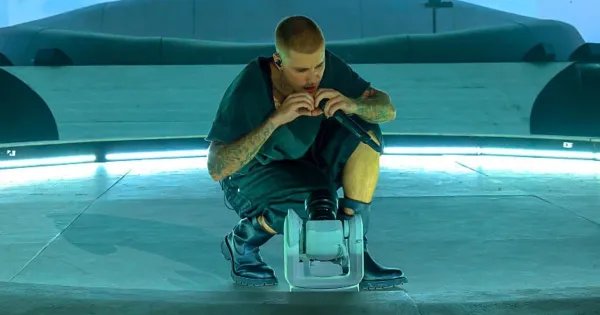

At Coachella, Justin Bieber opened a laptop, pulled up YouTube, and started scrolling through his own videos.
He jumped between eras, played old clips, sang along to earlier versions of himself. For a headlining slot, it felt strange.
The critics who felt it was a letdown were measuring the set against the wrong thing.
Bieber didn’t stage a concert that underdelivered. He staged a different format entirely. This new format is built on the logic of a platform feed rather than a traditional setlist.
That shift began in 2012, when YouTube shifted its core metric from views to watch time. Creators adapted quickly, optimizing for retention, pacing, and audience behavior.
That shift shaped an entire generation of content makers, and now, we’re seeing it reshape creative industries.
Hollywood is changing the way it tells stories
When Matt Damon and Ben Affleck appeared on Joe Rogan to promote their Netflix film The Rip, they described something that would’ve been unthinkable in the studio era: Netflix giving script notes tied directly to platform behavior.
Front-load action in the first five minutes. Reiterate the plot because viewers are on their phones. These weren’t creative instincts. They were retention metrics translated into narrative structure. Platform logic doesn’t just change distribution. It changes how content is made.
Bieber’s set followed that same logic. His catalog has been consumed and rediscovered through algorithmic distribution for more than 15 years. His audience experiences his work nonlinearly, in fragments, surfacing the moment that fits the mood.
At Coachella, he made that archive the show, such that the stage became another surface for the feed. It was sequenced the way his audience already engages with his content, not the way a touring production would package it.
Traditional artists design for stages. Creators design for platforms.
Brands and platforms need to rethink their content strategy
The polarized reaction reveals a deeper tension. When format shifts but expectations don’t, the gap reads as failure. It’s the same friction Hollywood is navigating as platform-driven content reshapes storytelling.
YouTube has been rebuilding live viewing inside YouTube TV with features like multi-view and real-time overlays, designed to make broadcast more dynamic and navigable.
For brands and platforms investing in live entertainment, this changes what those investments need to deliver. The value is no longer just in spectacle. It’s in how the experience translates into the broader content ecosystem and whether it generates moments that travel beyond the event itself.
The artists and brands that figure this out will not just perform at live events. They will design them differently—as extensions of a platform presence rather than departures from it. Bieber may not have done that deliberately at Coachella. But he did it. And the reaction showed exactly how much further the rest of the industry has to go.

