




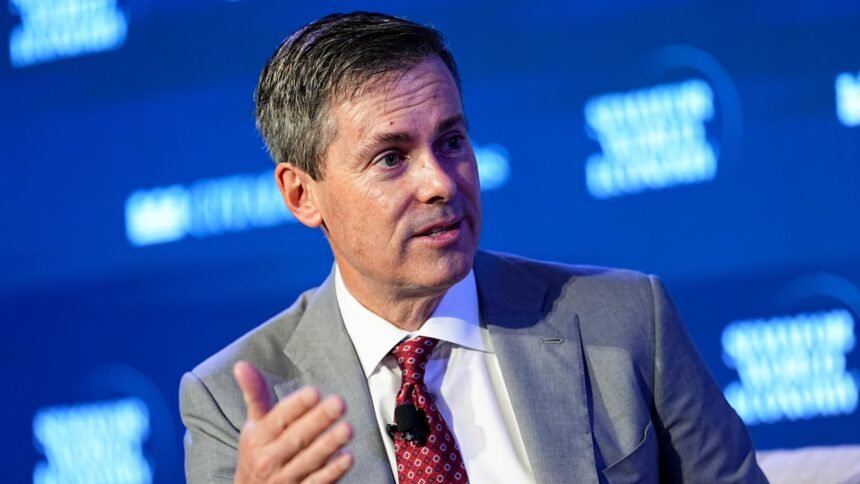

David Ricks, chief executive officer of Eli Lilly & Co., at the Semafor World Economy Summit during the International Monetary Fund (IMF) and World Bank Spring meetings in Washington, DC, US, on Friday, April 17, 2026.
Aaron Schwartz | Bloomberg | Getty Images
Eli Lilly is slated to report first-quarter earnings before the bell on Thursday, in one of the most closely watched reports across the healthcare sector.
Here’s what Wall Street is expecting, based on a survey of analysts by LSEG:
- Earnings per share: $6.66 adjusted expected
- Revenue: $17.62 billion expected
Demand for the company’s blockbuster obesity drug Zepbound and diabetes counterpart Mounjaro has helped fuel several solid quarters for Lilly, which holds the majority market share in the booming GLP-1 space.
Analysts expect Zepbound to rake in overall sales of $4.04 billion, with $3.98 billion coming from the U.S., according to StreetAccount estimates. Meanwhile, they expect Mounjaro to book worldwide sales of $7.26 billion, including U.S. revenue of $3.87 billion, StreetAccount estimates said.
The company’s newly approved GLP-1 pill for obesity, Foundayo, launched in the second quarter, so its sales won’t be included in Thursday’s report.
Still, the pill’s rollout is likely to dominate the discussion during Lilly’s first-quarter earnings call. Executives will likely face questions about whether Foundayo can reach the same level of momentum as the rival Wegovy pill from Novo Nordisk, which benefited from a three-month head start in the U.S.
It’s too soon to assess the performance of Lilly’s pill. But early prescription data suggest its initial rollout has been “modest,” according to a note last week from Leerink Partners analyst David Risinger.
In February, Lilly said it expects to benefit from Foundayo’s launch, Medicare coverage of obesity drugs coming online later this year and continued worldwide demand for Mounjaro and Zepbound. But the company also expects to face pricing pressure, driven by a drug pricing deal with President Donald Trump and lower cash-pay prices for Zepbound, among other factors.
Still, Lilly CEO Dave Ricks said in an interview in late April that he expects lower prices to accelerate prescription volumes in the U.S. He also estimated that global GLP-1 use will rise from approximately 20 million patients at the end of last year to 30 million at the end of 2026.

