





This post was created in partnership with InMobi
Generative AI is developing at a rapid pace, and marketers must understand how it will engage consumers to leverage its power.
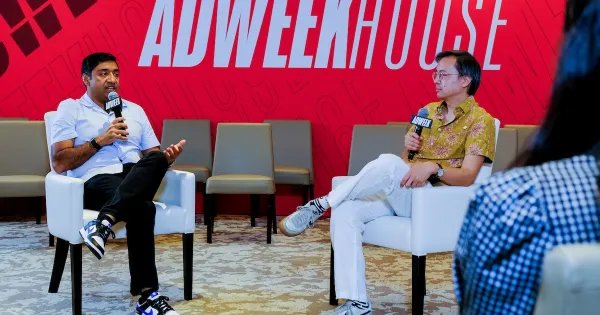
During an ADWEEK House Possible fireside co-hosted by InMobi, Ryan Joe, editor in chief of ADWEEK, sat down with Abhay Singhal, co-founder of InMobi and CEO of InMobi Advertising, to discuss the impact that generative AI will have on marketing teams and consumers alike.
The near-future of generative AI for advertising
Singhal opened the discussion with a prediction, saying that by the end of 2026, there will be an ad format with “good agent-to-agent interaction.”
“At InMobi, our basic hypothesis is that with gen AI, consumers are going to outsource a lot of research work to the AI, but they would still keep final decision-making in their own hands,” Singhal said.
He used the example of a consumer shopping for sneakers. The consumer can load an AI platform with their preferences, and the AI agent will find the best sneakers that fit their taste and price point.
Singhal also predicted that consumers will soon be able to interact with AI-powered ad formats, much like they would with a store employee. This would be a huge improvement over current ad formats that are “one and done,” where a consumer sees an ad with a message, clicks on it, goes to a website, then makes a decision to purchase.
“Ad formats could do so much better with the gen AI embedded into it that it would feel very personal and very engaging,” Singhal said.
The visual advantage in ecommerce
Glance, a company owned by InMobi, is an agentic commerce platform that curates products for users and creates AI visualizations. Singhal believes that this visual advantage is the future of ecommerce.
He gave the example of seeing a floral shirt that he would instinctively presume wouldn’t look good on him. However, if the shirt appeared on an agentic commerce platform, that platform could generate a photo of him wearing the shirt, and he could make a more informed decision.
Singhal explained that online commerce began with books and technology because they were nonvisual. Now, consumers can buy everything online—like furniture or clothes for a pet—and they want to be inspired visually.
“There are so many different categories that are very visual in nature, which, when you apply it to yourself or your setting or your pet, your desire to have it just enhances multiple-fold,” Singhal said. “And we’re seeing that in terms of the ROAS that we are able to deliver to these merchants—it’s literally off the charts.”

