





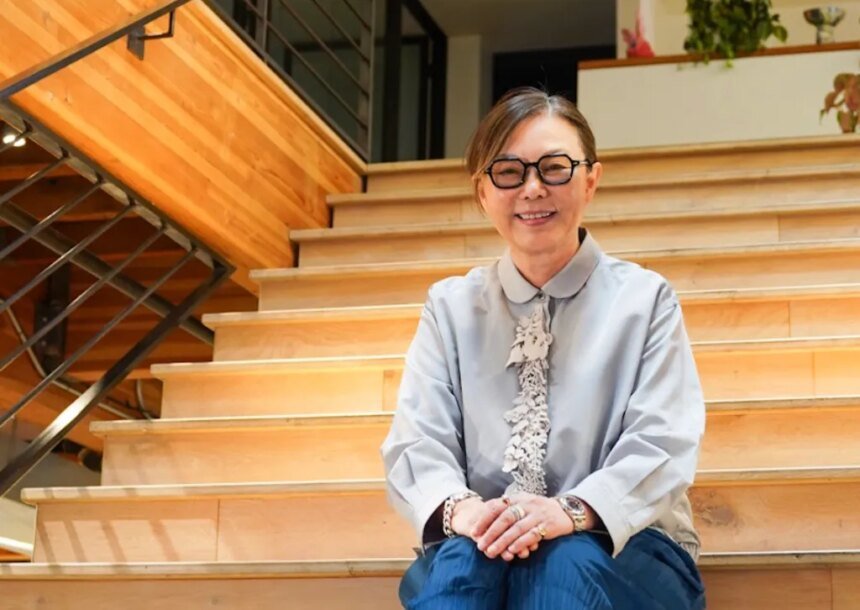

Julia Huang is the founder and CEO Intertrend Communications, which prides itself on being “the Most Award-Winning Result Driven Asian American Advertising Agency.” The company was launched in 1991, “before ‘multicultural marketing‘ was even considered a serious growth category,” Huang told Entrepreneur. Here she breaks down the launch and growth of her company, and how its success is built on a desire to connect with consumers on an emotional level.
Please give the elevator pitch of your business.
Intertrend is a multicultural agency built on a simple idea: Asians in America are not just a demographic box to check. We have helped brands understand that culture is not a niche tactic. Thirty-plus years in, we’re still the most awarded shop in the space, and still the most curious.
What inspired you to create this business?
My “aha moment” was realizing, at that time, multicultural marketing meant just translating an English campaign. Yet language without cultural understanding did not create a connection. I saw ads that technically spoke the language but emotionally said nothing. We realized there was an opportunity to bring creativity, strategic thinking and cultural empathy into a space that had mostly been treated as an afterthought.
What is the difference between your company and other creative agencies?
The differences are subtler than people think. We all have smart people, talented creatives and access to useful data. I don’t think we are necessarily comparing ourselves with other creative agencies, but we keep questioning our own assumptions about the communities we serve, because those communities keep changing faster than us feeling content selling ourselves as “experts.” The discipline to never stop evolving, I hope, is the difference.
Any lessons about effective marketing you can share?
Data can tell you what people do. But culture will explain why they do it. That is always where breakthrough ideas live. Audiences, maybe especially multicultural audiences, have been pandered to for so long that they can detect being a check box from a mile away. Shifting the marketing question from “How do we reach this audience?” to “What does this audience already believe, and what do we NOT know about them?” outperformed all the time.
Please share a stat on your business that you are particularly proud of.
In the world of advertising, surviving one decade as an independent shop is hard. Surviving three while staying culturally relevant is even harder. But the stat I’m actually most proud of is our client tenure. The majority of our top clients have been with us for more than two decades. It’s this number that tells me we’re doing the work right.
What does the word “entrepreneur” mean to you?
I think “entrepreneur” has become one of the most overused business labels. To me, entrepreneurship is the ability to see possibility where others see inconvenience. It’s less about ambition and more about a specific kind of obsession. If you’re not a little obsessed, you’re not an entrepreneur — you’re just self-employed. Especially for immigrant entrepreneurs, it is also about identity, survival, and sometimes proof that you belong in rooms that were not originally designed for you.
What is something many aspiring business owners think they need that they really don’t?
Scale. Or more precisely, the tendency to focus on scale before figuring out if what they’re building is actually worth scaling. We live in a world where bigger is considered better. If we are “big” we can raise more, hire faster. But scale without a growth strategy isn’t growth, it’s inflation. I personally wished I had the luxury of asking myself, “What does the right size look like for the business I actually want to run?” when I started.
Julia Huang is the founder and CEO Intertrend Communications, which prides itself on being “the Most Award-Winning Result Driven Asian American Advertising Agency.” The company was launched in 1991, “before ‘multicultural marketing‘ was even considered a serious growth category,” Huang told Entrepreneur. Here she breaks down the launch and growth of her company, and how its success is built on a desire to connect with consumers on an emotional level.
Please give the elevator pitch of your business.
Intertrend is a multicultural agency built on a simple idea: Asians in America are not just a demographic box to check. We have helped brands understand that culture is not a niche tactic. Thirty-plus years in, we’re still the most awarded shop in the space, and still the most curious.
What inspired you to create this business?
My “aha moment” was realizing, at that time, multicultural marketing meant just translating an English campaign. Yet language without cultural understanding did not create a connection. I saw ads that technically spoke the language but emotionally said nothing. We realized there was an opportunity to bring creativity, strategic thinking and cultural empathy into a space that had mostly been treated as an afterthought.

