





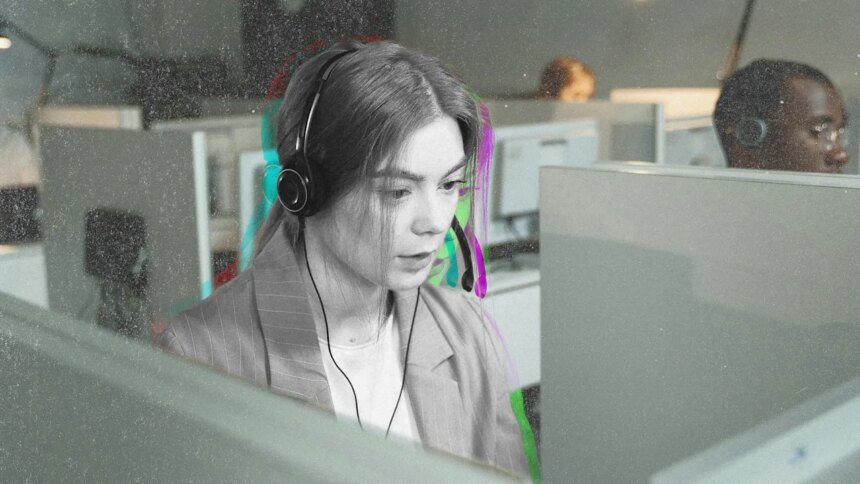

After a long day in the office, you catch a sight of yourself in the bathroom mirror: Hair, frizzy. Skin, dry. Eyes, puffy.
“Office air” has claimed yet another victim.
The term, which has recently gone viral on TikTok, puts its finger on a complaint office workers have suffered in silence for years. Coined by content creator Noa Donlan, her videos documenting the phenomenon have recently amassed millions of views across TikTok and Instagram.
“I first noticed it as a student, but it became unmistakable once I started working full-time four years ago,” Donlan told People in a recent interview. “I’d leave the house feeling put together, then catch myself in the office bathroom mirror at noon and look… different.”
Something is in the air.
Donlan is also not alone in noticing this slow undoing that occurs over the course of a full day in the office. And according to experts, it’s not all in their head.
“I don’t think this is anything necessarily new — we’ve been talking about interior air quality since the ’70s,” workplace designer Ellen Barker, at TPG Architecture, told Fast Company. “What’s interesting is that this conversation is now being rebranded by Gen Z as ‘office air’.”
The difference this time is rather than a focus on health (or “sick building syndrome” as it was previously coined), the “office air” conversation is far more concerned about how the office impacts our appearance.
So what exactly is going on?
Irritants, allergens, malaise
Mostly, it’s to do with humidity levels, Barker and her fellow designer Chasen Bloch told Fast Company.
“Especially in winter, when systems are running constantly, it really dries your skin out,” said Barker.
“Low humidity damages the skin barrier, which is why people notice their skin feeling tight, dry, or more reactive after long days at the office,” added Dr. Joel Spitz, Co-founder & Chief Medical Officer, Board Certified Dermatologist at skincare provider platform Honeydew. This leads to dehydrated, flaky skin that becomes especially noticeable after a long day at your desk.
“It dries out the scalp too, and counterintuitively, that can lead to oilier hair, because your body overproduces sebum to compensate for the dryness,” he continued. “Nails get more brittle over time for the same reason. None of this requires an exotic explanation. It’s just the air.”
The other culprit is recycled air. Working from home, you may regularly crack a window to circulate some fresh air. “In an office, that’s not necessarily the case,” said Bloch. If filters aren’t being changed regularly, a buildup of allergens and pollutants can cause irritation and allergic reactions. “That might explain why some people experience puffy eyes,” added Barker.
Because the air is often recycled, there can also be a build up of carbon dioxide. “There’s been more research coming out about how that can affect decision-making,” said Bloch. “It makes it harder to think and can impair cognitive function.” Indeed, other symptoms of poor office air quality may not be as clearly visible, with studies showing it may also affect cognitive function and productivity levels.
“Companies do have a financial incentive to design with HVAC and air quality in mind,” said Barker. “If it leads to more productivity and fewer employees going home sick, that matters.”
Designing a better office to create better air
Most healthy workers won’t develop health issues from office air alone. But sick building syndrome is a real phenomenon.
“With sick building syndrome specifically, it presented as symptoms like a sore throat, itchy eyes, or a mild cough that you noticed went away when you left the building and spent time outside,” said Bloch. “Those are important symptoms to look out for.”
What those on TikTok and elsewhere are noticing, however, are the surface-level effects of spending too much time indoors chained to a desk: Lighting quality is another factor to consider. Harsh overhead lighting is not only unflattering, but Barker says there are studies that suggest possible negative effects fluorescent lighting has on the skin’s aging process, potentially accelerating it.
“One of our main suggestions to clients has been switching to LED, which is more sustainable, and uses a warmer tone instead of the blue light tone that often comes with fluorescents,” Barker says.
Another aspect to be mindful of when designing office spaces is using low-VOC (volatile organic compounds) finishes and furniture to reduce the amount of chemicals being circulated in the air.
“For example, if we’re using vinyl flooring, we make sure to specify a low-VOC product,” said Barker. Low-VOC means less chemicals are released into the air as invisible fumes or vapors (think the smell of new carpet or freshly painted walls) at normal room temperatures, which can have adverse health impacts when breathed in.
There are also a number of ways to build up defense against office air if replacing the entire office HVAC system and lighting isn’t a viable option.
“Getting the moisture balance right addresses the skin, scalp, and nail issues all at once, and it costs a lot less than overhauling the lighting or the ventilation system,” said Dr. Spitz.
“If they have their own office, they could purchase an air purifier,” suggested Barker. “Going for walks outside, taking breaks from screens—these are things we all know, but it’s about being more conscious and getting ahead of the problem.”
Too much time indoors limits exposure to sunlight, increasing the risk of vitamin D deficiency and potentially causing dry skin, increased acne, and premature aging. Other options include “blue light glasses, protecting yourself with sunscreen, or using an application on your computer to filter out blue light,” says Bloch. Other easy fixes to reduce the impact of office air include “making sure you’re well hydrated, both with water and beauty products,” said Bloch.
“A lot of what people attribute to the building itself is really the cumulative wear of a long workday,” added Dr. Spitz. “Makeup and hair don’t hold up after eight or ten hours. Eyes get puffy and dark circles deepen when you’re not sleeping enough or staring at a screen.”
“The office gets the blame, but the lifestyle around the office is doing a lot of the work.”

