






In November 2025, nearly 300 designers began work on their submissions for the competition of a lifetime: the opportunity to design a bathroom for one of the most famous architects of all time.
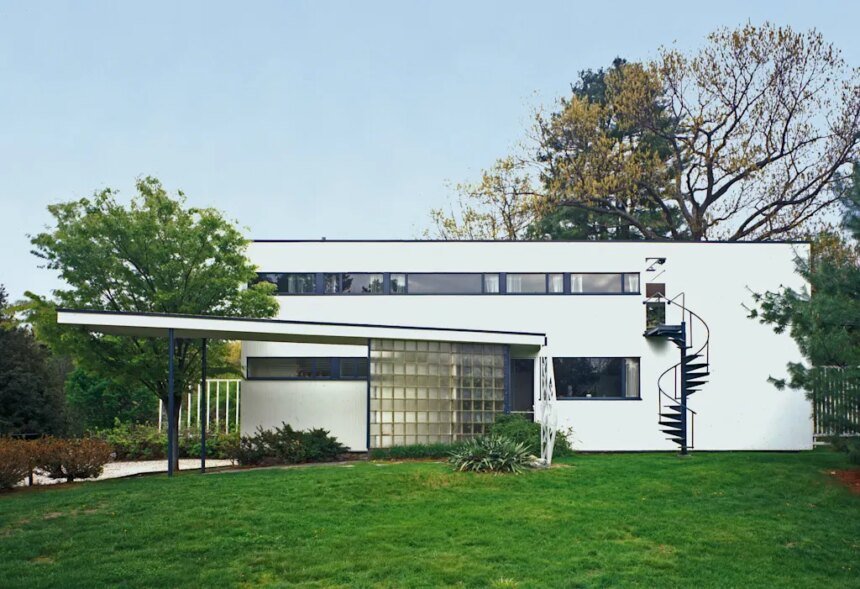
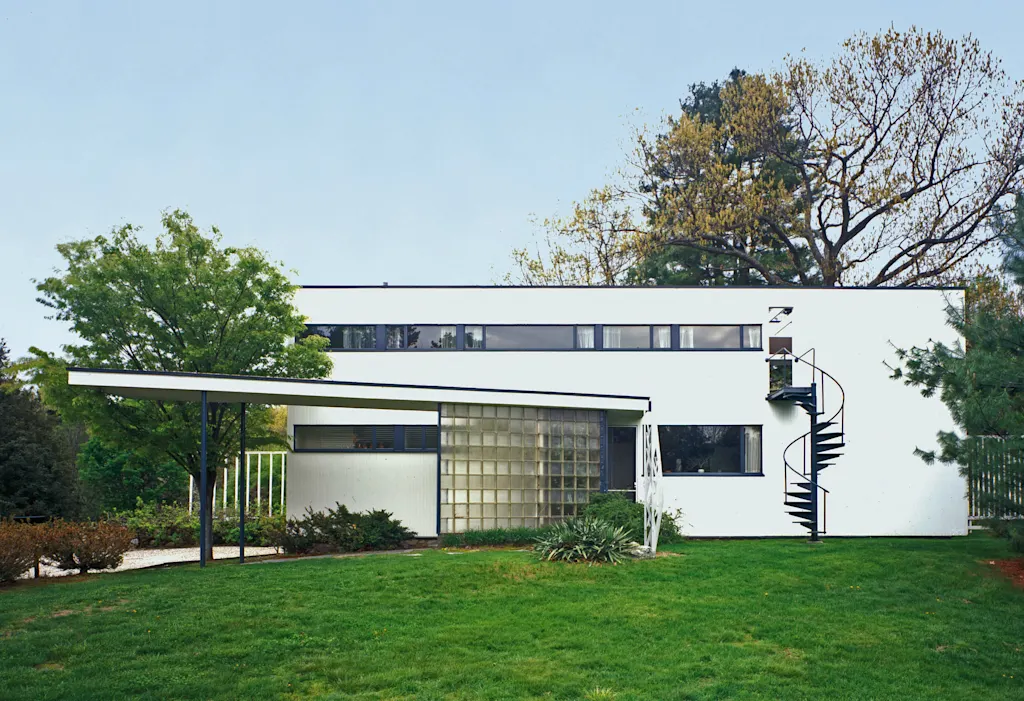
The competition called on designers to imagine a new public restroom for the Gropius House, the family home of the late German architect Walter Gropius. Gropius founded the famed art and design school the Bauhaus (1919–1933), which defined an entire era of modernist design through its innovative approach to technology and almost reverent obsession with materials.
His self-designed home is now preserved and made open to the public by Historic New England, a non-profit that oversees 127 privately owned historic properties in New England. On May 7, the organization announced Isabel Strauss as the winner of its call for submissions.
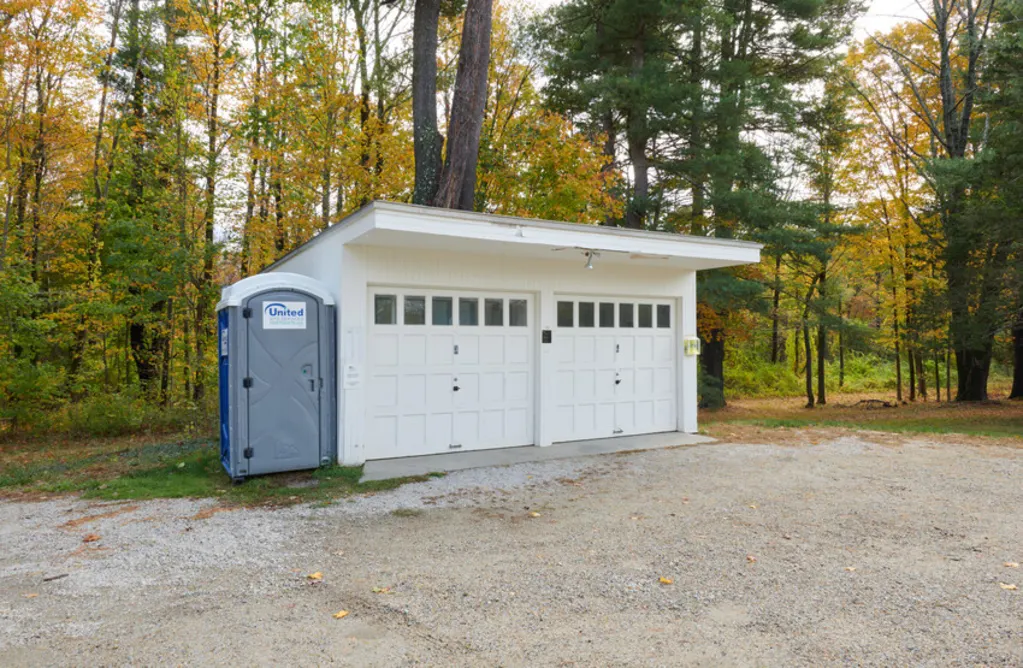
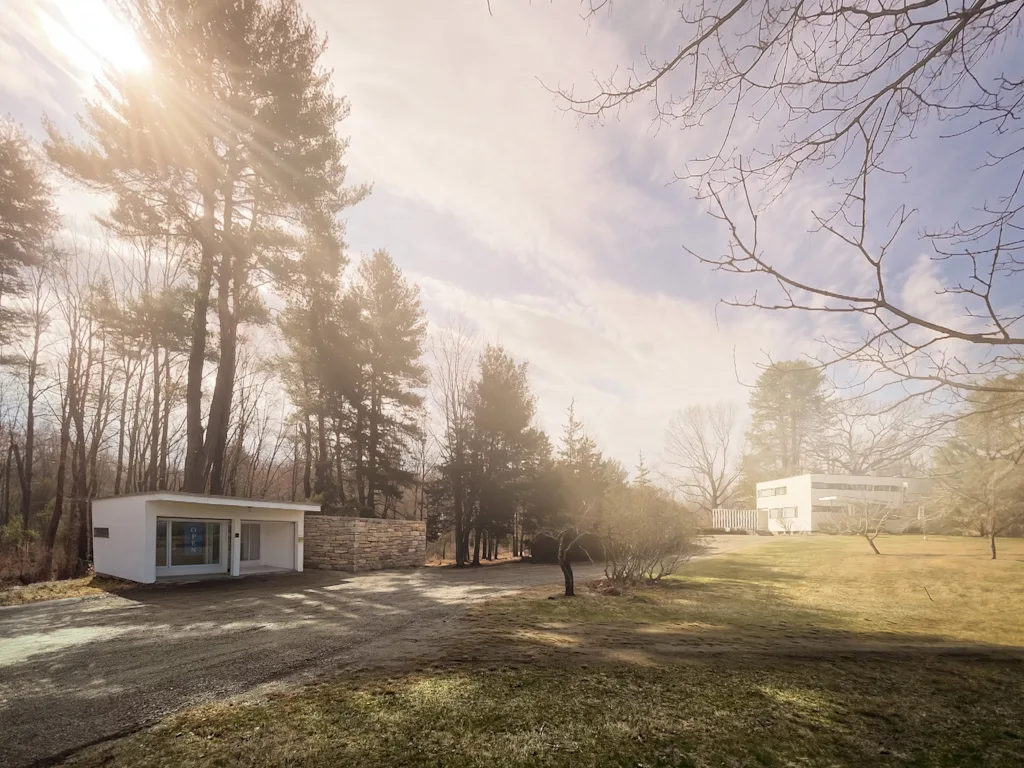
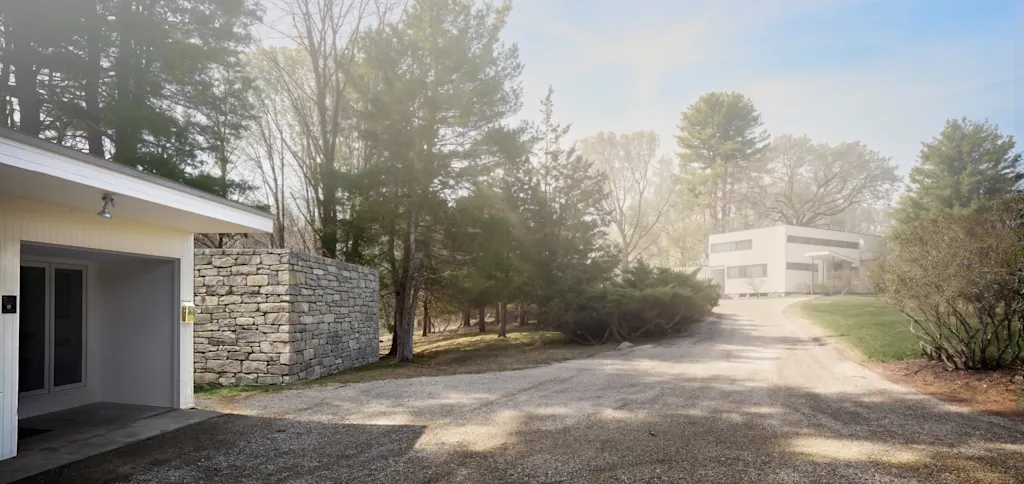
The Gropius House’s actual on-site restrooms are not available to the dozens of visitors that stop by every day, given the property’s age. Instead, according to Vin Cipolla, CEO of Historic New England, visitors had to use a single porta-potty propped up against the property’s visitor’s center. “Our visitor experience team estimates that about 4,000 people a year use the porta-potty,” Cipolla says. “We’re considering this a somewhat urgent matter.”
Last fall, Historic New England decided to share its bathroom design process with the public by turning it into a competition open to designers around the world. So how does one create a commode worthy of literally standing alongside Gropius’ work? Strauss says the answer is all about materials.
A bathroom on a famous site
The bathroom competition came with a list of guidelines and two main goals: to represent research and reflection on Bauhaus design principles, and to offer a creative design solution to a decades-long infrastructure problem.
Submissions needed to be situated as either an extension of the visitor’s center, which is located inside what was once Gropius’ garage, or a separate structure nearby. They had to be ADA accessible and include two toilets and two wash basins.
Finally, they needed to reflect the intense care and thought that Gropius put into the construction of the actual home and its grounds. From its Bauhaus furniture to its local construction materials, modern fixtures, and gleaming white exterior sandwiched snuggly in a transplanted copse of trees, every part of the Gropius House was deeply considered.
“Gropius House combined traditional elements of New England architecture—wood, brick, and fieldstone—with innovative materials including glass block, acoustical plaster, chrome banisters, and the latest technology in fixtures,” Historic New England’s official webpage on the site reads, adding, “He designed the grounds of the home he built for his family in 1938 as carefully as the structure itself.”
Strauss, who is a graduate of Harvard’s School of Design and currently works as an assistant professor of architecture at Smith College in Northampton, Massachusetts, had already visited the Gropius House several times given her proximity to the site. Last year, on a bike trip with her husband (who also works as an architect) to the nearby Waldon Pond, she first learned about the bathroom competition.
“My husband was going to do the competition, and then he didn’t have time because he had too many other projects,” Strauss says. “I was like, ‘I’ll give this a try.’”
A humble—yet design-forward—commode
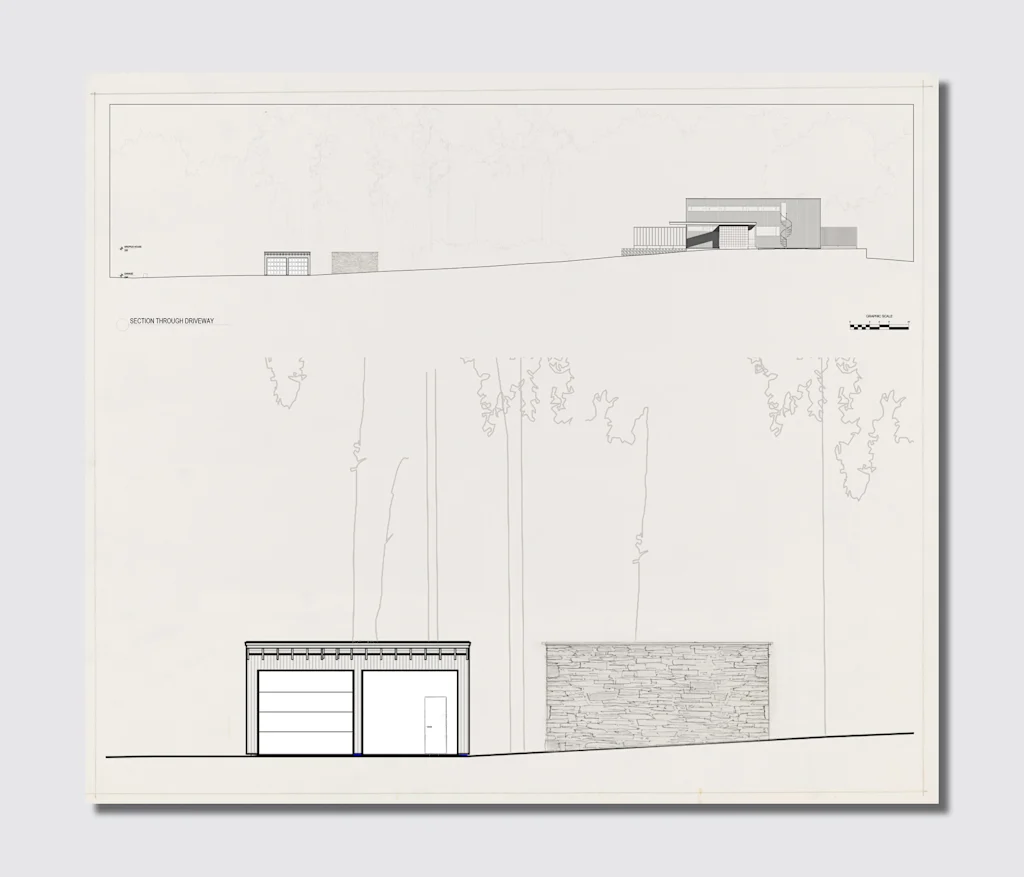
Strauss’ first step was to turn directly to Gropius’ own work. She used his original sketches of the Gropius Home’s garage to design the bones of a bathroom that would mimic the garage’s exact dimensions, standing just a few feet off to the side—like a modern reimagining of Gropius’ original structure.
The bathroom is nearly square, with two equally-sized rooms on either side of a central divider, similar to something that one might find at the start of a hiking trail. Strauss says she was inspired by the “classic outhouse typology” for the building’s lay-out, but its similarities to a toilet in the woods end there.
Nearly all of the materials making up the bathroom are pulled directly from the same sources as the Gropius house: the outside, for example, is clad in layers of fieldstone, which serves as the house’s foundations; the ripple glass in the transom windows also appears in the house; and even the simple white tiles in the stalls are recreations of the original bathroom tile.
Strauss’ Bauhaus bathroom is so simple and organic that it almost slides into the background of the natural wooded environment. Cipolla says that, amidst hundreds of other designs his team received, the competition judges were continuously drawn back to her humble-yet-grounded approach.
“It’s quiet—it doesn’t call attention to itself,” Cipolla says. “It sits within the fabric of the site in a rather unobtrusive way, drawing on vernacular materials, a naturalistic solution, and reflecting the materiality that already exists.” Now that the competition is closed, he adds, the Historic New England team hopes to get construction underway within the next couple of years and finally put the porta-potty to rest.
Strauss’ bathroom is evidence that, in the hands of a dedicated artist, even something as quotidien as a pair of stalls can become a reflection of design history.
“What I hope the spirit of my interpretation of Bauhaus design captures is taking materials that are ordinary or industrial that are not necessarily luxury, and, with careful design, elevating them so that everyone has access to beautiful and functional design,” Strauss says.

