





In New York, lawmakers are considering a pied-à-terre tax on second homes worth $5 million or more. It’s part of a growing wave of legislation focused on taxing the rich.
But some wealthy people aren’t too happy about it.
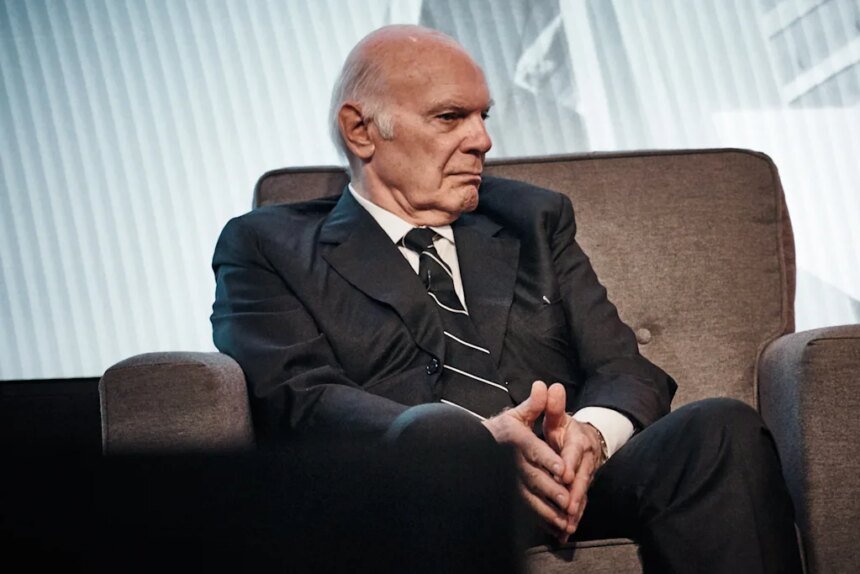
On an earnings call this week, Steven Roth, chief executive of Vornado Realty Trust, likened the rhetoric around taxing the rich to hate speech.
Roth was specifically referring to what he called a “spat” between New York City Mayor Zohran Mamdani and billionaire Citadel CEO Ken Griffin.
Mamdani recently filmed a video saying he would “tax the rich” outside Griffin’s multimillion-dollar penthouse. (The building, as noted by the New York Times, was developed by Vornado.)
“I must say that I consider the phrase ‘tax the rich’ . . . when spit out with anger and contempt by politicians both here and across the country, to be just as hateful as some disgusting racial slurs, and even the phrase ‘from the river to the sea,’” Roth said on the call.
“The rich whom the politicians are targeting started with nothing, are the epitome of the American dream,” he continued. “They are at the top of the great American economic pyramid for a reason. They should be praised and thanked.”
However, a majority of regular Americans say that billionaires “make it harder” for them to achieve their American dreams, according to a 2025 Harris poll.
Some rich people actually want fairer taxes
Meanwhile, some wealthy people disagree with Roth’s assessment, too. Erica Payne, president and founder of Patriotic Millionaires, says she embraces the phrase “tax the rich”—so much so that it’s what she titled her 2021 book.
“We believe that wealthy people like our members should be taxed for a number of reasons,” Payne tells Fast Company.
As an organization, Patriotic Millionaires is made up of high-net-worth individuals who advocate for more progressive taxes in order to close the wealth gap.
One reason, Payne says, is that since 1975, about $80 trillion has been transferred from the bottom 90% of Americans to the top 1%.
Another is that “the wealth concentration at the level it has reached is an existential threat to democracy, period,” she says.
Multiple studies have linked wealth and economic inequality to democratic erosion. It’s a greater threat to democracy, as one study put it, than military coups.
“Anyone who doesn’t understand that, including people who possess that level of wealth, should be seen as acting in opposition to our agreed upon system of self governance,” Payne says.
Why else should we tax the rich? “Because currently we’re taxing the poor,” she adds, “and that doesn’t seem to be working out particularly well for us.”
After the 2017 Republican law that changed the tax codes, billionaires paid a lower effective tax rate than the rest of Americans.
Speaking with Fast Company this week, Payne bluntly criticized Roth’s comments, calling them a sign of insecurity—and a sign that rich people “might understand they’re not remotely worth the amount of money in the economy that they currently control.”
“Over-inflated egos”
It’s not the first time the ultra-wealthy have been criticized for portraying themselves, as a Washington Post op-ed put it in 2021, as “sensitive and oppressed.”
“They are having an emotional response and a sensitivity to what is the only logical choice in a capitalist democracy,” Payne says, “and that is to acknowledge that the level of wealth that they currently enjoy is based substantially more on a deliberate misstructuring of the economy, so that it definitionally delivers outsized returns to people in their class, relative to the actual value they bring.”
Just as Roth said billionaires should be praised and thanked, many defend the ultra-wealthy by pointing out that they’ve created jobs and economic value through their companies.
But Payne contests that framing. In some instances, she says, business owners actually destroy value. (Consider one study from 2009, which found that for each new retail job created by Walmart, 1.4 existing jobs are lost at competing businesses.)
“The ‘sky-is-falling,’ ‘chicken-little,’ ‘the-economy-will-collapse-without-our-talent’ mythology they’re trying to spread is patently absurd,” Payne says of wealthy people who oppose taxes or other policies to address wealth inequality.
“The only thing that will collapse if we tax billionaires at an appropriate level is an over-inflated ego or two,” she adds, “and I think that would be a wonderful thing for all of us.”

