

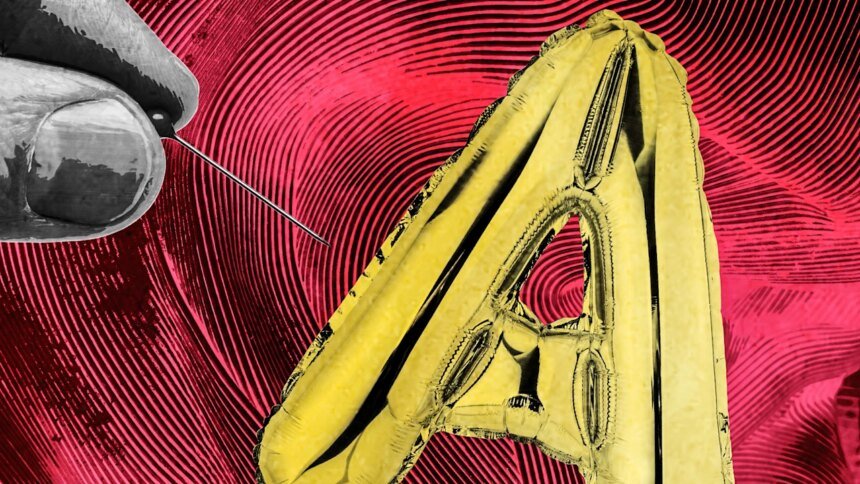

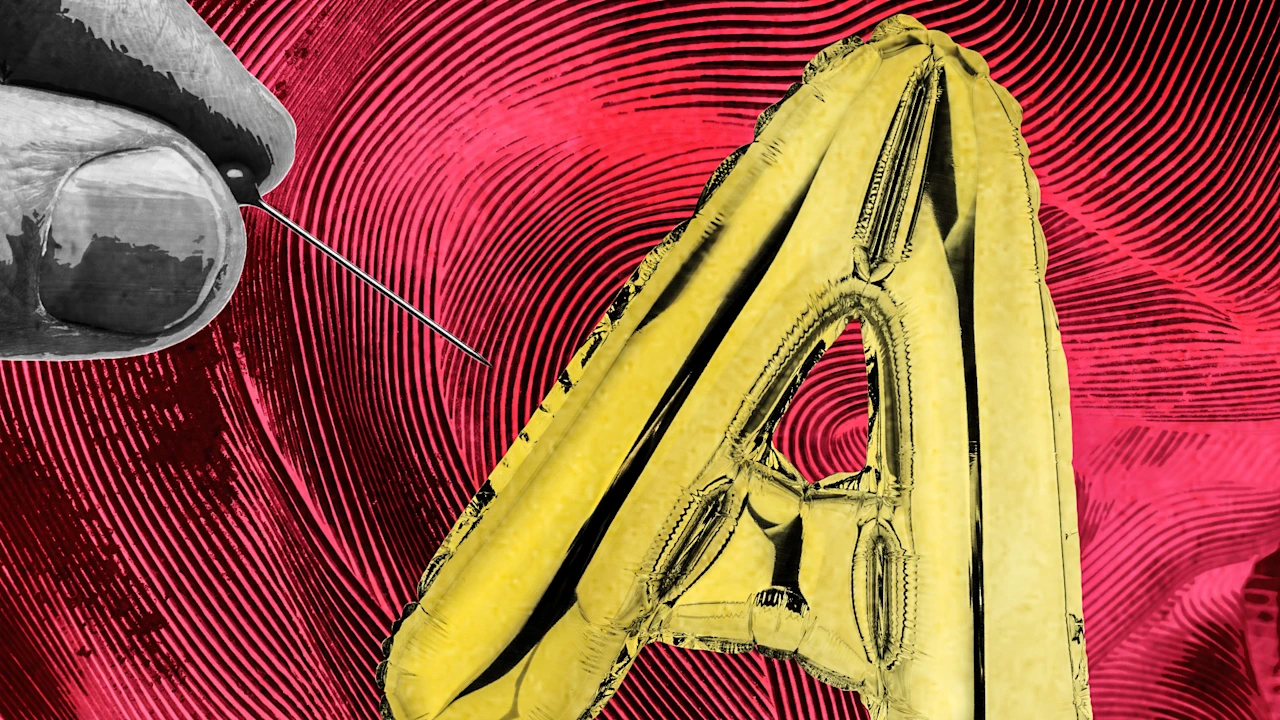
As if college students didn’t have enough to worry about, now undergrads at Harvard University may see their A grades go up in smoke.
With over 60% of Harvard students getting A’s in the mid-2025 academic year, faculty are currently weighing a proposal that would cap that to no more than 20% of the class, plus four students. (A more detailed breakdown: 66% of undergraduates earned A’s, and 84% earned an A or A-minus in the 2024–25 academic year.)
“The Student Handbook recognizes an A grade as one reserved for work of ‘extraordinary distinction.’ We recommend returning to this definition,” the February 2026 proposal reads. “While any changes to grading policies may raise concerns about fostering a competitive culture, we believe that these recommendations take critical steps toward the College’s goal to re-center academics, restoring confidence in the College’s grading system, and better aligning incentives with pedagogical goals.”
Just for context, less than half of the Ivy’s student body earned an A back in 2006. Also, as the administration clamped down on grade inflation during the fall 2025 semester, the number fell to 53%.
“It’s kind of nutty,” Steven Levitsky, a Latin American studies professor at Harvard, told Inside Higher Ed. “We’ve completely erased the distinction between an A and A-minus,” he said, adding that the proposal is the “least bad solution.”
Faculty are voting on the measure this week, with results due next Wednesday, May 20. It’s unclear whether it will pass, as students—already dealing with a weak job market and skyrocketing tuition costs (now surpassing $80,000)—are said to be furious, with some 85% opposing the cap, per the Harvard Crimson.
Grade inflation isn’t anything new
Of course, grade inflation at Harvard, and other U.S. colleges, isn’t anything new. It can be traced back to the Vietnam War, when professors used it to protect students from being drafted.
More recently, from 1990–2020, grade point averages (GPAs) at four-year colleges increased more than 16%, according to a post by the U.S. Department of Education. It cited students’ “consumer demand” for higher grades, and the rating of professors, in driving the trend.
“It’s true that grades always seem to be rising [at Harvard] . . . and has become extreme in recent years,” says a 2025 report about grading trends at Harvard from Dean of Undergraduate Education Amanda Claybaugh. “A slow rise in the early 2010s, continuous with longstanding trends, followed by a more rapid rise in the late 2010s, then an additional spike during the year of remote instruction and a flattening out after that.”
As students await a decision, one thing to note: Recent attempts at Princeton University and Wellesley College to rein in runaway grade inflation failed, Bloomberg reported.

