




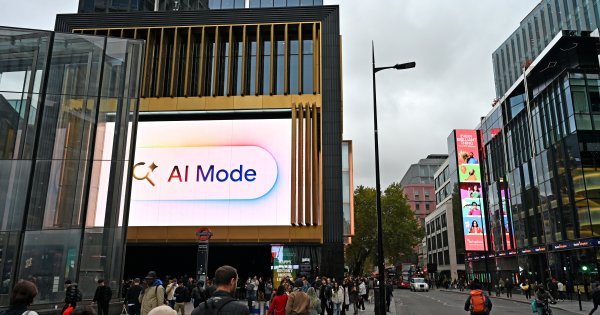

Google is standing up infrastructure that lets consumers shop from countless merchants without leaving its properties, whether they’re watching videos on YouTube, browsing on Search, or querying the Gemini app. The native checkout feature strengthens Google’s commerce position against Amazon by keeping consumers on its platforms rather than clicking out to other sites.
In conjunction with that change, Google is also introducing new ad formats within its AI Mode search interface and rolling out an AI agent designed to operate as an orchestration layer across Google’s various marketing functions and platforms.
The announcements were made Wednesday at the tech company’s annual marketing summit, Google Marketing Live, in Mountain View, California, and follow the announcement of a historic overhaul of the Google search bar.
“2026 is the year I see us fully transitioning from AI’s potential into its everyday reality,” said Dan Taylor, the company’s vice president of global ads, on a call with press. With Gemini underpinning all of the company’s flagship tools and new commerce capabilities enabled by the recent establishment of the technical standard Universal Commerce Protocol (UCP), Taylor added, “we’re moving from marketing automation to marketing intelligence.”
Native checkout fortifies Google’s walled garden
On the commerce front, Google’s new native checkout feature, Universal Cart, acts as a single shopping cart that works across merchants and Google surfaces. A consumer can add makeup from Sephora to their cart from within the Gemini app, then add home cleaning products from Target through Google Search, and a pair of shoes from Nike via a YouTube video—and check out together.

The tool is enabled by UCP, enabling Google’s systems to communicate directly with the merchants’ systems on the backend. Retailer launch partners include Sephora, Target, Nike, Ulta Beauty, Walmart, Wayfair, and Shopify, and these merchants will still legally own the transactions completed via Universal Cart.
The push heightens the walls around Google’s garden, incentivizing consumers to browse and shop entirely within Google’s ecosystem by eliminating the need to click out to a merchant’s website (though that option remains available). In this way, the development acts as a direct challenge to Amazon.
Even so, the company’s Ashish Gupta, vice president and general manager of merchant shopping, insisted Google is not becoming a marketplace unto itself. “We see ourselves as a matchmaker, connecting shoppers directly with businesses,” he said. “We are not a retailer, we are not a marketplace, and that approach continues to guide us in this agentic era as well.”

