





On Monday, Pope Leo XIV made history by becoming the first pope to personally present an encyclical, a letter of great importance in which a pope explains his views on a major moral or social challenge facing the world, to his followers.
The leader of the Catholic Church didn’t do so on his own, however. He had help in unveiling the encyclical, called “Magnifica humanitas: on safeguarding the human person in the time of artificial intelligence.”
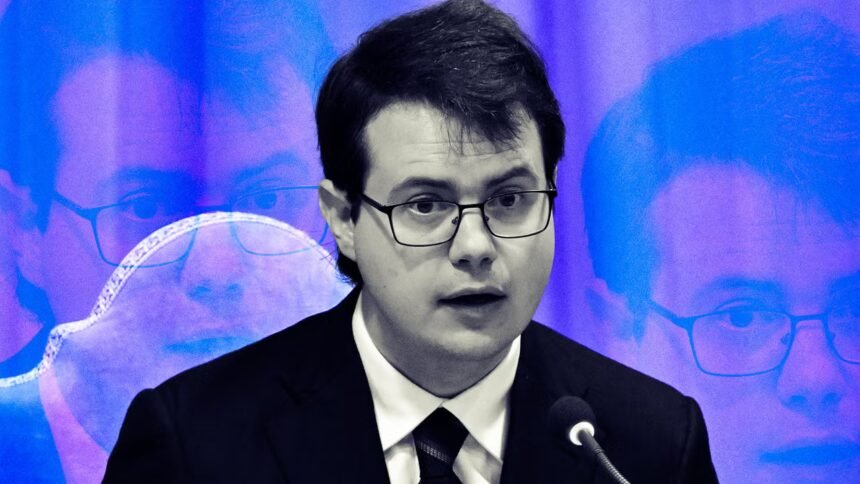
Anthropic cofounder and self-proclaimed atheist Christopher Olah was also present.
An unlikely speaker
The Vatican doesn’t normally invite outsiders to speak, let alone those in the tech industry. But Leo, who has issued numerous warnings on AI before, clearly had an urgent point to make due to “the gravity of the moment,” he said.
In the pope’s view, that moment is one where a few powerful people control the fate of the world. Leo didn’t name names, but it seemed clear he was speaking about—and to—the billionaire executives in charge of the largest tech companies.
“When such power is concentrated in the hands of a few,” he warned in the letter, “it tends to become opaque and evade public oversight, increasing the risk of distorted forms of development that give rise to new dependencies, exclusions, manipulations and inequalities.”
He continued, explaining the importance of “freeing technology from monopolistic control and opening it to discussion and debate” by “making it human-friendly and restoring it to the plurality of human cultures and ways of life.”
Interestingly, Leo and Olah weren’t at odds over the point, or any of the views presented in their speeches. In fact, the tech founder and religious leader appeared deeply aligned.
Where does Christopher Olah fit in?
Out of the gate, Olah presented himself as a different kind of tech founder: one who is cautious, even worried, about AI.
He began his speech by calling himself a person who got into AI work because he “has a desire to help things go well for humanity.”
Still, he warned that even those who feel similarly can easily get caught up in the technology’s capabilities.
“Every frontier AI lab, including Anthropic, operates inside a set of incentives and constraints that can sometimes conflict with doing the right thing,” he told the audience.
He even asserted that he shares Leo’s view that AI is dangerous when controlled by a powerful few.
“AI development is concentrated in a handful of wealthy nations. How can we ensure the gains of AI are shared globally?” he asked.
AI could “displace human labor”
Interestingly, the tech founder is known for his groundbreaking research on AI “interpretability,” or how to make machines more human-friendly. He previously led interpretability research at OpenAI.
So his stance that humans must be able to remain in control of the technology is not much different from Leo’s.
Both Olah and Leo also spoke to something that has been on the minds of many in recent years, too: AI’s impacts on workers.
While we’ve heard those in the tech sector make wildly appealing promises about AI’s ability to create jobs, Olah didn’t stick to the script whatsoever.
“There is a real possibility that AI will displace human labor at a very large scale. If that happens, supporting those who have been displaced will be a moral imperative of historic proportions,” he said.
A call for collaboration
Perhaps the greatest takeaway from both Leo and Olah, however, was in their joint call for continued collaboration.
Olah pressed that, while those who are skilled in science and math may be the ones creating powerful technology, that doesn’t mean they are the people best equipped to make choices about how it is used.
He urged that conversations between tech leaders and religious and moral leaders are crucial in keeping AI in check.
“It is through dialogue and mutual effort, through the push and pull, that humanity will achieve great things,” Olah said. “That is what I see in Magnifica Humanitas, and it is why I am grateful to his holiness and to the church for taking up this work of discernment,” he added.
Leo echoed the call, noting that, “The church wishes, with humility and frankness, to be part of conversations on artificial intelligence,” Leo said.
He continued, explaining that the church may not have “technical answers” and that it doesn’t wish to “displace those with expertise.”
Instead, he offered the idea that the church has something else to give: “a wisdom concerning the human that our present time desperately needs.”
That wisdom, according to both Leo and Olah alike, may be hard to find when talking to the powerful few that are currently at the helm of AI.

