




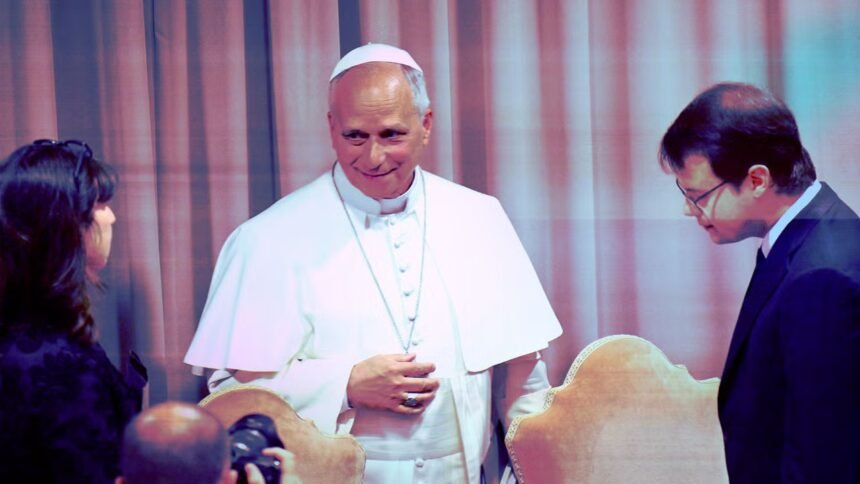

Given its profound implications on the workforce, the environment, and humankind as a whole, it’s no surprise that almost everyone has an opinion on artificial intelligence these days, including the pope.
Less than a year after his election, Pope Leo XIV just released his first encyclical, a pastoral letter aimed to offer guidance.
Titled Magnifica humanitas: On safeguarding the human person in the time of artificial intelligence, the 42,300-word letter offers a glimpse into the pope’s stance on AI, highlighting various concerns over the dangers of technology, and a need for safeguards to be put in place.
“Calling for prudence, rigorous evaluation and even, at times, a slower pace in adopting AI does not mean opposing progress,” Pope Leo wrote. “Instead, it is an exercise of responsible care for the human family.”
How have people reacted to the letter?
While the letter aims to bring attention to AI and its dangers, it is also having an additional, and unexpected, response—bringing a fresh cultural relevance to an otherwise antiquated institution: the Catholic Church.
“Pope Leo really makes me empathize with my grandma hanging a framed photo of John Paul II in her kitchen,” a user said on X in a post with over 7,000 likes.
Another responded, “I’ve been Catholic grandma-maxxing ever since the guy was elected, I put one up too lmao.”
Others are taking the chance to inject humor into the conversation.
A user said on X, “Now I’ll have to baptize myself Catholic so that every time they tell me to use Chat GPT, I can say that ‘my religion forbids it.’”
“[Pope Leo XIV] released statement that says it’s absolutely critical for the survival of mankind that i have a summer situationship,” another added.
Still, some users did not agree with the pope’s stance, including Blake Scholl, founder and CEO of Boom Supersonic.
“Bad take from the Pope,” he said in an X post. “Tech revolutions tend to eliminate some jobs while creating others. If we cling onto jobs, we’d still be plowing fields by hand out of fear of disruption.”
Reactions to the encyclical highlight not just a conversation around technology, but a quiet shift toward a embracing the Catholic Church. After suffering declines in attendance in the wake of the institution’s abuse scandal, local archdioceses are once again welcoming record high numbers of new converts.
The Holy See has also had other notable internet moments, like a recent video of the pope doing the 6-7 hand gesture while meeting a group of young kids.
Users are in fact noticing the slow shift. “Me when young: the Catholic church is an archaic and out of touch relic that will fade away in the modern world,” a user said on X.
That same user added, “Me now: the Catholic church may be our last salvation, pun intended. Welcome to the resistance.”
The widely circulated encyclical is not Pope Leo’s first time bridging a discussion between the Vatican and emerging technologies. In the past, he has expressed concern over the effects of AI on human development, and offered personal advice on using it.
“Use it in such a way that if it disappeared tomorrow, you would still know how to think,” he told a high school student in Honolulu.

