






Before Zack Eakin sold investors on his new startup, he practiced on Palmer Luckey.
When Eakin left Luckey’s defense startup, Anduril, in 2024 to start a new composites company called Layup Parts, Luckey — along with Anduril co-founders Brian Schimpf and Matt Grimm — let him workshop the pitch.
He got different feedback from each, Eakin told TechCrunch. Grimm helped him think about how to pitch VCs, Schimpf (Anduril’s CEO) pushed him on strategy, while Luckey — ever the fundraiser — guided him on the storytelling.
This miniature boot camp appears to have worked. Two years ago, Eakin raised a $9 million seed round. The startup announced Tuesday it has raised another $42 million in a Series A funding round led by dual-use venture fund Marlinspike, with participation from new investors Cerberus Ventures and Pinegrove Venture Partners, and existing backers Founders Fund and Lux Capital.
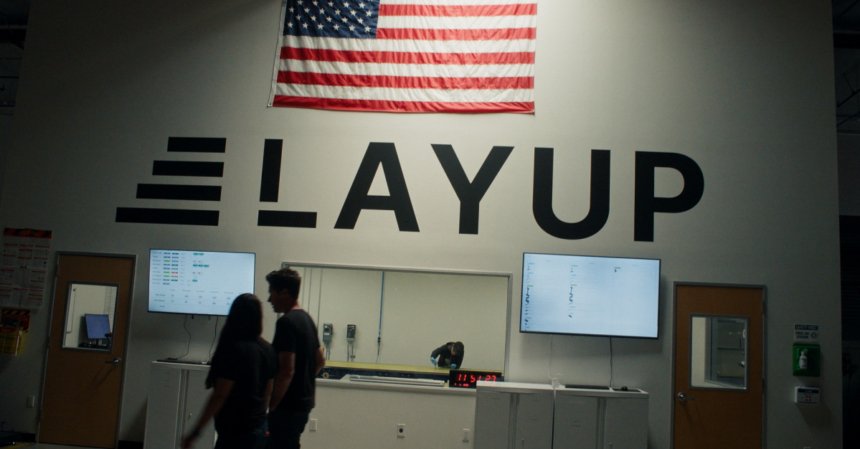
It’s a tidy sum for the Huntington Beach, California, startup, which employs just 60 people or so. And much of it will go toward people. Layup Parts used most of its seed money on capital expenditures. Eakin wants to use the new funding to grow the startup’s ranks and move into a bigger facility this year. The goal is to make ordering custom parts made of carbon fiber or fiberglass as easy as if they were sold on Amazon.
Eakin has been working with composite materials for around two decades, dating back to his time in motorsports, he told TechCrunch. The engineer started his professional career at Chip Ganassi Racing, where he worked with carbon-fiber structures and bodywork, especially for the company’s IndyCar entries and the radical (and radically controversial) DeltaWing prototype.
Eakin took a bit of a detour to become the first engineer at Elon Musk’s Boring Company in 2017. But by 2021, he was once again elbow-deep in composites when he took the role at Anduril.
It was at that point Eakin realized how, during his time digging tunnels, something of a revolution had started in the worlds of industrial fabrication and manufacturing. Startups like SendCutSend and Protolabs had dramatically reduced the time and cost required to prototype and ship parts to customers. But no one was doing this for composites, he said.
“It just kind of dawned on me that, like, all these other manufacturing verticals are getting better, [and] we are struggling to find people to make our composite parts for us,” Eakin said. “Why is there nobody trying to make this better?”
It’s not that Eakin didn’t know the answer. Composites tend to be harder to deal with in general — or, as he put it, there are “a lot more fingers and eyeballs involved.” Plus, there had been a lot of consolidation among composite companies, according to Eakin.
This meant bigger firms were less likely to try to innovate and risk their dependable revenue streams. And even if they wanted to, he said, these companies don’t have the software talent to build the tools required to reach that goal of getting to a one- or even zero-click solution.
“If we have stock materials, and you have a good understanding of those materials, we can build software that has an order of magnitude reduction in the amount of clicking it takes for an engineer to produce those — and ultimately gets to zero clicks, where it just takes customer data and poops out shapes,” he said with a smile.
Eakin said it became obvious that the best way to do this was to start a whole new composites company and that these challenges made the idea all the more valuable.
“I just decided this might be the best thing I can do for Anduril, is to go fix this part of the supply chain, because I don’t think it’s just an Anduril problem,” he said.
So far, he’s been right. In the two years since Eakin founded Layup Parts, his team has been rapidly prototyping and producing parts for a variety of customers, including motorsports, design studios making show cars, and even pickleball paddle companies. The company has already cut the time between receiving customer data and manufacturing a part down from weeks to hours in some cases.
The biggest business lines, unsurprisingly, are aerospace and defense. That includes both startups and the more traditional defense primes, according to Eakin.
The opportunity is evident in the cap table. There’s the lead backer Marlinspike, which is already invested in Anduril and a number of other defense-focused manufacturing companies. Cerberus Ventures was started in 2023 by Chris Darby, who spent nearly 20 years running the CIA-backed venture firm In-Q-Tel.
While Eakin looks back fondly on what he learned from Anduril and its leaders, he’s also carrying over skills he learned at The Boring Company. Despite not working with composites there, he said a lot still applies to a startup. Working at The Boring Company involved a lot of “first-principles engineering stuff, very similar to what we would do in racing,” he said.
“Elon has a very high sense of urgency, so as much as it was a new type of thing to make, it felt familiar with the crazy deadlines and just developing stuff as fast as you can,” he said.
When you purchase through links in our articles, we may earn a small commission. This doesn’t affect our editorial independence.

