




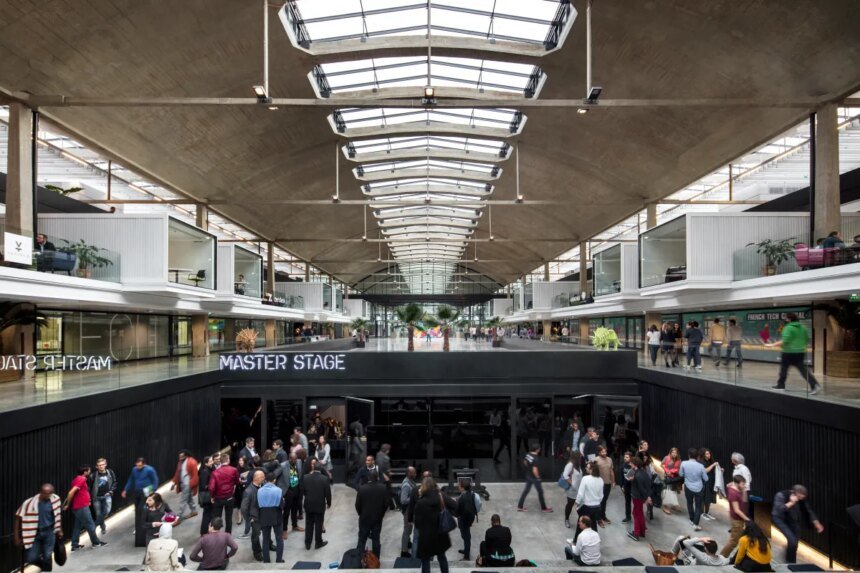

Station F, a Paris-based startup hub founded by French billionaire Xavier Niel, is gearing up for a new edition of its F/ai accelerator program in a bid to strengthen its positioning as a stepping stone for promising AI startups.
Launched in January of this year, F/ai’s planning to kick-start its second batch this September, aiming to help a handful of AI-focused startups move from early product to real revenue in a matter of weeks.
Spanning 538,000 square feet, Station F is often described as a co-working space, but its footprint extends beyond the physical space, its director Roxanne Varza told TechCrunch.
One example is Station F’s Future 40 annual selection, in which the team names the most promising teams among some 1,000 companies it welcomes each year. In 2024, TechCrunch observed that nearly all of that annual cohort incorporated AI into its core business.
Station F today has a front row seat to the rise of AI startups, leveraging its position as a cornerstone of “la French Tech.” The startup hub has also successfully leveraged its position to capture equity stakes in its Future 40 companies. “We have been investing [in these companies] since 2022,” Varza said.
Helped both by its size and Niel’s connections, Station F has become a frequent stop for officials seeking to connect with Europe’s tech scene, with no less than 11 presidential visits since President Macron’s inaugural tour in 2017. It has also welcomed AI big names like Sam Altman, and is now leveraging these ties for F/ai.
The first cohort of F/ai’s program was backed by a long list of significant tech companies — AMD, Anthropic, AWS, Clay, Google, G42, Hugging Face, Lovable, Meta, Microsoft, Mistral AI, OpenAI, OVHcloud, Snowflake, and Qualcomm — not to mention several VC funds.
The second cohort will add a few more big names, TechCrunch has learned: Eleven Labs, Nebius, Rippling, OpenRouter, Hubspot, and Github.
“The goal was to bring together all the major players and make it much easier for [AI] startups looking to launch in Europe to connect with them,” Varza said.
Two teams from the accelerator’s first batch have already gained international recognition: Alpic, which won the global grand finale of The Pitch, a competition organized by Deel; and Rippletide, which won the OpenAI Codex Hackathon.
While awards rarely hurt, especially when they bring funding, F/ai is focused on helping its cohort generate revenue, targeting €1 million (about $1.14 million) within six months. “We’d heard quite a bit of criticism about the slow pace of commercialization of European startups,” Varza said. “This brings them on par with what investors are seeing in the U.S.”
Investors seem to like what they’ve seen so far. The first cohort collectively raised $34 million in pre-seed funding, according to Station F. The teams’ track record may have also helped: 80% of these 20 AI startups were founded by repeat entrepreneurs, a third of whom hold PhDs.
The founder profile skews that way mostly because F/ai selects its cohort exclusively via recommendations from founders, partners and investors — a process that could add to the cliquishness and elitism France’s tech scene is at times accused of.
But while teams can’t apply directly, they can get in touch with one of F/ai’s many partners, and perhaps soon with alumni, Varza said. She added that Station F has some 30 other programs startups can apply to.
Access appears to be a key focus for F/ai, which has in the past hosted the likes of Turing Award winner Yann LeCun for private chats. “Today, if the founders here want to speak to people at this level, they all seem to think they need to go to the U.S. and join a program there. We actually want to show that you can stay here and do it from here,” Varza said.
When you purchase through links in our articles, we may earn a small commission. This doesn’t affect our editorial independence.

