




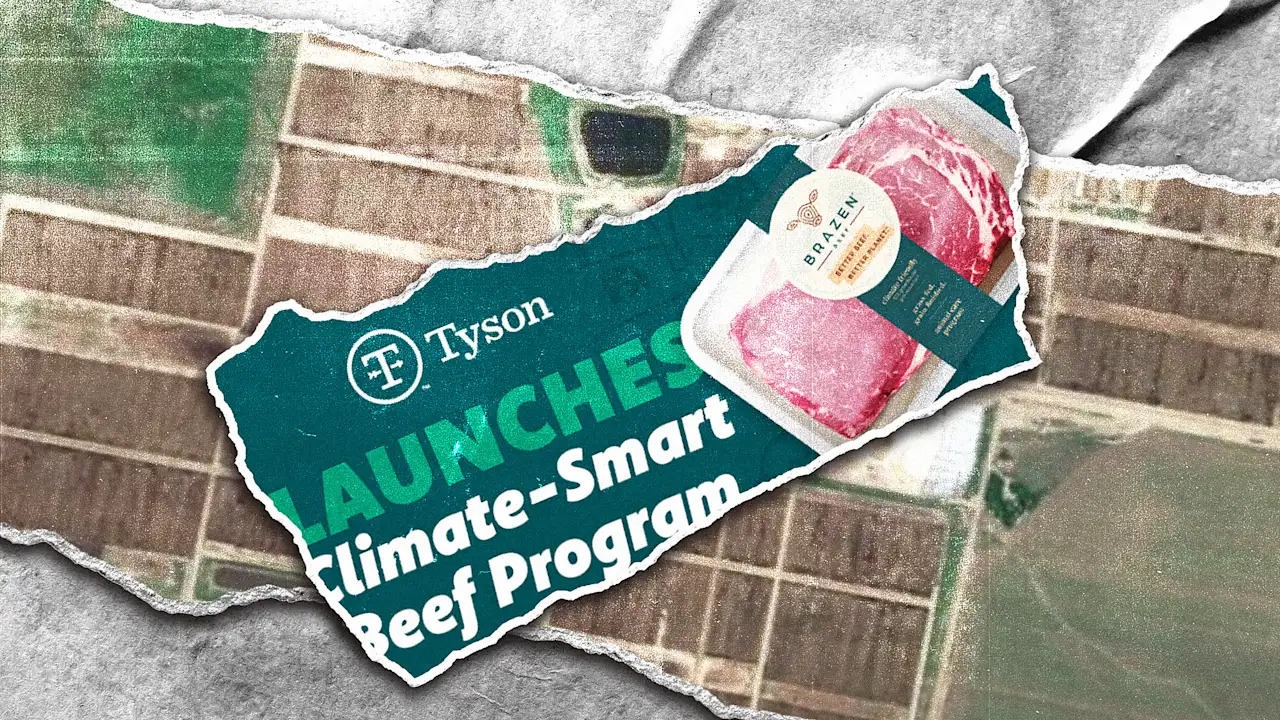
Tyson Foods has agreed to stop making claims about reaching “net zero” or selling “climate-smart” beef for at least five years, part of a settlement from a lawsuit brought against it by the nonprofit Environmental Working Group (EWG).
EWG sued Tyson in 2024 over “false or misleading” marketing claims. The lawsuit, filed in D.C. Superior Court, alleged that Tyson misled customers through materials that said the company’s industrial meat production operations will reach net-zero greenhouse gas emissions by 2050, and also claims that it produces “climate-smart” beef.
Beef is one of the worst climate offenders when it comes to proteins. It is responsible for eight to 10 times the carbon emissions as chicken and up to 50 times those of beans. Climate experts highlight beef’s immense land and water use, deforestation, and the methane emissions from cattle as top environmental impacts.
In the United States, agriculture at large accounts for about 10% of greenhouse gas emissions. About half of that comes from livestock, with cattle specifically making up 35% of agriculture emissions.
“No plan” to achieve net zero goals
In 2023, Tyson launched a “Climate-Smart Beef Program.” It advertised that its “Brazen Beef” products were part of that program, and that they came from animals raised “with emissions reduction practices in mind,” per the lawsuit.
On its Brazen Beef website, Tyson had said that its emissions were already down 10% (the website is no longer available).
But EWG says that Tyson never defined “what exactly ‘climate-smart beef’ is, what baseline it is using for comparison, or how it is measuring any alleged [greenhouse gass] reductions,” the lawsuit reads.
The lawsuit also alleged that Tyson “has no plan” to achieve its net zero goals.
In the settlement, announced this week, Tyson agreed to no longer make those environmental claims for five years. Tyson also cannot introduce new environmental claims “unless they are supported by expert analysis and verified facts,” per the nonprofit.
“The five-year restriction is meaningful because it prevents Tyson from turning around and re-introducing these claims without doing the hard work to substantiate them,” Caroline Leary, general counsel and chief operating officer at EWG, says via email.
“Five years is a substantial window for a company of Tyson’s size to either make real, measurable progress on reducing its emissions, or for it to reconsider the accuracy of the claims it makes to consumers,” she adds.
In a statement, a Tyson spokesperson says the settlement does not represent any admission of wrongdoing by the company.
“Tyson Foods has a long-held core value to serve as stewards of the land, animals and resources entrusted to our care,” the spokesperson added.
Spin and bones
The Tyson settlement comes in the same month as a separate settlement between the New York attorney general’s office and JBS USA, part of the world’s largest meat company.
In that settlement, JBS also agreed to stop making unsubstantiated claims about reaching net-zero emissions.
JBS USA will also pay $1.1 million for agriculture programs to help New York farmers reduce emissions and become more climate resilient.
The settlements highlight both the environmental impact of meat companies and also their intense marketing practices.
A 2024 report found that meat and dairy companies are failing to address these impacts, and none have net-zero targets that meet UN standards. The industries spend more on advertising than on climate solutions, the report found.
EWG, which was represented by the Animal Legal Defense Fund, Earthjustice, Edelson PC, and FarmSTAND in the suit, called the settlement a “significant victory” and says it will continue to review climate claims across the meat industry.
“Our hope is that this settlement raises the bar for the entire industry, and that companies like Tyson will take a fresh look at what substantiation actually requires,” Leary says. “If Tyson or any other company chooses to resume climate claims without the evidence to back them up, we will be prepared to take appropriate action. Consumers deserve truth in advertising, now and in the future.”
The final deadline for Fast Company’s World Changing Ideas Awards is Friday, December 12, at 11:59 p.m. PT. Apply today.

