




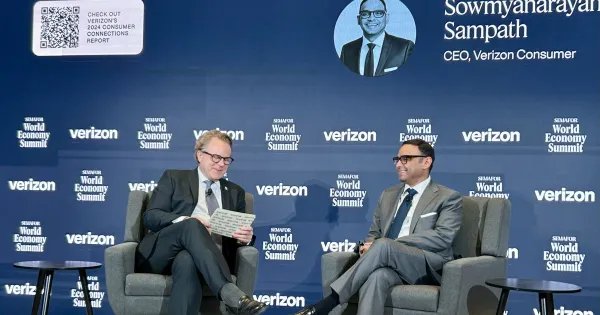

The news organization Semafor, known in part for the distinct format of its written reporting, is now working to move more deeply into video.
The publisher has hired Adam Banicki, the former general manager of video at Fortune Media, as its first head of video, according to cofounder and chief executive Justin Smith.
In doing so, the four-year-old news brand aims to build out a video business aimed squarely at the C-suite audiences that power the rest of its operation.
Banicki, who previously spent more than five years at The Wall Street Journal, where he last served as senior executive producer of YouTube, will oversee both the editorial and commercial sides of Semafor’s video business. He reports to chief commercial officer Rachel Oppenheim, who was promoted from chief revenue officer six months ago.
The appointment comes as publishers across the industry race to bulk up their video operations in response to declining referral traffic and shifting consumption habits. The New York Times, for one, has described its video transformation as being on par with its print-to-digital transition, its executive editor told Business Insider earlier this month.
But Semafor is pursuing a deliberately different model, one that rejects the scale-based logic that has historically driven video strategies.
“We have a lot of conversations where we are literally discussing how we can dispose of scale-based thinking,” Smith said. “You have to abandon those old tendencies and invent a new playbook, which says that not all clicks are equal.”
Growth without scale
The news comes several months after Semafor, which generated $40 million in revenue in 2025, raised $30 million at a $330 million valuation in January, according to Reuters.
Semafor declined to share updated financials, but its video revenue has grown 150% year over year and is on pace to generate high-seven- to low-eight-figure revenue by the end of 2026, according to a spokesperson.
Semafor currently produces three shows: CEO Signal, hosted by Andrew Edgecliffe-Johnson and Penny Pritzker; the media and marketing program Mixed Signals, hosted by Ben Smith and Max Tani; and the finance-focused Compound Interest with Liz Hoffman.
As part of its push into video, the company has at least five new shows currently in development, which will vary across industry and region, according to Smith.

