






AI agents are starting to execute more sophisticated tasks, such as identifying vendors that can deliver freight, comparing prices, and messaging the vendor to organizing a delivery. But when it comes to making a payment for the shipment, they still need to involve a human.
Today’s financial sector relies on financial rails, the underlying infrastructure that moves money and information between a money and financial information between banks, businesses, and consumers. But these financial rails were built for human-initiated transactions, not autonomous AI agents. For example, traditional payment systems like credit cards and ACH rely on human authorization for transactions, which slows down agents engineered to work autonomously.
One new startup, Natural, is tackling the problem by redesigning the whole system from the ground up. And it now has $30 million in fresh capital to pursue an ambitious plan that will put it in direct competition with giants like Stripe.
About a year ago, Natural co-founder and CEO Kahlil Lalji realized that AI agents were evolving faster than existing financial architecture, which can’t support tasks like autonomously paying a vendor, collecting payments, or transacting with each other.
Lalji has a background in banking and finance, but as he prepared to launch another startup he had hoped to avoid the sector. His previous startup Ivella, a YC-backed banking and financial product for couples was sold in 2023 to Earnin, where he worked as an engineer for two years. He told TechCrunch he had been burned by the finance sector after the Zero Interest Rate Policy era ended.
And yet, Lalji couldn’t ignore the opportunity.
“I kept on coming back to it,” he said. “It just feels obvious that agentic payments are going to be structurally the most important problem [in the] space.”
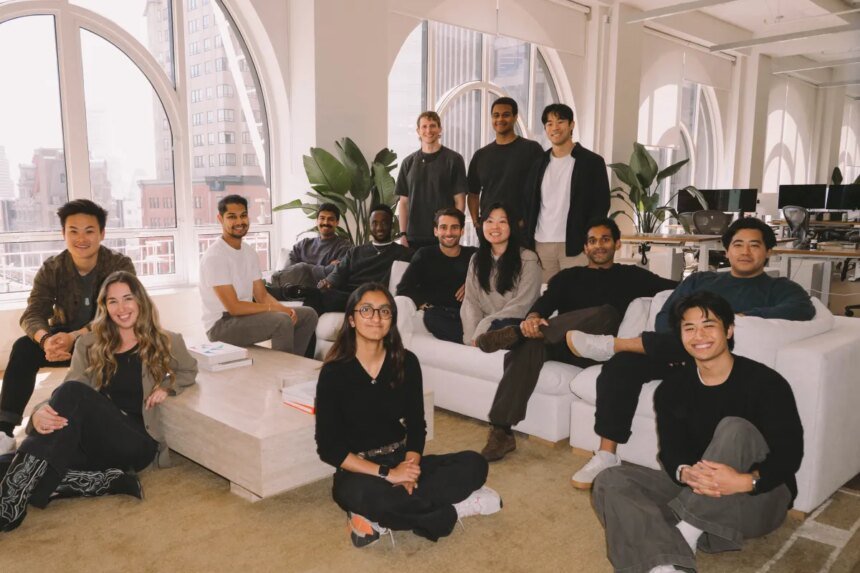
Lalji teamed up with Eric Wang, his co-founder at Ivella, and Walt Leung, a former engineering manager at Nextdoor, and founded Natural in 2025. The startup positions itself as an agent orchestration layer that enables AI agents to move and store funds. By integrating Natural’s infrastructure, companies can allow their agents to make autonomous payments, collect funds, and transact with both humans and other agents.
Natural got the attention of Kirsten Green, founder and managing partner at VC firm Forerunner. Green, whose firm focuses on consumer experiences and the future of commerce, led its $30 million Series A round in the company, bringing the company’s total funding to $40 million.
Green was attracted by Natural’s broader ambitions. The startup isn’t just focused on helping agents pay for and check out goods on behalf of consumers, it’s also trying to reinvent payment infrastructure, including how disputed transactions are handled.
Although Natural has operated in a beta trial until now, Lalji told TechCrunch that the startup has made enough critical architectural decisions to give it a “good shot” at competing with incumbents like Stripe, which is also racing to redesign payment rails for AI agents.
Lalji hopes that Natural’s fast development speed will allow it to outpace established giants and build the payment infrastructure that will serve as the financial backbone of AI agents. The startup’s mission has attracted senior staff who previously worked at fintech giants Stripe, Ramp, and Square.
Although Natural views Stripe as its main competitor, several other startups, including DCVC-backed Skyfire Systems, are trying to reinvent the payments backbone for AI agents using USD-backed stablecoins. While Natural plans to incorporate stablecoins into its architecture, it is also building support for traditional bank payments.
While there is a fierce race to dominate the field, Lalji is betting the entire market could grow significantly if transactions happen at computer speed rather than human speed. “The number of payments that may occur in the world may be two or three or four orders of magnitude greater than the number of payments that exist today,” he said.
When you purchase through links in our articles, we may earn a small commission. This doesn’t affect our editorial independence.

