




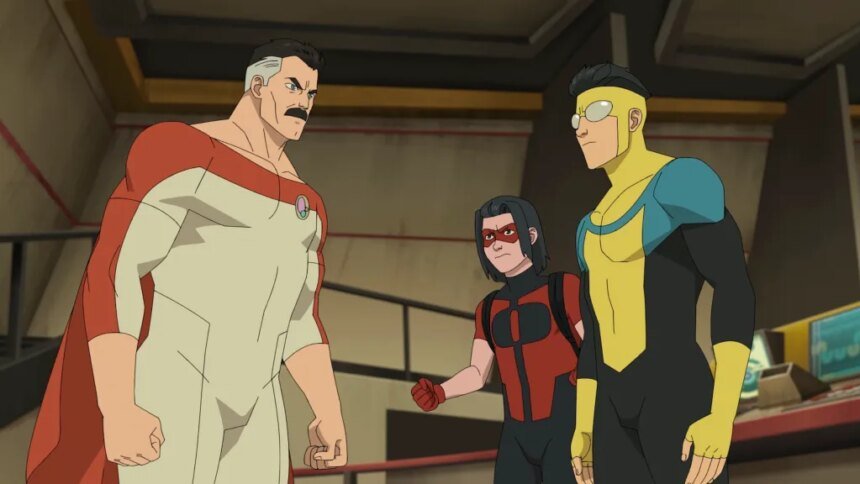

David Alpert has helped turn some very dark, very bloody ideas into some of the biggest franchises on the planet, despite being a very pleasant and nice guy. As CEO and co-founder of Skybound Entertainment, he and Skybound Chairman and legendary creator Robert Kirkman have shepherded juggernauts like The Walking Dead and Invincible from comic-book pages into multi-platform universes spanning TV, games, audio, and more.
Invincible is now poised to become the longest-running animated original on Prime Video, with six seasons confirmed and season four doubling the viewership of season one. I caught up with David, who previously joined me on my podcast, How Success Happens, to get Skybound’s recipe for keeping fans obsessively hooked.
Dan Bova: When you made season one of Invincible, were you like, “We’re definitely going to do this for a lot of seasons” or was it a big question mark?
David Alpert: We had always hoped that we’d get to do this for a long period of time. But it wasn’t the easiest sell. We’re saying, “Hey, we want to do an hour-long, super R-rated, very, very violent, serialized television show about superheroes. And our goal is to really capture the look and feel of ’80s after-school and Saturday morning cartoons.” People were like, “What are you talking about?” But when we finally found the right partner, our goal was really, yes, we want to tell the story from beginning to end, and we’re committed to doing that.
When you look at the success you had with The Walking Dead, was there anything that made you say, “This is a winning formula” or “Don’t do this”?
We always look for white space. One of the things that was really exciting about Walking Dead was there were no serialized horror television shows—ever. We knew horror worked, we knew people loved horror and serialized drama, but there hadn’t yet been that horror serialized television show, so we thought that was a huge opportunity. Similarly, with Invincible, the idea that it was an hour-long, 2D, serialized superhero show with a lot of violence meant there was no comp, which on one hand is a risk, but on the other hand we’re like, we know people love animation, superhero stories, and serialized drama; we thought it was the combination that made it really unique.
You’ve got such an incredible cast of actors voicing these characters. Are people banging down the door: “Can I be an alien? Can I be a demon?”
We’re getting crazy people—the names are crazy, the level of people coming out from major pop stars, hip hop stars, and actors wanting to be in it. Movie stars are like, “This is the thing my kid won’t shut up about, so we need to find a way to be associated with it,” which has been a huge opportunity for us to get amazing voice cast. The team we’ve assembled has done an amazing job, and there are a couple of surprises coming that I think will be pretty unique.
Have you had to turn down a superstar because it just didn’t work?
Yeah. There are some people who are massive names, and from a pure marketing perspective you’re like, “I want that size audience.” At the same time it has to feel authentic and organic; you don’t want the stunt to take you out of the show. What I love now is when people hear J.K. Simmons do Omni-Man, they don’t think, “That’s J.K. Simmons doing Omni-Man,” they think, “That’s Omni-Man.” We want people who can do both: distinctive voices and acting that makes the character feel real.
Invincible started as a comic book, it’s a TV show, it’s a video game—how do you keep it all in sync story-wise?
One of the things for us is we try not to recreate the exact same beat every time. There’s a timeline between when those things are created, so things change and surprises get spoiled. If you saw the comic, you have to get the same emotional payoff but in a different way: if you read the comic, you knew what was coming at the end of episode one of the TV show, but the way we gave it to you was different, so fans were like, “I knew something big was coming, I didn’t know it was going to be like that.” With things like The Walking Dead comic, TV show, and the Telltale game, we’d use a character like Glenn showing up to anchor new characters into the world and timeline, and then expand out to give you something new.
There’s been a lot written about epic second-season drop-offs. Why didn’t that happen to you?
One of the debates we had with Amazon for season one was that we really did not want to be a binge-released show. They ultimately came up with a compelling solution: three episodes and then weekly thereafter, and I think that’s been a huge boon for us. I think binge-viewing is the best thing that’s happened for television consumption in the last decade, but binge-releasing has been the worst, because if you watch a show in a weekend, it’s gone by Tuesday and there’s no opportunity to be part of the social conversation. For us, when we have moments at the end of an episode where characters get really messed up or somebody dies, people are talking about it and embracing it in the culture for that week, and engagement begets engagement.
Is there anything you can tease about upcoming seasons without giving away too much?
One of the great things about Skybound’s storytelling and Robert’s storytelling is we understand escalation. Season four leaves you in a place that was a powerful finish—I’m still recovering from delivering those episodes—and I had so many people sending texts and messages like, “Damn,” “Seriously?” “WTF,” “Can’t believe it.” The goal is to continue to escalate and find new ways to come at you differently and surprise you each season so you feel engaged and connected, going on the same journey with the characters. I’m proud that we not only have high retention but also season-over-season growth; we have twice as many viewers in season four as in season one, which is a testament to fans proselytizing, kids telling parents, friends telling friends, and we need to honor and deliver on that.
Final question. Jeff Bezos calls and says, “I love Invincible, I want to buy it outright from you guys. Give me a number.” What do you say?
I’d say, “Jeff, you don’t write, you don’t call, and now you call to buy my baby?” I’d say, “Let’s go on your yacht, let’s talk about it, let’s sail around the Mediterranean, and then we can begin to have a conversation.”
David Alpert has helped turn some very dark, very bloody ideas into some of the biggest franchises on the planet, despite being a very pleasant and nice guy. As CEO and co-founder of Skybound Entertainment, he and Skybound Chairman and legendary creator Robert Kirkman have shepherded juggernauts like The Walking Dead and Invincible from comic-book pages into multi-platform universes spanning TV, games, audio, and more.
Invincible is now poised to become the longest-running animated original on Prime Video, with six seasons confirmed and season four doubling the viewership of season one. I caught up with David, who previously joined me on my podcast, How Success Happens, to get Skybound’s recipe for keeping fans obsessively hooked.
Dan Bova: When you made season one of Invincible, were you like, “We’re definitely going to do this for a lot of seasons” or was it a big question mark?
David Alpert: We had always hoped that we’d get to do this for a long period of time. But it wasn’t the easiest sell. We’re saying, “Hey, we want to do an hour-long, super R-rated, very, very violent, serialized television show about superheroes. And our goal is to really capture the look and feel of ’80s after-school and Saturday morning cartoons.” People were like, “What are you talking about?” But when we finally found the right partner, our goal was really, yes, we want to tell the story from beginning to end, and we’re committed to doing that.

