





You might think of Walmart as America’s quintessential big box store—the place you can get everything from Hanes T-shirts to large screen TVs to cleats for your kid’s soccer uniform.
But Walmart isn’t defying shaky consumer confidence because of the breadth of its offerings, which impressively stretches to 120,000 products at most stores. Customers aren’t flocking into stores to buy made-in-America T-shirts, as I wrote about in May, thanks to a novel partnership with American Giant. Or because it is adding more high-end products (at lower prices than you’d find anywhere else), as I covered in October in this profile of its chief merchant Latriece Watkins.
Nor is this about breakthrough new products exclusive to Walmart such as Glen Powell’s Smash Kitchen line of condiments, which hit $10 million in revenue in just six months. (I wrote about how Powell and his cofounders pulled off that feat, revealing their growth numbers for the first time, and how products like theirs fit within Walmart’s overall strategy.)
You’re getting warmer, though.
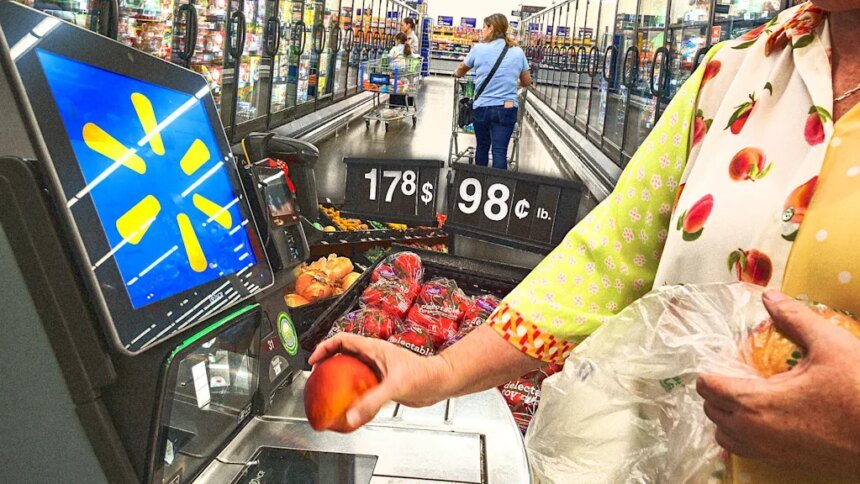
If you want to understand why Walmart is beating the odds, this where you should look: the grocery aisles. Walmart has gone from a general merchandise store that also sells groceries to America’s grocery store that also happens to sell everything else you could imagine.
The Arkansas-based retailer, which generated $648.1 billion in revenue last year (60% of which came from food), accounts for more than a fifth of all grocery dollars in the country.

