






Opinions expressed by Entrepreneur contributors are their own.
Key Takeaways
- After achieving a big goal, the advice is often to set a new goal and get back to work. But there’s a problem with this advice.
- Dopamine, adrenaline and cortisol drop after a big win, and what you’re left with is the arrival fallacy: the gap between what you expected to feel when you crossed the finish line and what you actually feel.
- When you set a new goal as fast as possible, you train your brain to treat the natural rest state after high output as a signal that something is wrong. And you teach it that the solution to “wrong” is more pursuit.
- After a major goal ends, your brain needs time to store the experience as meaningful rather than just completed. Without that step, the brain treats the win as unresolved.
We keep giving people the same advice after a big win. Set a new goal. Get back to work. Do not sit in it too long.
It sounds like momentum. It sounds like resilience. It is neither. It is the reason so many driven, capable people keep arriving at the top of their game and quietly falling apart, and nobody is connecting the dots.
I have spent years watching this pattern. The higher the achiever, the harder the landing. And the advice they receive in that window, the very advice that is supposed to help, is making it worse.
That stops being a personal problem the moment it starts walking out the door of your organization, burning out your best people and repeating itself in every person who follows the same roadmap to success nobody thought to question.
I am done staying quiet about it.
What is actually happening in your brain after a big finish
For weeks or months leading up to a finish line, your brain runs on dopamine. Not the version people talk about casually. The actual neurochemical function: It fuels anticipation, drives pursuit, and makes the chase feel meaningful. Adrenaline keeps you sharp. Cortisol keeps you alert. Your entire system orients around a target.
Then you finish. And all three drop. Fast.
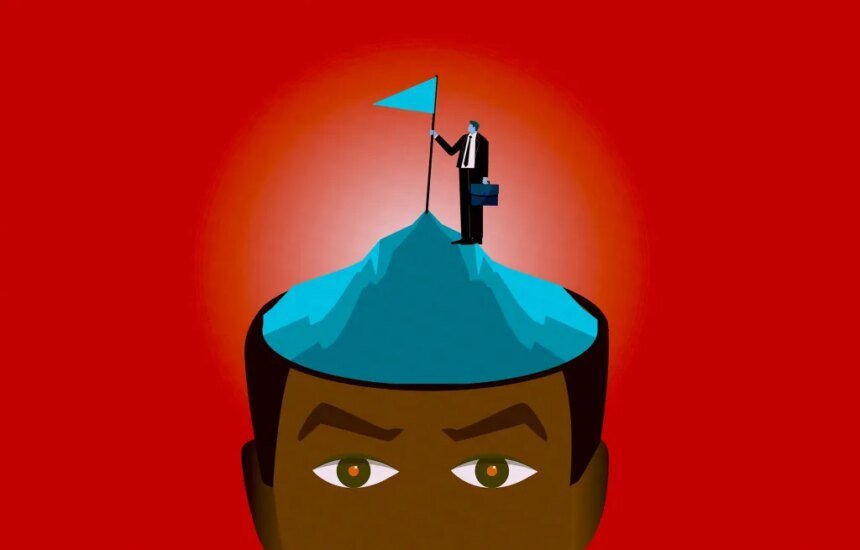
The target disappears. Dopamine has nothing left to anticipate. Serotonin, the chemical responsible for genuine satisfaction and stability, has not had time to activate yet. What you are left with in that gap is what Harvard psychologist Tal Ben-Shahar named the arrival fallacy: the gap between what you expected to feel when you crossed the finish line and what you actually feel.
Researchers and clinicians have named it various things: post-achievement depression, post-success depression, post-project depression, the success crash. What they all describe is the same thing — your brain chemistry doing exactly what it was designed to do, arriving at a place no one ever prepared it for. It is why success feels empty even when everything went right.
That is where the advice gets dangerous.
The advice that keeps the loop running
The most common suggestion after a post-finish crash is to set a new goal as fast as possible. It feels helpful. It gives you direction. It reactivates the dopamine system, and you feel better almost immediately.
That is the problem.
What you have just done is trained your brain to treat the natural rest state after high output as a signal that something is wrong. And you have taught it that the solution to “wrong” is more pursuit.
Every time you do this, the cycle gets tighter. The crash comes faster after the next finish. The flatness gets harder to sit with. Some people describe feeling lost after finishing a goal, not knowing who they are outside of the chase. The space between finishing something and chasing the next thing narrows until you cannot stay still even when everything around you is going well.
This is not a motivation problem. It is a pattern that compounds every time you follow that advice. The dangers of entrepreneurship that nobody warns you about are rarely about the climb. They are almost always about what happens when you stop climbing and have no plan for the landing.
Finishing is not the same as arriving
Most people treat a finished goal and a landed goal as the same thing. They are not.
Celebrating and moving on quickly is the standard advice, and it is exactly what keeps the win from registering as real. After a major goal ends, your brain needs time to store the experience as meaningful rather than just completed. Without that step, the brain treats the win as unresolved. Not because you did not achieve it, but because your system never got a clear signal that it was safe to stop running.
Research on how dopamine consolidates shows that a win actually registering as a win requires acknowledgment of the effort, not just the outcome. Skip that, and your brain discards the experience and returns to baseline, already scanning for the next target. It is the “now what” feeling that nobody warned you was coming, and the reason why reaching a goal does not feel the way you expected it to.
In a recent interview, Alex Hormozi sat down with Tony Robbins and admitted that despite building a $100 million business, he still feels apathetic. Robbins’s response cut straight to it: “There are two skills in life. The science of achievement, which you’re unbelievably great at. And the art of fulfillment, which you’re not so great at.”
The science of achievement is what most driven people spend their entire careers mastering. The landing is what nobody teaches. The way you manage your energy in the 48 hours after a major finish matters more than most people realize, and skipping it is where the real cost accumulates.
Motion is not the same as recovery
Movement feels like momentum. But in the 48 to 72 hours after a major finish, keeping busy is one of the most effective ways to prevent real recovery.
After sustained high output, your brain and body are carrying an accumulated cost. Not just tiredness — the biological tax of months of sustained cortisol, adrenaline and vigilance. According to NIH research on burnout and the HPA axis, chronic stress leads to a predictable progression: early hyperactivity with elevated cortisol, followed by exhaustion and suppressed cortisol levels. You cannot override that cost with activity. You can only push it forward.
The people who keep busy after a big finish tend to hit a harder wall later, and by then they are convinced something is wrong with them rather than understanding it was always just a delayed bill. That delayed bill is what we are losing top performers to. Not bad management. Not poor culture. A pattern nobody taught them to manage and advice that kept reinforcing it.
What actually works
None of this means sitting in the emptiness and waiting. It means using the gap deliberately.
Give yourself 24 to 48 hours after a major finish to document the experience while it is still real. Not journaling for the sake of journaling. Answering specific questions that help your brain store the experience as complete: What did this cost me? What part of this actually mattered? What did I think crossing this finish line would change? Your brain needs anchoring to file a win as real rather than incomplete. This is one of the things experiencing burnout teaches you the hard way. The cost of skipping that step always shows up later.
Rest and avoidance are not the same thing. Rest gives your system the time to process the chemistry drop without immediately triggering the chase cycle again. Avoidance keeps you out of sight while you are not performing. One restores you. The other just delays the crash. Force yourself into spaces where you have to show up but do not have to perform. Even a few days of deliberately lower stimulation after something major changes how cleanly your system recovers.
Wait before you plan. The worst decisions most people make in their professional lives happen in the window right after a major finish — when chemistry is dropping and clarity is at its lowest. The impulse to pivot, start something new or make a big call feels like decisive action. Most of the time it is reactive chemistry. The direction that survives 48 hours up to seven days of stillness is real. The one that cannot wait usually is not.
We have spent decades teaching people how to chase. We built entire industries around it. Coaching, content, courses, all of it oriented around the climb.
Nobody built anything for what comes after. Until now!
That is the gap. That is where people are getting lost. And that is exactly where the conversation needs to go next.
Key Takeaways
- After achieving a big goal, the advice is often to set a new goal and get back to work. But there’s a problem with this advice.
- Dopamine, adrenaline and cortisol drop after a big win, and what you’re left with is the arrival fallacy: the gap between what you expected to feel when you crossed the finish line and what you actually feel.
- When you set a new goal as fast as possible, you train your brain to treat the natural rest state after high output as a signal that something is wrong. And you teach it that the solution to “wrong” is more pursuit.
- After a major goal ends, your brain needs time to store the experience as meaningful rather than just completed. Without that step, the brain treats the win as unresolved.
We keep giving people the same advice after a big win. Set a new goal. Get back to work. Do not sit in it too long.
It sounds like momentum. It sounds like resilience. It is neither. It is the reason so many driven, capable people keep arriving at the top of their game and quietly falling apart, and nobody is connecting the dots.
I have spent years watching this pattern. The higher the achiever, the harder the landing. And the advice they receive in that window, the very advice that is supposed to help, is making it worse.

