





Opinions expressed by Entrepreneur contributors are their own.
These days, sports are as much about entertainment as they are about competition. Leagues like Banana Ball have found success by turning the game into a spectacle, placing less emphasis on the final score and more on ensuring fans leave smiling.
“I’d say if you’re in this industry and you’re not looking at what Jesse Cole has created, you’re insane,” Diamond Baseball Holdings (DBH) CEO Peter Freund tells Entrepreneur. But that approach isn’t realistic for every league. In most major professional sports, revenue is tied — at least in part — to winning. But in the minor leagues, the equation is different.
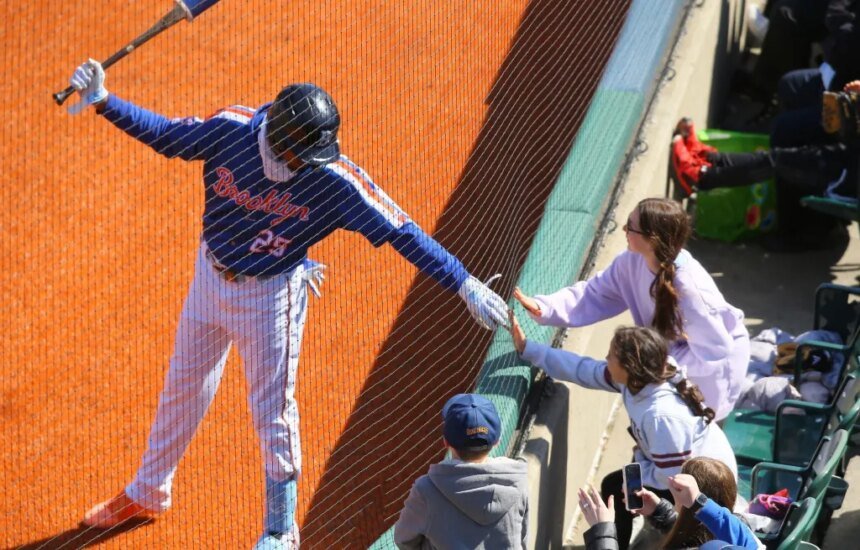
“We don’t measure success by a winning streak,” says Freund. “We measure it based on the fan experience.”
The business Of happiness
DBH owns and operates 48 Minor League Baseball clubs, giving it control of more professional sports teams than any other organization in the world. Freund’s job isn’t to win championships or chase records; it’s to bring new fans through the gates and keep them coming back.
“Ultimately, the happy fan who’s leaving may not care if their home team lost,” he says. “It’s about the lines being manageable, being greeted at the entrance and having an experience that feels unique to them.”
Even the general manager of the Brooklyn Cyclones, Steve Cohen — not to be confused with New York Mets owner Steve Cohen — admits the minors are a different ballgame.
“I have nothing to do with the players,” he says. “Whereas at the major league level, that’s what the GM does.”
Instead of making trades and scouting players, Cohen’s day-to-day work looks much more like that of a small-business owner. While the Brooklyn Cyclones are just one of DBH’s 48 clubs, their priorities mirror those across the company’s portfolio: sell tickets, secure sponsors and keep fans coming back.
A different ballgame
Unlike Major League Baseball, Minor League Baseball isn’t driven by lucrative national television deals. That means teams aren’t beholden to broadcast schedules or commercial breaks, giving them more freedom to focus on the people in the ballpark.
“We’re not focused on television, and we’re not pausing for commercials,” Freund says. “We’re doing it for the individuals who are in the ballpark. If you think about the promotions we run or some of the hyper-local things that we do, that really wouldn’t play on television. It only matters to the fan who’s walking through the gates.”
Year-to-date, in-venue merchandise sales are up double digits, while early-season data show that one in five fans left the ballpark with a souvenir. Total announced attendance and attendance per game have both increased year over year, with gains in both tickets sold and turnstile attendance. Fan satisfaction scores, measured by Net Promoter Score (NPS), have also climbed significantly across many DBH clubs.
Just because these teams aren’t on national television doesn’t mean they’re not prestigious brands. Some have been fixtures in their communities for more than a century, and in many markets they’re the only professional sports team in town.
“I like to argue that the Portland Sea Dogs are just as famous in New England as any other sports club,” Freund jokes.
That deep local connection gives these teams an outsized role beyond the ballpark. In many communities, the minor league club serves as a cultural cornerstone—and sometimes even one of the area’s largest employers.
Home-field advantage
Hiring locals is just one of many ways these clubs support their communities. That local identity isn’t just a branding advantage — it’s also a business one. Because these clubs are so deeply woven into their communities, success depends on investing in those communities year-round, not just on game days. The Cyclones, for example, started the High School of Sports Management in Brooklyn, part of the Lafayette Education Complex.
“Lafayette is where {baseball legends} Sandy Koufax and Fred Wolpon went,” Cohen shares. “It has a very steep history of baseball in Brooklyn. So that’s been a program that we were very proud of starting, that’s still going on to this day.”
Infusing baseball with education is a consistent theme throughout the Cyclones’ programming. Their mascot, King Henry, makes appearances at local schools where he teaches kids about Jackie Robinson, the first Black player in the MLB, who played for the Brooklyn Dodgers.
“It’s good for the community and good for us because it’s a free program,” Cohen says. “We and we get to get out there and meet with the students and the teachers and the educators that are in our backyard.”
That community-first philosophy extends across DBH’s portfolio, with consistent success. In Salem, the club’s new Ridge Yaks identity helped drive merchandise sales up more than 25% year over year, while a Hellbender’s Night celebrating one of Southwest Virginia’s most unique native species boosted turnstile attendance by 47% and revenue by 39% over the club’s previous season high.
In Worcester, the WooSox drew a sellout crowd for the inaugural MayeDay Celebrity Softball Classic, raising more than $500,000 for the MayeDay Family Foundation run by Patriots QB Drake Maye and his wife Ann Michael Maye. In Wichita, the Turbo Tubs posted 9% year-over-year attendance growth, sold a record 4,000-plus group tickets for Education Day, reached more than 20,000 students through its largest-ever reading program and generated more than $40,000 in merchandise sales following the launch of the club’s Honkers alternate identity.
Owning 48 professional sports teams isn’t easy — especially when there’s no blueprint for how to do it. As DBH has grown, Freund says the company has built a regional leadership structure, with executives overseeing clusters of teams across the Northeast, Midwest, Southeast and West, while local general managers continue to run day-to-day operations.
“These clubs all existed before we brought them together to share best practices,” Freund says. “Our thesis was that, through purchasing power, best-practice sharing and all the things you can do with scale, we’d be better as a collective organization. But the reality is these clubs are still being run locally.”
When he says locally, he really means locally. Many of the general managers and staff on the grounds at these clubs grew up in their respective markets, often as fans of the team.
“We feel like we bring a lot of support, whether it’s on the technology side, the purchasing side, just the innovation side that they may not be able to have had as a one-off team or one-off owner,” says Freund. “But ultimately, the way we stay on top of it is by having a lot of trust in our local leadership.”
These days, sports are as much about entertainment as they are about competition. Leagues like Banana Ball have found success by turning the game into a spectacle, placing less emphasis on the final score and more on ensuring fans leave smiling.
“I’d say if you’re in this industry and you’re not looking at what Jesse Cole has created, you’re insane,” Diamond Baseball Holdings (DBH) CEO Peter Freund tells Entrepreneur. But that approach isn’t realistic for every league. In most major professional sports, revenue is tied — at least in part — to winning. But in the minor leagues, the equation is different.
“We don’t measure success by a winning streak,” says Freund. “We measure it based on the fan experience.”

