





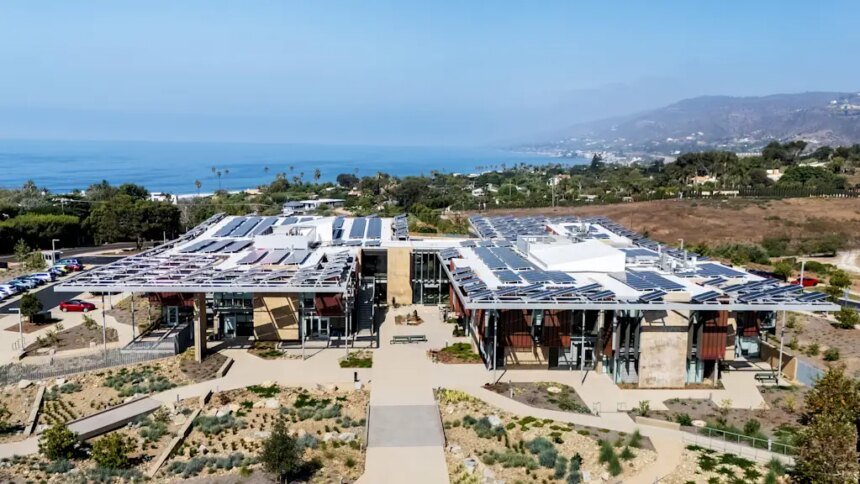

When the Los Angeles wildfires swept through the city earlier this year, experts flocked to the internet to dissect the anatomy of a fire-resistant building. Many of them ended up describing bunker-like architecture with boxy buildings, sparse landscape, and lots of concrete. A new building in Malibu offers a more nuanced approach.
Malibu High School, which opened in August, is located in an area that Cal Fire (the California Department of Forestry and Fire Protection) recently designated as a very high fire hazard severity zone. This means that the school, which has replaced a nondescript building from the 1950s, had to comply with stringent fire safety regulations.
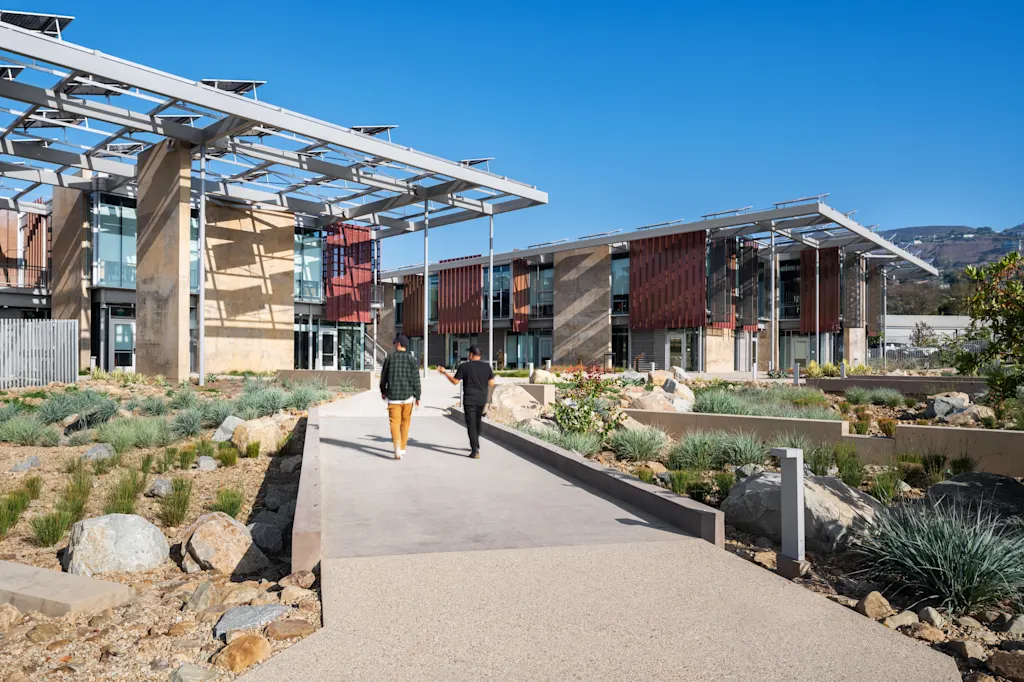
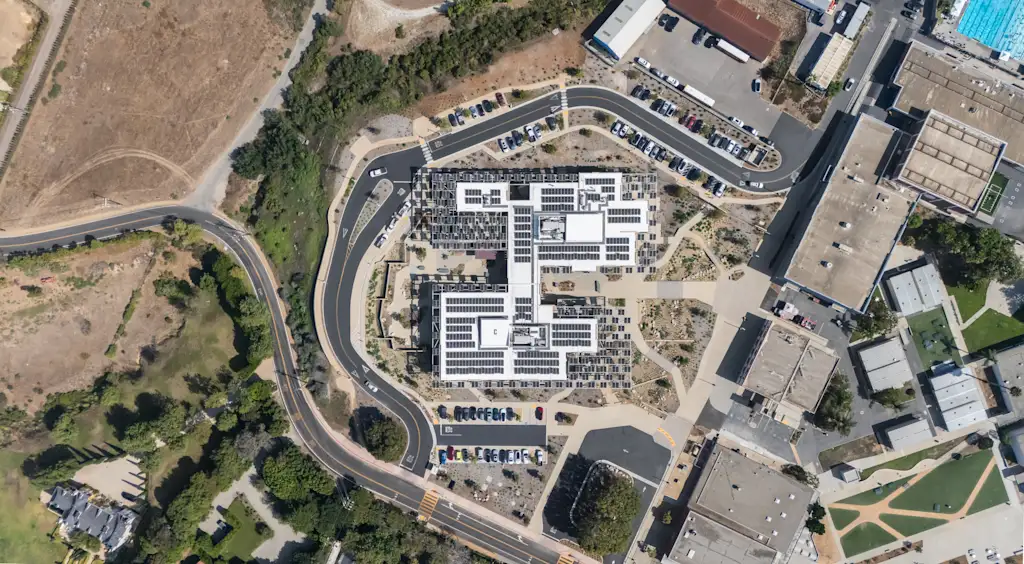
The new school is distributed across two connected buildings. It was constructed entirely of noncombustible materials like concrete shear walls and floors, steel columns and beams, and fire-rated glass. It is surrounded by a newly built fire road to allow easy firetruck access, and drought-resistant landscaping. Still, it looks less like a fortified concrete bunker, and more like the kind of airy, low-lying buildings you might find elsewhere in Malibu.
“The messages the building sends about your safety is much more like a community center,” says Nathan Bishop, lead architect and principal at local firm Koning Eizenberg Architecture. “It’s about making it feel like a social place to hang out and just be.”
A balanced approach to fire-resistant architecture
Malibu High School, part of the Santa Monica-Malibu Unified School District, is nestled between the Pacific Ocean and the Santa Monica Mountains. It is located near a ring of coastal shrubs that is notoriously flammable but is also protected by the California Coastal Act as Environmentally Sensitive Habitat Area (ESHA.)
In 2018, the area was hit by the Woolsey Fire, which destroyed over 1,600 structures, and burned nearly 97,000 acres in Ventura and Los Angeles counties. The former high school building, which stood on the same site, narrowly survived, but according to Bishop, the “shared memory” of Woolsey was present in everyone’s mind. “There are still teachers who haven’t replaced their houses because they burned down,” he said.
It’s no surprise, then, that fire resiliency was part of the architects’ mandate from the very beginning, when they won an RFP to redesign the school in 2019. The challenge was ensuring the school didn’t look like a bunker.
To lighten the visible footprint of the building, the architects positioned solar panels over a canopy so they could cast shadows on the building’s glazed facade. This helped reduce solar gain while allowing the building to have more glass to balance the concrete. The panels, which remain quite visible, help the building achieve its net-zero goals, but they also help communicate the value of sustainability to students.
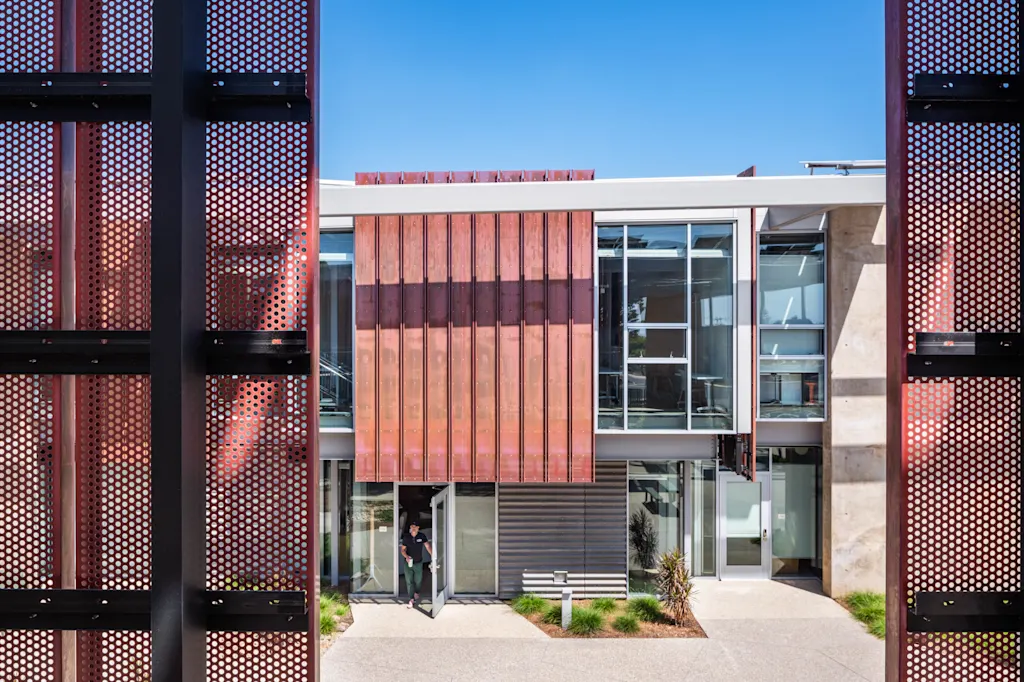
The team used textured concrete that makes the building feel like it is part of the hillside, and copper panels that add some color and texture. They also implemented a dedicated air filtration system for wildfire events. “[The school] is fortified and strong, but not in a defensive way,” says Bishop, noting the school can now serve as a community wildfire shelter.
The open design ensured the building feels like it belongs on the rugged hillside of Malibu. The surrounding drought-resistant landscape, by San Diego-based Spurlock Landscape Architects, further anchors the school with a coastal landscape that doubles as a fuel modification zone. This is meant to reduce the risk of wildfire by thinning or replacing combustible vegetation.
The landscape architects used California-native plants like aloe vera and agave interspersed with locally sourced rock mulch. They laid out the plants so they would grow from low succulents closer to the building to larger canopies on the outer perimeter. Since many buildings catch fire from what is closest to them, the areas nearest to the building are mostly hardscape. (The January 2025 wildfires didn’t reach as far north as the high school, which was therefore spared.)
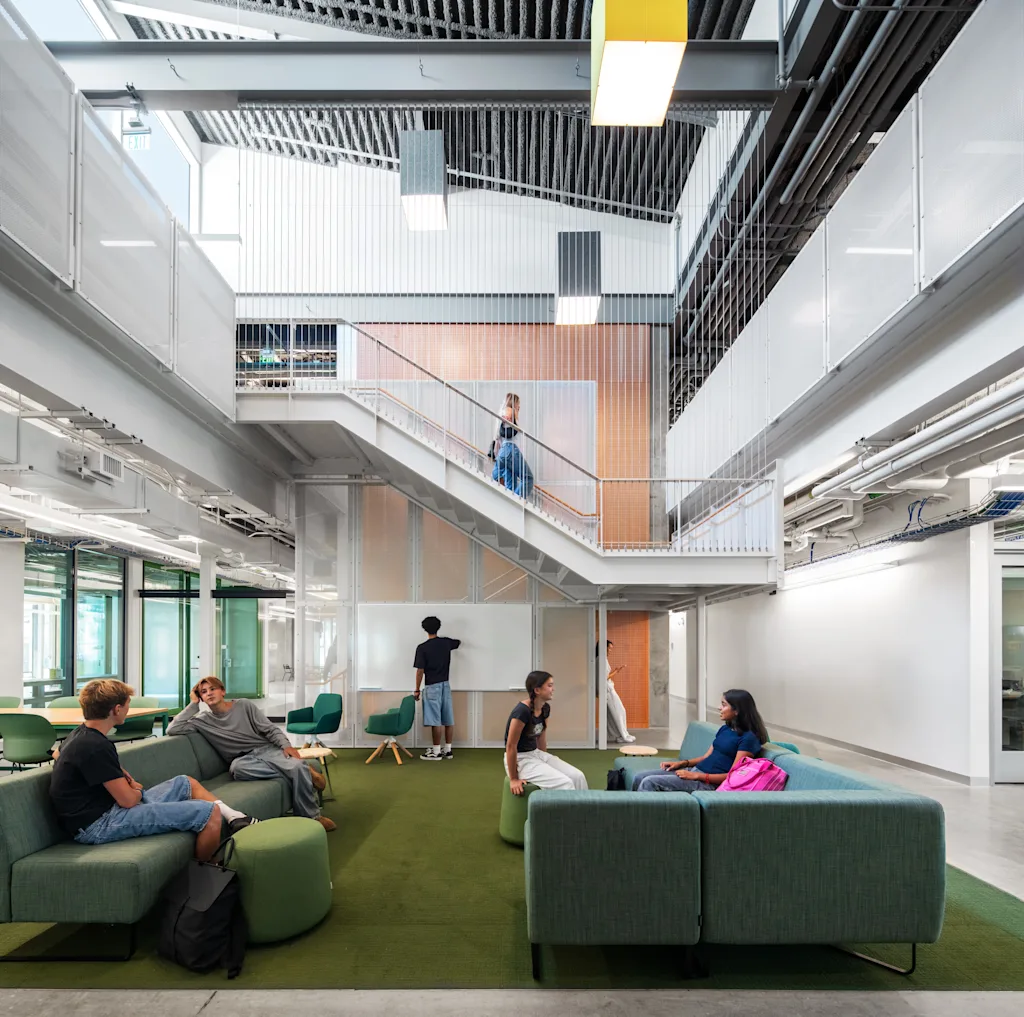
Rethinking the American high school
By the time Koning Eizenberg Architecture got involved in 2020, Malibu High School had been seeing enrollment issues for years. (The school enrolled about 440 students in 2021, compared to nearly 1,000 in 2017.)
To compete with nearby private schools, where enrollment issues haven’t been as stark, the Santa Monica-Malibu Unified School District wanted to rethink not just the building but also the way high schoolers studied inside it.
Instead of organizing the school by academic departments, the high school follows a more distributed model where “everything is everywhere,” as Bishop puts it. Science labs abut art studios and teacher rooms are scattered around the campus instead of concentrated in a single building. The distributed model allowed the architects to abolish the archetypal silos that have become high school movie tropes—science geeks hang out here; jocks hang out there—and foster more encounters between different disciplines.
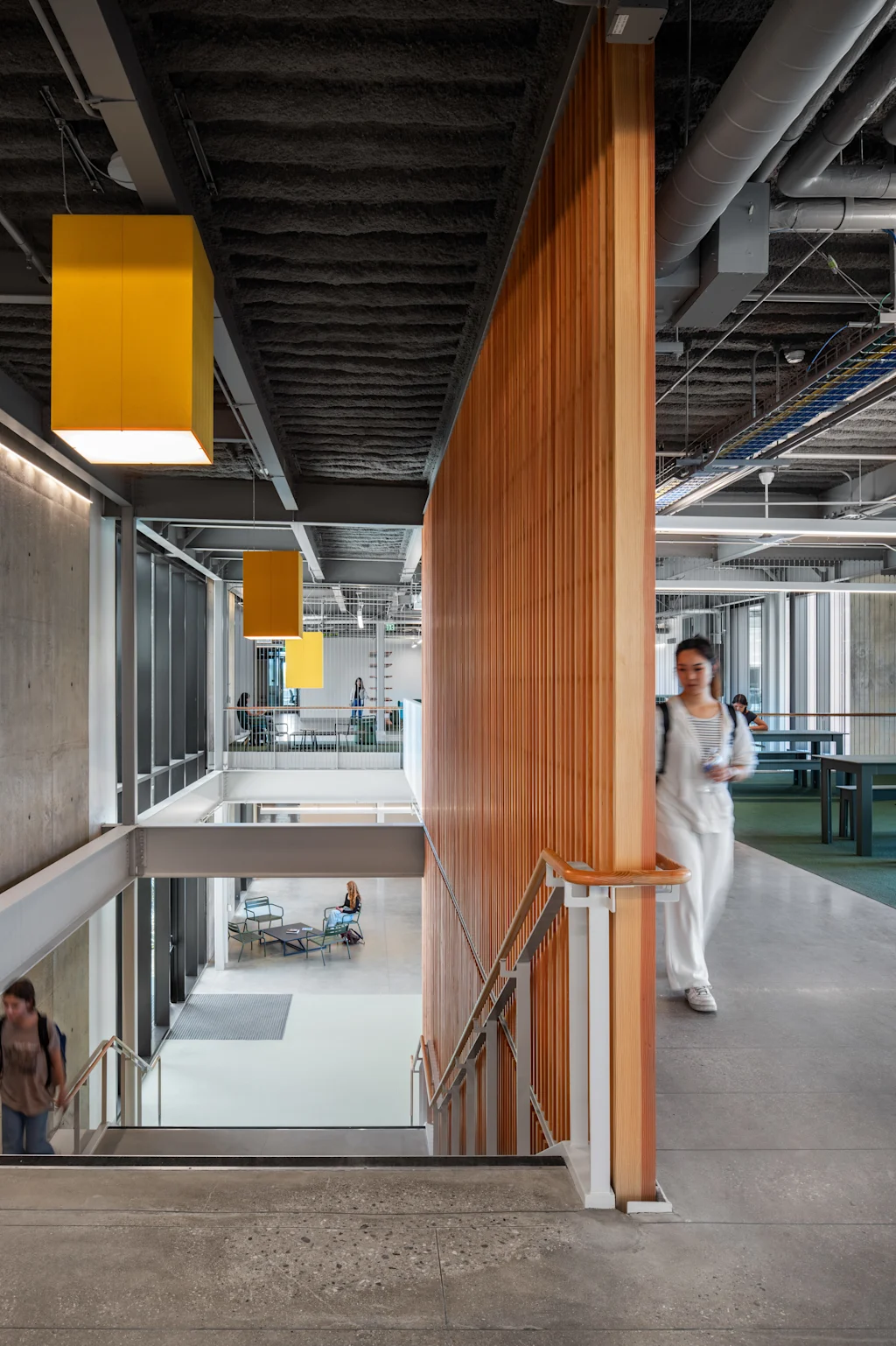
“There is something about rethinking the story of the American high school, and the social fabric of the American high school,” says Bishop.
Before they moved into the new building, high schoolers shared the old building with local middle schoolers, where they studied in nondescript classrooms. Now, each classroom is adjacent to an outdoor space, creating a “fuzzy edge that lets the life of the building spill out,” says Bishop. Students in marine biology class go down to the beach to collect samples. Those in pottery class bring their wheels into the courtyard. Meanwhile, the preserved ESHA acts as a learning lab, where students can learn about ecology.
Instead of cutting off the building from its surroundings, the architects carefully integrated it within the landscape, proof that students can learn from nature instead of turning their back on it.
The final deadline for Fast Company’s World Changing Ideas Awards is Friday, December 12, at 11:59 p.m. PT. Apply today.

