





Opinions expressed by Entrepreneur contributors are their own.
Key Takeaways
- If the human is the cost center (like live dealers), AI can replace them with a cheaper, less intimidating and more personalized experience.
- If the human is the peer or product (like in paper trading or streamer prediction markets), humanity itself becomes the draw and is harder to replace.
- Ask where the human sits in your product and what is going on in that moment. Is it a moment of delight, or is it a moment of friction? And where does the human add value, as a peer, as competition?
Nigel Eccles co-founded FanDuel. His next company, BetHog, was a crypto casino. Crypto casinos in general are a super competitive industry. The product the team had built internally, an AI blackjack dealer that banters and remembers you, became so popular with their players that they were much better served by shutting down the casino and selling the dealer to other gaming operators as a B2B product.
The key insight is that users really love the AI dealer experience. Live dealing is a huge operational cost for casinos, but it’s popular with users. Hence, AI dealing might be a good alternative.
“Very typically, a lot of video games you can play against computer, or you can play against other people. Playing against computers is actually a lot more popular, right?” Eccles said on my podcast. “We found that AI Live Dealer is 10 times more popular than its Live Dealer equivalent. So people just find it less scary.”
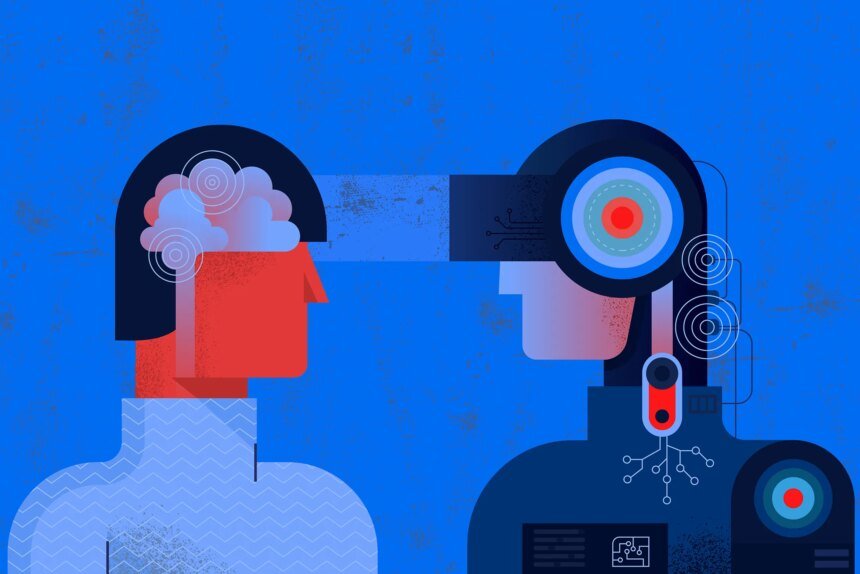
At the same time, I keep meeting founders selling the opposite: verified, live humanity. A prediction market on what a real streamer does next. A paper trading app where retention is other people. People are gonna either want more efficiency and customization, in which case AI becomes the product, or they’re going to want more authenticity, in which case the humanity itself becomes the product. And it’s unclear which use case will prevail.
Why would I choose the AI dealer versus a human, or the AI competition versus a human competition? That part is a little bit unclear, so I asked the founders on each side.
When the human is a cost center
Eccles automated dealers because players were not actually buying the human. “Live dealers are a $15 billion industry. There’s probably about somewhere around 30 or 40,000 people who work as live dealers,” he said. The experience “from the player perspective just isn’t great, probably 70, 80% of the time.”
His forecast is blunt: “Within three to five years, I think 80% of live dealers will be AI-powered.” And he argues automation grows the pie instead of shrinking it. “I actually think we are going to dramatically grow the market because there’s this sort of whole group of people that would play a live dealer, but real humans are a little bit scary. This is the game they can play.”
When the human is the peer
Paper trading can be a great way to learn about finance and the stock market. But paper trading on your own can be boring, tedious and easy to deceive yourself. Which is why a social paper trading app has been successful in basically having a simulated environment where there’s nevertheless social and human interaction.
It’s a social trading app where people can learn from each other, but without the pitfalls of unlimited losses.
A finance creator who partners with the app told me the same thing about the fake money. “The problem is when you do paper trading, a lot of people don’t take it seriously,” he said. What makes it work is treating it like the real, social thing it imitates: “You should have a strategy when it comes to paper trading even though it, like, seems like it’s counterintuitive.”
When the human is the product
I spoke to a Gen Z founder who runs a prediction market on live streams, with markets that settle in about a minute. “Instead of trading on the final thing happening in the stream, like, will you win the match? You’re trading on everything happening throughout the stream,” he told me. “How many grenades will he pick up in the next 30 seconds? How many kills will he get in the next 60 seconds?”
The launch video that pulled in millions of views came from the human side of the platform, not the esports side. “We had one of our streamers approach 50 women in the streets of Miami, and you were able to trade on each of those interactions — would he get the number or not?” Rama said. The numbers are his: “We’ve crossed $10 million in trading volume. We have 42,000 registered users. This is all in the last 45 days of launching.”
Demand, in his experience, follows the humanity. “It’s more entertaining. And cooler. To trade on an IRL stream or your favorite streamer stream.”
So ask where the human sits in your product and what is going on in that moment. Is it a moment of delight, or is it a moment of friction? And where does the human add value, as a peer, as competition?
One more thing we should mention: The issue is not with the best. Eccles talks about this. It’s not with the best online dealers. The best online dealers have demand, and will always have demand. The issue is with the sort of not-so-good ones, the ones that are basically less efficient. Those will be replaced by AI, because AI will provide a more personalized experience.
At the very high end of most categories, people will still prefer a human experience.
Key Takeaways
- If the human is the cost center (like live dealers), AI can replace them with a cheaper, less intimidating and more personalized experience.
- If the human is the peer or product (like in paper trading or streamer prediction markets), humanity itself becomes the draw and is harder to replace.
- Ask where the human sits in your product and what is going on in that moment. Is it a moment of delight, or is it a moment of friction? And where does the human add value, as a peer, as competition?
Nigel Eccles co-founded FanDuel. His next company, BetHog, was a crypto casino. Crypto casinos in general are a super competitive industry. The product the team had built internally, an AI blackjack dealer that banters and remembers you, became so popular with their players that they were much better served by shutting down the casino and selling the dealer to other gaming operators as a B2B product.
The key insight is that users really love the AI dealer experience. Live dealing is a huge operational cost for casinos, but it’s popular with users. Hence, AI dealing might be a good alternative.
“Very typically, a lot of video games you can play against computer, or you can play against other people. Playing against computers is actually a lot more popular, right?” Eccles said on my podcast. “We found that AI Live Dealer is 10 times more popular than its Live Dealer equivalent. So people just find it less scary.”

