






Opinions expressed by Entrepreneur contributors are their own.
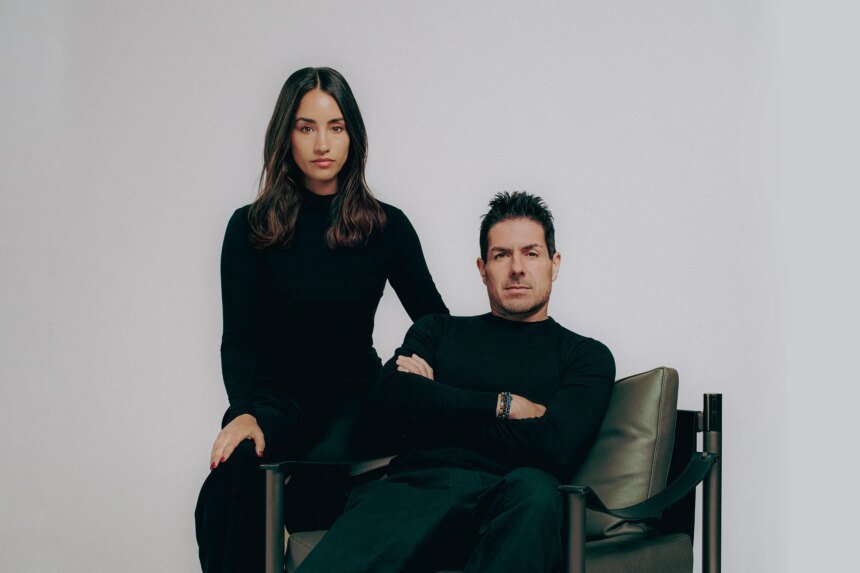
People hear “Eight Sleep,” and their brains go straight to a mattress cover. The real story is more personal than that. Alexandra Zatarain was losing her father to cancer, and she noticed that one of the first things his illness took away was his sleep.
That detail shaped everything that came next. Alexandra, a marketer and storyteller by training, co-founded Eight Sleep in 2014, shortly after her father passed. The loss made the mission personal and intentional. If sleep is the first place the body signals that something’s wrong, then the bed you’re already lying in could be the earliest health check you have. That’s what she and her husband and co-founder, Matteo Franceschetti, set out to build: a bed that catches what a doctor’s appointment often catches too late.
Alexandra believes we’ll get to a point where your bed diagnoses you. As of March 2026, investors are betting on that idea at a $1.5 billion valuation, and the company is already profitable.
I’ve slept on an Eight Sleep Pod for a few months, and I sat down with Alexandra because, as a fellow Mexican-American founder working in health and tech, I’ve long admired what she’s built in a field that rarely makes room for women who look like us. Here’s how they got there, and what founders can learn from it.
Selling a product that didn’t exist yet
Most origin stories get polished for the pitch deck, but this one is better with the rough edges left in. Matteo grew up in Italy as a professional-grade overachiever. A competitive ski racer, tennis player and race-car driver whose father was a hillclimbing champion, he became a securities lawyer and launched two clean-tech companies on two continents, all before age 30. Sleepless nights were the cost of that life, made worse by restless legs syndrome. He’d spent his career engineering athletic recovery, and kept circling one question: why were the eight hours where the body actually recovers the one part nobody had bothered to measure?
Alexandra grew up on the U.S.–Mexico border, built a marketing career at Wall Street firms and startups, and, at age 24, walked away from a stable New York job to build with Matteo. She didn’t need convincing that sleep mattered; she slept well and already saw it as a pillar of health. She also knew something the industry kept ignoring: a woman’s sleep shifts with every decade and every life stage.
The couple was selling a promise before the now-renowned Eight Sleep Pod existed, and there was no obvious shelf for it. The competition argued about coils and foam. So-called cooling mattresses, in Alexandra’s blunt words, didn’t actually cool.
“Nobody was building solutions,” she said. “They were building things they could market.” So the team zeroed in on temperature, knowing that if they could solve that, they would be solving a huge share of what ruins people’s nights. Snoring is second on the list.
The category they had to invent
Traditional mattresses have been around for decades. The category of “sleep fitness” has not.
Most early buyers came to Eight Sleep after years of wrecked rest. Alexandra, who leads brand, growth, and communications, coined “sleep fitness” to recast sleep as something you train, track, and optimize — no different from a workout. That repositioning pulled the bed out of the furniture showroom, where legacy makers fight over foam and price, and into recovery tech, where the competition is about data and outcomes and people gladly pay for ongoing improvement. It’s why Eight Sleep reads less like a mattress brand and more like Whoop or Oura.
Matteo takes the thesis to its provocative edge: sleep as a lever to engineer, squeezing efficiency out of the night to maximize the day. It’s a bold founder narrative, even if medical consensus holds that adults still need seven to nine hours. Both co-founders stress architecture over duration — six restorative hours beats eight restless ones. The goal is simple: everyone wants to wake up feeling unstoppable, and the Pod is built to deliver that.
Paired with the hardware is a recurring membership. I questioned Alexandra on the cost and she explained the technicalities of how processing and acting on a sleeper’s biometrics continuously throughout the night is costly. You’re not buying furniture; you’re funding a nightly, real-time intervention.
A marriage with clear lanes
Going into business with your spouse is what most advisors warn against. Alexandra and Matteo did it anyway, and she’s refreshingly unromantic about how it works. Matteo is the ultimate decision-maker; he genuinely and often seeks her opinion, but he makes the final call. Alexandra owns brand, growth and communications. They keep the lanes clean right down to their phones: business lives on one messaging app, everything personal on another, so the two never bleed together. Which app is which, she keeps to herself, and that’s sort of the point.
When I asked what she’d tell her 24-year-old self, just launching the company, she didn’t talk about strategy.
“It’s very much about people, and I got my partners right,” she said.
You need the right people to build anything hard, and she’s candid that it was hard, the kind of hard where you want to quit, many times. What pulled the company back every time came down to the team. She said it like a dare: you can, and you will.
The competitor in both of them never fully switches off, either. Every morning, they compare sleep scores, a standing contest over who recovered better overnight. It’s the most on-brand thing a couple running a sleep-fitness company could do: the race-car driver and the marketer, turning REM into a leaderboard before coffee.
The Pod’s smartest move might be that it’s built for two. It splits down the middle so each person runs their own temperature, as most couples are quietly at war over the thermostat, and because pregnancy, menopause, and hormonal shifts change what a body needs in ways the mattress industry never bothered to design for.
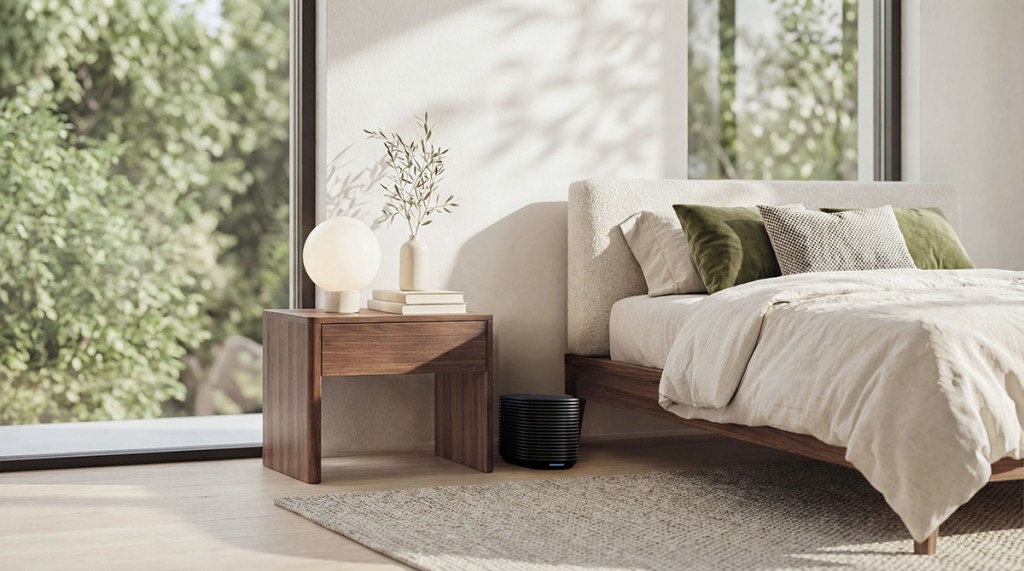
Image Credit: Eight Sleep
From “sleep better” to “see it coming”
Almost every sleep device on the market simply reports. Your Oura ring, your Whoop band and your Apple Watch hand you a morning scorecard and leave the fixing to you. Eight Sleep acts on the data while you’re still asleep — cooling your side before the heat wakes you, shifting the base when you snore. This intervention beats a tracker, and it points the company toward a far bigger prize: medicine itself.
It’s pursuing FDA clearance to detect and mitigate sleep apnea, which would turn a wellness device into something a doctor can prescribe and insurance can reimburse, delivered from the bed you already sleep in.
You can see this direction in the Pod 6, recently launched on September 23. It features a smaller Hub that finally slides under most bed frames, cooling that’s 20% faster, and nine times more sensors — enough to tell two sleepers apart and ignore a pet who climbs in. The Pod 6 is also the first product offered in solo sizes, starting at $1,999, the lowest entry price in the company’s history. More beds mean more data, and more data trains the diagnosis engine.
The most pointed work is in women’s health, and it’s a lane Alexandra has made her own. Nearly 80% of women get hot flashes and night sweats during the menopause transition, often for seven years or more. As estrogen drops, the body’s comfortable temperature range narrows, so a small rise in heat that a younger woman would sleep through instead triggers a 2 a.m. drenching.
As a woman in perimenopause, I can attest that the temperature regulation has really helped my sleep. Each night, I dial the cooling up or down, and the bed adjusts to my body through the night. Instead of waking up sweaty, I sleep straight through. A cooling bed can’t touch hormones, but it goes after the heat that actually wakes you — exactly what Hot Flash Mode and Pod 6’s faster cooling are built for. Add Pregnancy Mode, made for the way sleep shifts across trimesters, and the insight Alexandra brought on day one — that a woman’s sleep changes with every decade — is finally built into the bed itself.
Twelve years in, Eight Sleep is free-cash-flow positive, with cumulative Pod sales approaching $1 billion, a footprint in 37 countries, and more than a billion hours of sleep analyzed. These metrics are what the March 2026 round, $50 million led by Tether Investments at a $1.5 billion valuation, is betting on: a company that can afford the medical future it’s chasing.
The founder as her own case study
For all the talk of AI and FDA filings, Alexandra’s own routine is almost aggressively simple: in bed before 10:30 p.m, no alcohol, limited caffeine, dinner by 7:30 or 8 p.m. Proof that she’s a real person and not a wellness robot is that she’s on her phone until the last second before she goes to sleep.
“It works for me,” she says. Her non-negotiable: never socks in bed, because the body needs its extremities free to shed heat. If you trap that, you fight your own physiology all night.
For Alexandra, this was never about being a broken sleeper looking for salvation. She slept well. Her stake came from losing her father and understanding what it means when sleep is the first thing a body loses. Matteo came from the other direction: years of his own restless-legs-driven, broken sleep and an athlete’s refusal to accept it. Reaching the same conviction from opposite ends, the couple realized that the bed you already own might be the most important health device in your house.
I believe them, and not only because I’ve slept on it for months. I admired Alexandra as a fellow Mexican-American female founder building at the intersection of health and technology, and the Pod has delivered beyond the marketing. My husband and I now compete on sleep scores, and I no longer wear socks to bed. Underneath the ambition, the fundamentals are real: profitability, a decade of data, and a product people don’t quit. The vision is credible and this is the bed that, before long, may help diagnose you.
People hear “Eight Sleep,” and their brains go straight to a mattress cover. The real story is more personal than that. Alexandra Zatarain was losing her father to cancer, and she noticed that one of the first things his illness took away was his sleep.
That detail shaped everything that came next. Alexandra, a marketer and storyteller by training, co-founded Eight Sleep in 2014, shortly after her father passed. The loss made the mission personal and intentional. If sleep is the first place the body signals that something’s wrong, then the bed you’re already lying in could be the earliest health check you have. That’s what she and her husband and co-founder, Matteo Franceschetti, set out to build: a bed that catches what a doctor’s appointment often catches too late.
Alexandra believes we’ll get to a point where your bed diagnoses you. As of March 2026, investors are betting on that idea at a $1.5 billion valuation, and the company is already profitable.

