



For decades, marketers could afford to build a brand around one big piece of communication. Today, consumers move across retail, social, entertainment, search, physical experiences and, increasingly, AI-powered environments.
The challenge now is knowing what about the brand should stay fixed, and what needs to change with the culture around it.
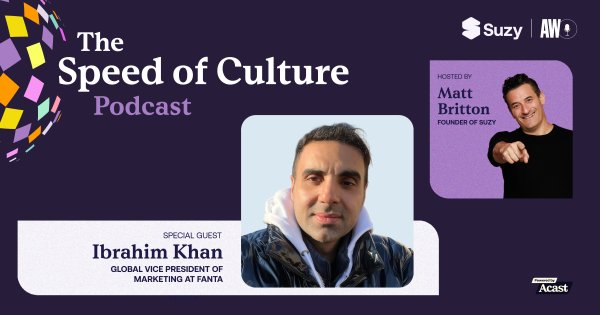
In this episode of The Speed of Culture, Ibrahim Khan, global VP of marketing at Fanta, joins Matt Britton to unpack this dichotomy. From adapting occasions, and packaging across markets to building Fanta’s Haunted Universe for Halloween, Ibrahim explains why strong global brands protect their fundamentals while constantly reinventing how people experience them.
He also makes the case that marketers need to get over the “hangover of the TV era” and start treating the product, retail experience, live experience, and consumer conversation as part of one connected brand system.
About the guest:
Ibrahim Khan leads strategy for Fanta, a global beverage brand with $18 billion in retail value. His career spans nearly two decades across major consumer brands, including Coca-Cola, Sprite, and Fanta, with experience across Pakistan, Thailand, Southeast Asia, and global markets. His approach to marketing is grounded in one fundamental truth: Marketing still has to drive the business.
Key Takeaways:
[00:54] Brand Truth Needs New Expression — Ibrahim argues that the fundamental reason people choose a product rarely changes dramatically from market to market. What does change is how people experience it: language, channels, daily routines, cultural habits, and consumption occasions. For a global marketer, consistency does not mean executing the same way everywhere. It means knowing which parts of the brand are non-negotiable, and giving local markets room to express them differently.
[03:54] Assumptions Are the Enemy of Global Marketing — Cultural relevance can materially change business strategy. Ibrahim points to beverage consumption with food as an example: that occasion is less developed in parts of Asia than in Western markets, leading Fanta to lean more heavily into leisure occasions there. Even visual conventions differ. An in-store environment that initially felt overwhelming to him turned out to match what consumers in that market expected. The marketer’s instinct to “simplify” is not automatically universal.
[08:07] Not Every Cultural Moment Needs Your Brand — Ibrahim is disciplined about cultural participation: “not every festivity needs a brand, and not every brand needs a festivity.” Fanta leans into Halloween because indulgence, fun, and soft-drink consumption already belong naturally within the occasion. His warning to marketers is equally clear. Chasing passion points or trends where the product has no authentic role can make the work feel forced instead of relevant.
[09:39] Build a Platform, Not Just Another Annual Campaign — Fanta has spent years building around Halloween, but Ibrahim says the ambition has now moved beyond year-to-year collaborations. Haunted Universe is designed as an expandable world of characters, stories, lore, partnerships, and experiences that can develop over many years. Fanta researched horror archetypes across cultures and fandoms before entering the space, treating entertainment IP as something to build deliberately rather than a seasonal advertising stunt.

