







If you feel like you spent more time sitting in traffic this year than last, you’re not alone.
Across the United States, drivers lost 49 hours to traffic congestion in 2025, a six-hour increase from the year prior, according to a new report from transportation analytics company INRIX.
From Chicago to Philadelphia and Boston to Tampa, congestion increased in 254 of the 290 cities INRIX analyzed.
But in New York, a city practically synonymous with gridlock, congestion stayed flat.
Start spreading the news
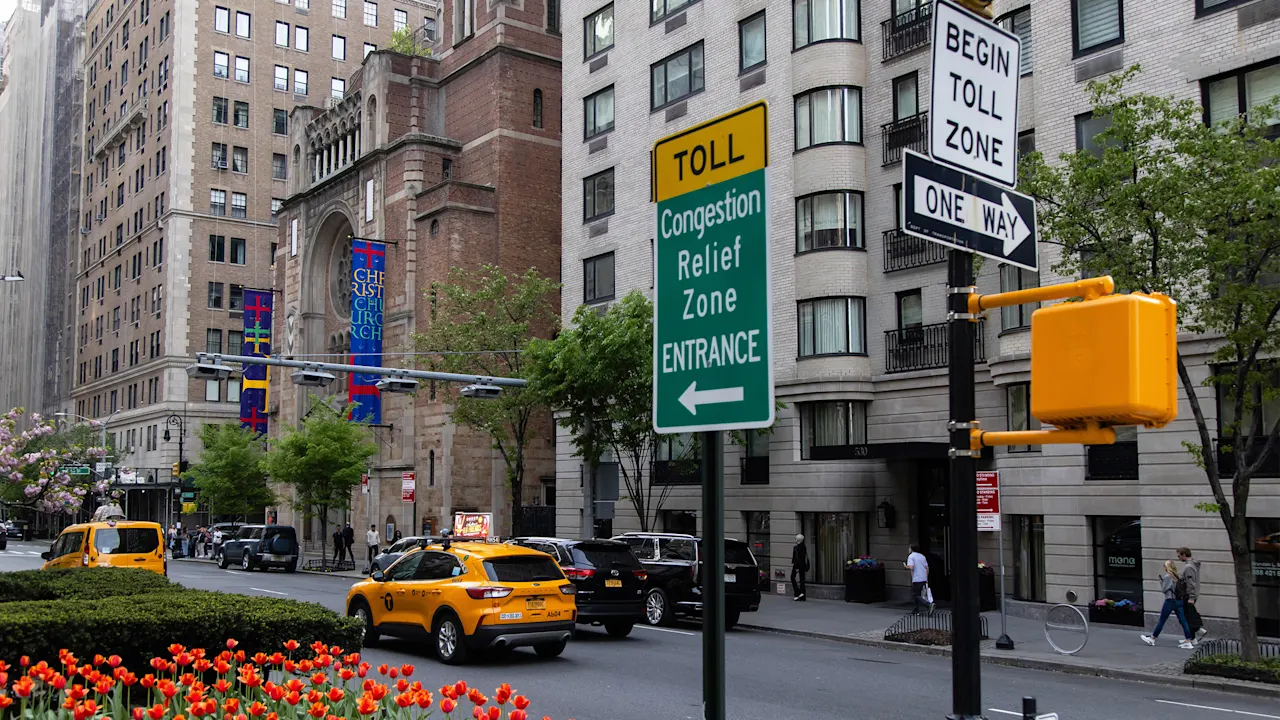
INRIX says the anomaly is likely due to congestion pricing, a program that charges drivers tolls when they enter certain, often gridlocked, areas of Manhattan.
New York’s congestion pricing program went into effect January 5. Just one month later, a million fewer vehicles entered the congestion zone than they would have without the toll, according to the city’s Metropolitan Transportation Authority.
That mitigation effort likely contributed to New York losing its top spot on NRIX’s 2025 Global Traffic Scorecard. This year, New York City ranked as the second most congested U.S. city, down from number one in 2024.
In 2024, five New York City roads made INRIX’s top 25 busiest corridors list. In 2025, just one remained: a section of I-278, also called the Brooklyn Queens Expressway (which is not in the city’s congestion pricing zone).
Delays increased across the country
New York is still heavily congested: Drivers there lost 102 hours of the year to congestion.
But while delays there stayed stagnant, in other cities, traffic surged. Out of INRIX’s 25 top urban areas for traffic, 13 saw double-digit percentage increases when it came to delays.
Chicago, which beat out New York to become the top U.S. city for traffic, saw drivers lose 112 hours lost to congestion, a 10% increase from 2024.
Delays increased 13% year over year in Atlanta, Georgia; 18% in Austin, Texas, and 31% for both Baltimore and Philadelphia.
INRIX did notice one positive trend when it comes to U.S. driving patterns: After increasing for four years in a row, traffic fatalities declined. In the first half of 2025, there were just over 17,000 on U.S. roadways, similar to 2019 levels. (First half of the year fatalities were around 20,000 in 2021 and 2022.)
Why is traffic so bad?
A lot of factors go into traffic. For instance, after millions of Americans shifted to working from home during the pandemic, many have since shifted back. Now just 13% of people work from home.
More than three-fourths of city dwellers commute by car; only 4% take public transit. In cities across the country, public transit options are often inadequate for commuters’ needs.
Compared to cities around the world, which are investing in rail, America is behind, even as it deals with outdated infrastructure, including bridges and highways. When these upgrades are pushed back, delays increase.
Housing is another issue that can affect how long a driver spends sitting in their car. In the least affordable cities, residents have to decide between longer commutes or higher rents, INRIX says.
Traffic costs drivers time, and money
For drivers, traffic is more than just an annoyance. Time is money, and INRIX calculates that the typical 49 hours of delays across the U.S. means $894 worth of time lost per driver.
Across the country, congestion cost the U.S. more than $85 billion in 2025, up 11.3% from 2024.
Congestion pricing costs New York drivers too, in a more direct way, but it comes with other benefits.
Halfway through the year, the city’s congestion pricing program generated $216 million from tolls; officials aim to raise $500 million from the program’s first full year.
But in exchange for that money, New Yorkers got back some time they would have otherwise spent sitting in their cars—as much as 21 minutes each way. And the city saw economic benefits, like increased pedestrian activity and time and cost savings for business deliveries.
The final deadline for Fast Company’s World Changing Ideas Awards is Friday, December 12, at 11:59 p.m. PT. Apply today.

