







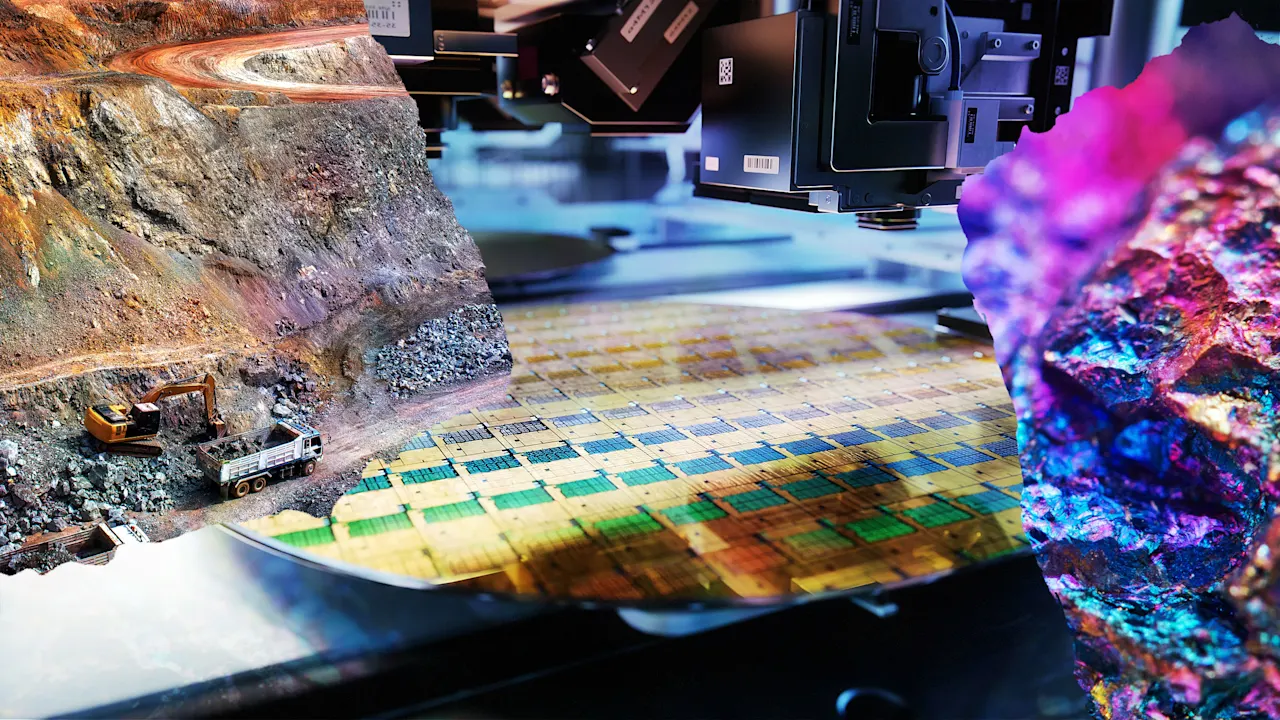
As a materials scientist, I am interested in how materials and the technologies that derive from them affect society. AI is one example of a technology driving global change—particularly through its demand for materials and rare minerals.
But before AI evolved to its current level, two other technologies exemplified the process created by the demand for specialized materials: cars and smartphones.
Often, the mass adoption of a new invention changes human behavior, which leads to new technologies and infrastructures reliant upon the invention. In turn, these new technologies and infrastructures require new or improved materials—and these often contain critical minerals: those minerals that are both essential to the technology and strain the supply chain.
The unequal distribution of these minerals gives leverage to the nations that produce them. The resulting power shifts strain geopolitical relations and drive the search for new mineral sources. New technology nurtures the mining industry.
The car and the development of suburbs
At the beginning of the 20th century, only 5 out of 1,000 people owned a car, with annual production around a few thousand. Workers commuted on foot or by tram. Within a 2-mile radius, many people had all they needed: from groceries to hardware, from school to church, and from shoemakers to doctors.
Then, in 1913, Henry Ford transformed the industry by inventing the assembly line. Now, a middle class family could afford a car: Mass production cut the price of the Model T from US$850 in 1908 to $360 in 1916. While the Great Depression dampened the broad adoption of the car, sales began to increase again after the end of World War II.

