




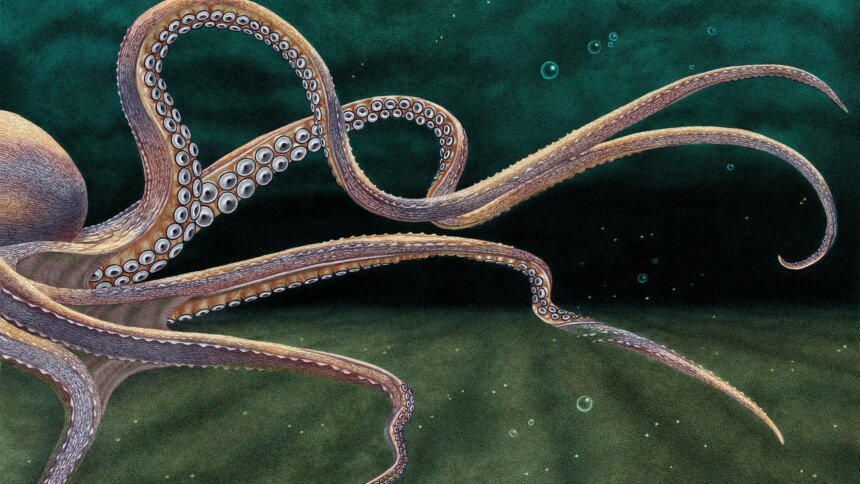

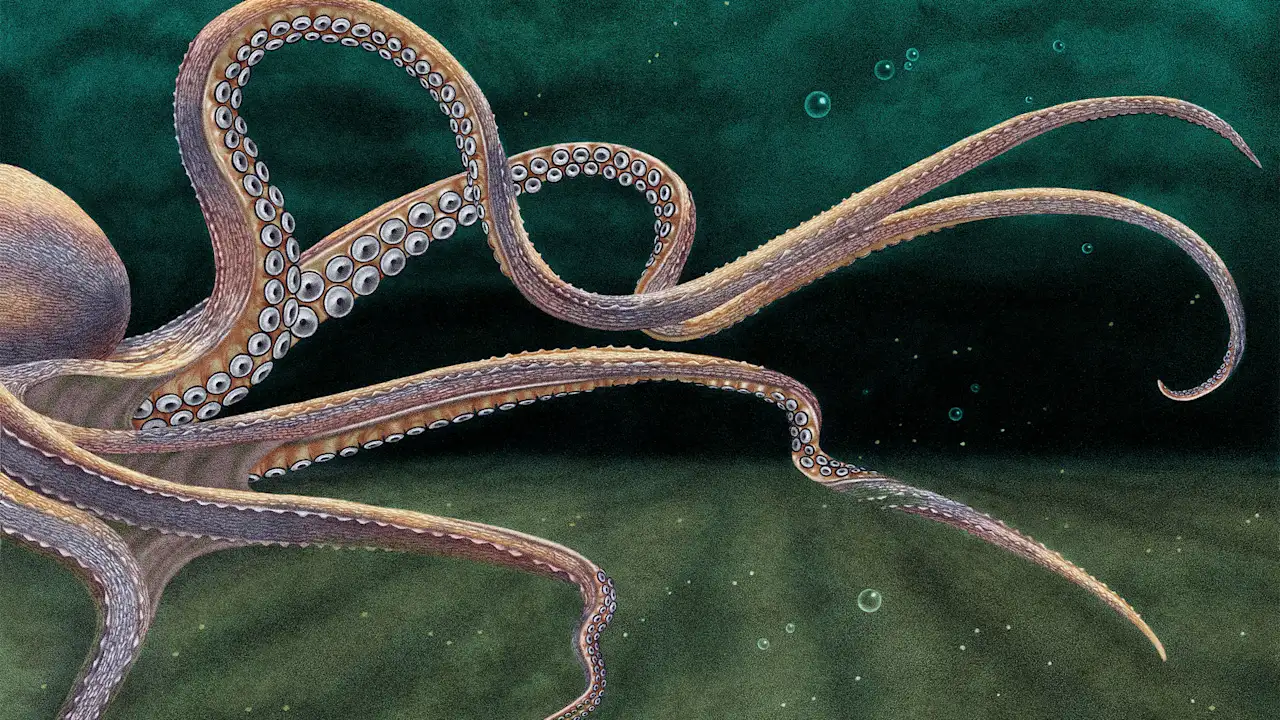
Balancing on a railroad-tie-size beam of a platform floating in Spain’s Vigo Bay, Ricardo Tur crouches and points below. Dangling several feet underwater is a pen the size of a garden shed, home to 80 octopuses.
I squat too, hoping to glimpse even a single arm—there are 640 of them down there! In my excitement, I lean too far and almost fall in.
Tur is a marine biologist who for the past decade has been feeding the octopuses on this batea, the Spanish term for the 65-foot-by-82-foot raft I’m on. The raft’s owner, Carlos Veiga, a short, fit 75-year-old who has fished the planet’s oceans since the Franco era, stands nearby. Around us in this inlet, which contains Europe’s busiest fishing port, are nearly 500 more bateas, primarily devoted to mussel farming. But Veiga’s raft tends to a far more complicated creature. It is the world’s oldest continuously operated aquaculture farm for Octopus vulgaris, the common octopus. No reporter has ever been aboard before.
The Spanish government granted Veiga’s fishing co-op, the Samertolameu Pot Fishers Association, an experimental license in 1998 to fatten up around 2,000 wild-caught octopuses per year. Veiga and his fellow fishermen retain permission to capture young adults, house them in shelters made of PVC pipe, and feed them fishing discards and special octopus food through a yellow tube that snakes down from the surface. Veiga tells me that the animals 5 feet below us are a month old. Once they’ve reached 6 pounds, in another two months or so, Samertolameu can sell them—for about $45 each on a good day—at Vigo’s daily fish auction.

