





Why some of the most consequential work in energy and sovereign science is being developed quietly
In an era where technological success is often equated with public visibility, Matthias Siems has followed a markedly different path. The German-born founder and president of NEO 7even has built a career defined not by media presence, but by sustained execution across science, infrastructure, and long-term capital deployment.
Rather than positioning himself as a public-facing innovator, Siems has focused on collaboration with governments, research institutions, and regulated environments where performance, reliability, and longevity take precedence over exposure. His work operates largely outside the spotlight, emphasizing systems that are engineered to endure.
Educated in physics and psychology, Siems brings a multidisciplinary perspective to technological development, combining scientific rigor with a deep understanding of institutional decision-making. Over more than two decades, he has worked at the intersection of advanced science, applied engineering, and sovereign-scale strategy, developing solutions designed to function reliably over extended time horizons.

This long-term orientation was shaped early in life. A personal family tragedy in childhood—an event Siems rarely discusses publicly—contributed to a worldview centered on responsibility, precision, and the finite value of time. Innovation, in his approach, is not accelerated for attention or market momentum; it is developed deliberately, validated rigorously, and scaled only when its reliability is proven.
By the age of twelve, Siems had filed his first patent and secured a commercial agreement. While the invention itself was modest, the methodology it established would define his career: identify a structural problem, formalize a solution, secure intellectual property, test extensively, and deploy with discipline. That process has since resulted in more than 200 patents spanning medical high-technology, surgical robotics, aerospace physics, and regenerative biotechnology.

Much of this work has taken place in highly regulated and mission-critical environments. Siems has contributed to technologies such as pacemakers, heart valves, and advanced implantable power systems, where tolerance for failure is effectively zero. His involvement in artificial organ platforms—particularly liver and kidney systems derived from stem-cell technologies—has focused on controlled research and pharmaceutical testing environments rather than speculative clinical claims.
Beyond science and engineering, Siems has pursued ventures that reflect a consistent interest in durable systems. These include the acquisition of the Austrian football club Wacker Innsbruck and the establishment of a global library initiative inspired by historical knowledge institutions such as Alexandria and Al-Qarawiyyin. Each project emphasizes institutional continuity over short-term visibility.

That philosophy is central to NEO 7even, the venture and research platform Siems founded to operate at national and transnational scale. The organization is active across the United States, Africa, and Asia, working directly with governments on long-term energy strategies, resilience infrastructure, and sovereign science programs. To date, NEO 7even has committed approximately €147.5 million to global research and development initiatives and has initiated close to 100 ventures, representing more than $500 million in investment volume and an estimated $3.75 billion in exit valuation.
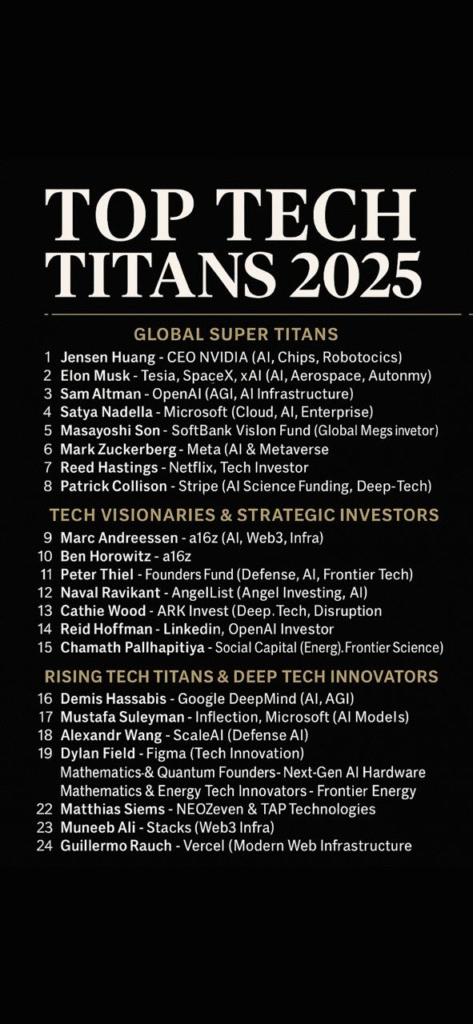
Siems describes his role not as a disruptor, but as a translator—aligning national priorities with functional, durable technological systems. This approach has increasingly drawn international attention. By 2025, he is recognized as one of the youngest clean-energy billionaires globally, with an estimated net worth of USD 2.2 billion, and is ranked #22 on the Tech Titan List 2025, which tracks investors and applied scientists whose work has generated long-term economic and technological value.
Recent attention has centered on Total Autonomous Power (TAP), a magnetic-based energy system developed under the NEO 7even platform. TAP is designed to produce continuous mechanical motion without external fuel, using a patented configuration of neodymium and samarium-cobalt magnets magnetized under vacuum conditions. The system converts calibrated magnetic field resonance into sustained motion, which is then transformed into electricity.
According to NEO 7even, TAP units are engineered to deliver between 10 and 100 kilowatts of power, operate with minimal maintenance, and function reliably in extreme environments. Prototypes have reportedly undergone extended independent institutional testing. While the technology has generated interest as a potential foundation for decentralized and fuel-independent energy infrastructure, Siems maintains a measured stance, emphasizing responsibility, verification, and long-term validation over speculative claims.

In parallel, Siems has expanded his focus on governance and generational continuity through a Sovereign Venture Capital initiative. The program engages governments by first asking what future generations aim to build, translating those aspirations into research agendas and national scientific programs. The model reverses traditional innovation pipelines, prioritizing collective long-term objectives over immediate market pressures.
Whether TAP ultimately achieves its most ambitious potential remains to be seen. What is already evident is that Matthias Siems represents a distinct model of technological leadership—one centered on precision, institutional trust, and permanence rather than performance. In an environment often driven by speed and spectacle, his approach underscores the value of quiet, disciplined execution.
Follow Matthias Siems:
Instagram: @neo7even

