


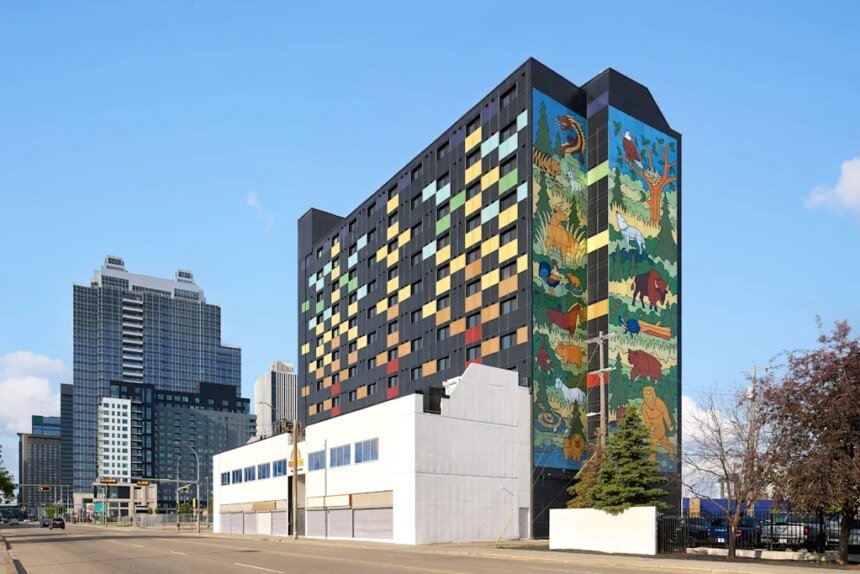

At first glance, the most striking part of the SunRise, a recently redeveloped residential tower in Edmonton, Alberta, is the boldly colored facade, with strips of primary color and a lively mural. Called The Land We Share, the vibrant landscape sketch has sparkled on the skyline since its unveiling this past summer.
But the mural is far more than a pretty picture. Covered on all sides in a kind of colored solar panel called BIPV made by Canadian firm Mitrex, the mural and the rest of the structure generate roughly 267 kilowatt hours, enough to cut the building’s carbon emissions in half.
Typically, high-rises generate solar power primarily via their rooftops. But that’s limiting, says Mitrex founder and CEO Danial Hadizadeh. “High-rises are exposed to the sunlight, and we can infuse them with panels at a minimal cost, so why not?” he says.
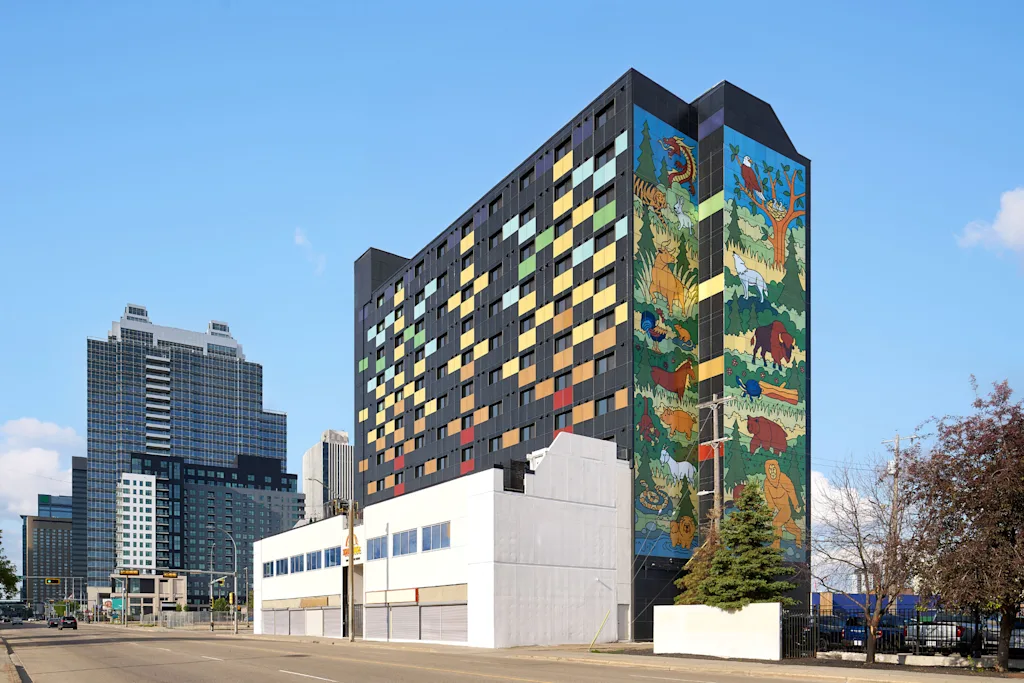
A smaller part of the cladding company Clarify, Mitrex (named after the Iranian god of the sun) launched five years ago, after solving some of the unique technical challenges around making these colorful panels work. The panels are safe and easy to hang and can be colored in numerous shades in addition to the standard bluish tint. They have been reformulated to be noncombustible and now are cost competitive with other facade choices.
Hadizadeh says that next year the company will introduce a new model that’s cost competitive with aluminum cladding, and he hopes to see larger real estate portfolios start coating multiple buildings in the panels to reduce their energy costs.
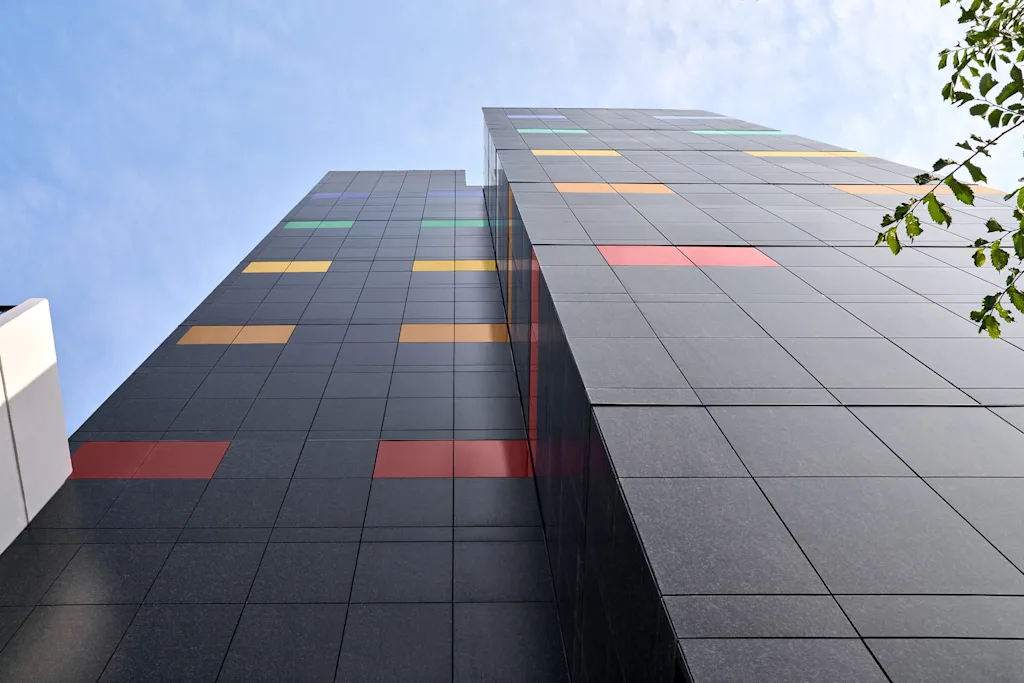
“Increasing efficiency, lowering cost, and implementation on all elevations and every aspect of the building, that’s where we are going,” Hadizadeh says.
While it is true that, say, a 10-square-foot section of a vertical array on the side of a skyscraper will generate less energy than a similar-size section on a rooftop panel, due to the latter’s ability to capture more direct sunlight, it’s still generating considerably more than an un-panelized facade. There might be some difficulty getting every side of a building to provide adequate generation in a super-dense collection of skyscrapers such as in Midtown Manhattan, but that’s a relatively small part of the market.
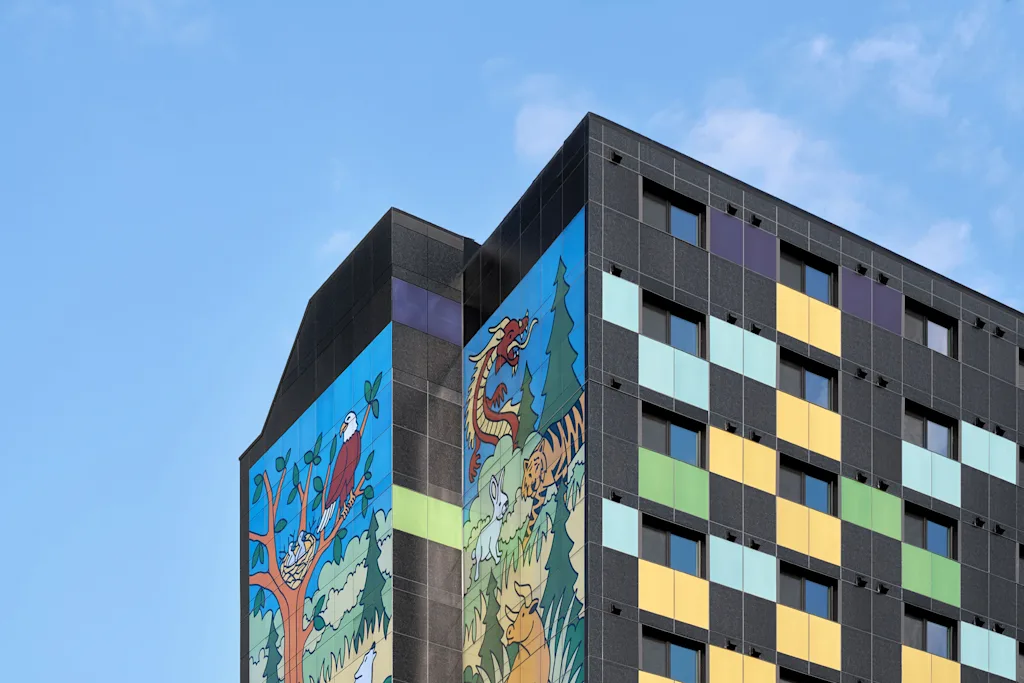
In the case of SunRise, the building’s owner, Avenue Living Asset Management, needed the building upgrade to meet certain carbon emission reduction targets to qualify for retrofit funding, and the Mitrex panel made the project pencil out. In fact, Mitrex panels hang atop what’s called the rainscreen, a waterproofing and insulating layer on the facade of the building; not only does this approach create power, but it also improves the building’s overall energy efficiency at the same time.
Mitrex projects slated to open next year include a medical center on the University of Toronto campus and a series of high-end residential towers in Dubai.

