




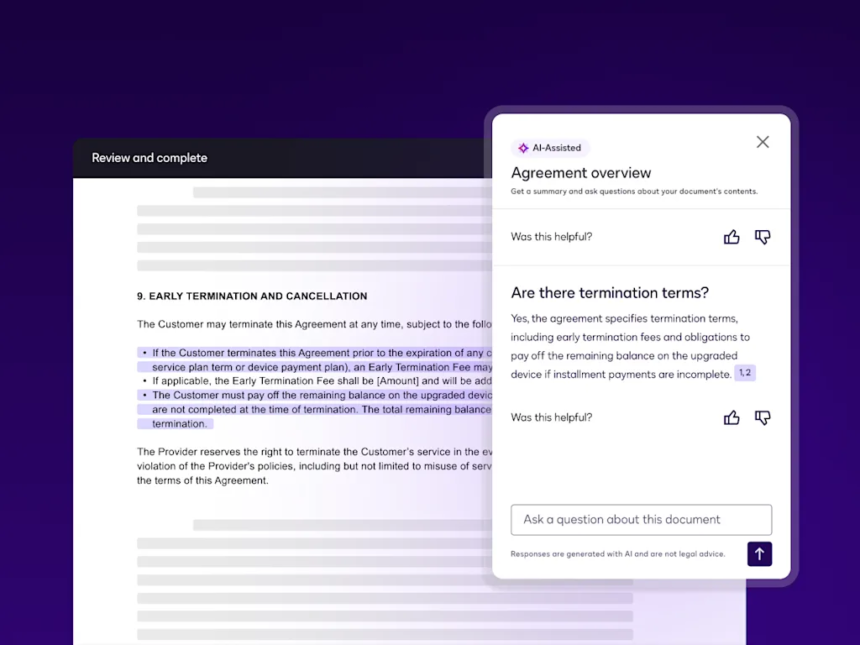

New AI tools from Docusign aim to make contracts easier to understand and quicker to prepare.
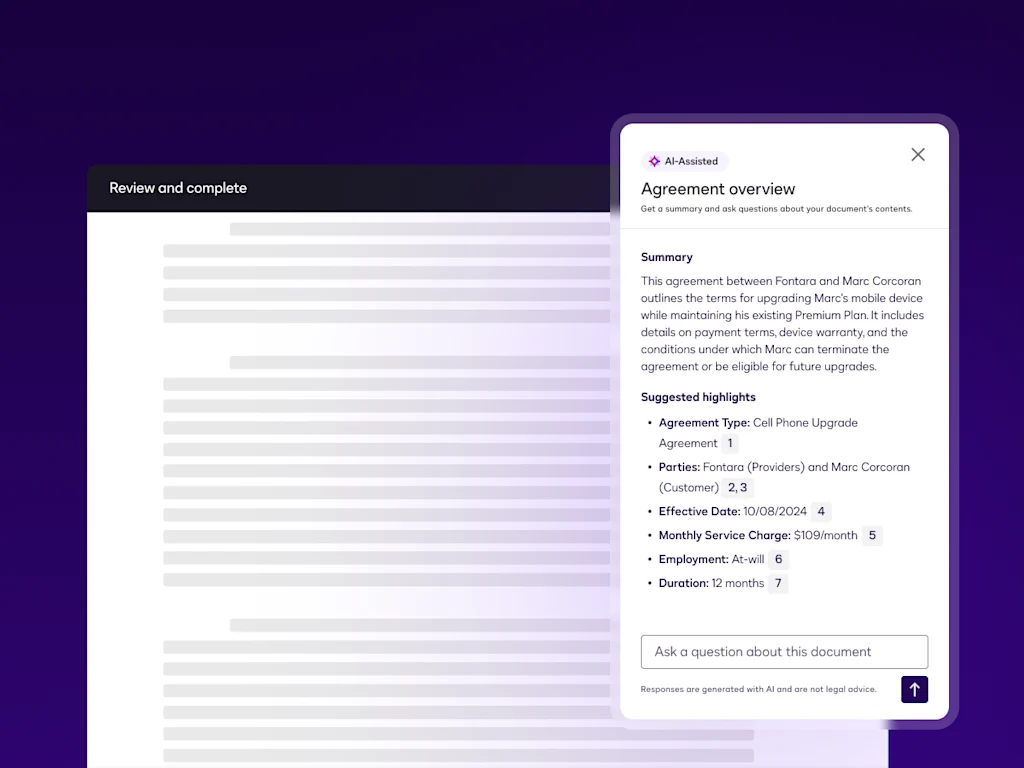
For people signing documents like leases or purchases agreements, a new AI feature will make it possible to request an overall summary of the contract and its key terms. Users will also be able to ask questions about the document, which for consumer agreements could include requesting details about cancellation procedures, fees that may apply, relevant timelines, or terms of a warranty.
“The whole purpose of this is to allow and provide a level of trust to the signer so that they understand what is it that they’re signing,” says Mangesh Bhandarkar, GVP of product management at Docusign, “and help them get through the signature process in a much quicker way, with a better understanding of the agreement itself.”
In a demonstration for Fast Company, Bhandarkar highlighted how the AI could generate a basic summary of a residential lease, automatically pulling out key terms like the rental period, monthly rent, and landlord and tenant responsibilities for various utilities. The AI also answered questions about other terms like pet fees, including links to relevant, highlighted sections of the document.
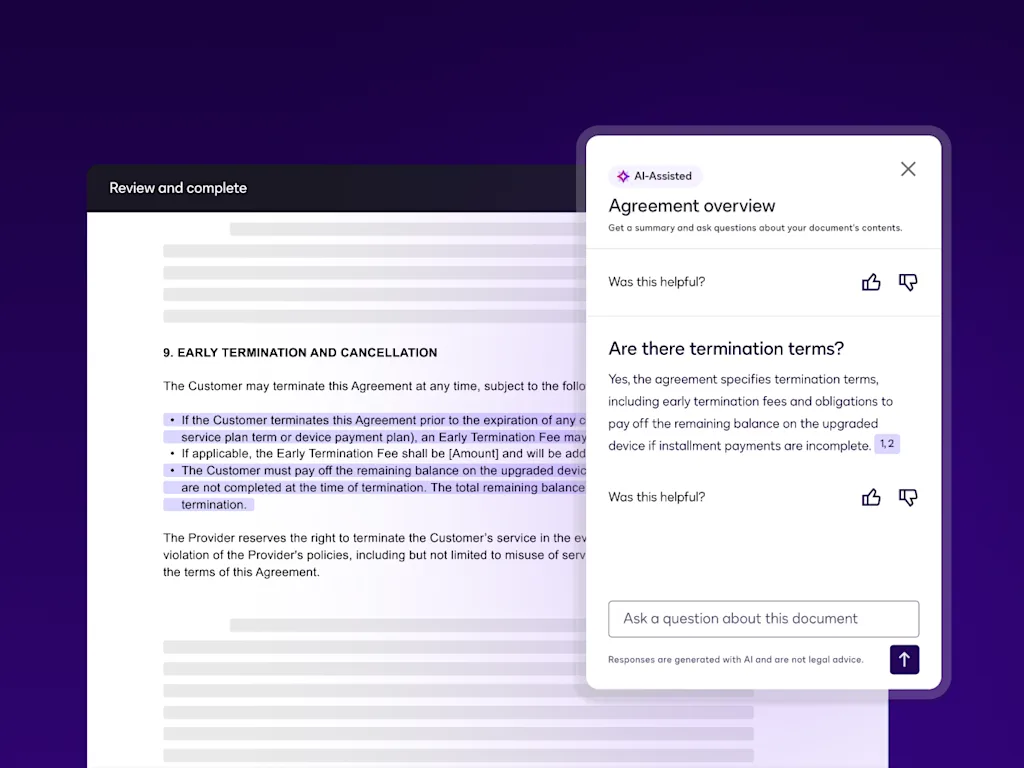
AI’s use in the legal field has been controversial, with some AI legal research and analysis plagued by incorrect answers and AI hallucinations. But Bhandarkar says the company feels confident in its Iris AI system, which has been honed specifically to handle contracts based on Docusign’s specialized dataset of written agreements and designed to provide in-document citations. “We make sure that it is not hallucinating information that is not in the document,” he says.
Still, Bhandarkar emphasizes that Docusign isn’t offering formal legal advice or a substitute for getting a thorough understanding of a contract before signing it. Rather, he says, the company is “trying to give a better understanding and a quicker understanding of the makeup of the agreement with relevant data that could help you make an informed decision about the actions you’re taking.”
Docusign, which says it helps more than 1 billion people sign contracts every year, reports a recent survey indicated that nearly 75% of contract signers would feel more confident with a plain-English AI summary of the documents they’re signing. And some users, Bhandarkar says, are already using general-purpose AI tools like ChatGPT for help in understanding contracts. They’ll now be able to access AI that’s both specifically optimized for the task and integrated into the platform they’re already using to review and sign the agreement.
The new feature will likely also help organizations that are creating contracts for consumers to sign, since they may see contracts signed faster and with fewer inquiries. Document creators at all plan levels will be able to choose whether to enable signers to use the tool with particular contracts, Bhandarkar says.
In recent years, Docusign has rolled out other AI features in moving to offer what it calls an intelligent agreement management (IAM) platform, where organizations can draft, store, and analyze contracts using AI and other tools, in addition to simply collecting signatures from other parties. More than 25,000 customers currently use the IAM platform, Bhandarkar adds.
And additional AI offerings aim to make the process of drafting contracts that much faster. Docusign’s AI is gaining the ability to automatically detect areas on imported documents such as PDFs that should be turned into digitally fillable fields, making it that much quicker to turn draft agreements into interactive versions without manually dragging and dropping fields, Bhandarkar says. Document creators will naturally be able to preview and edit fields before sending documents out for signature, and field suggestions will be available in all Docusign plans.
The company’s AI is also gaining the ability to validate email addresses and phone numbers where agreements are sent for signature, in order to reduce cases where documents are sent to the wrong destination. That feature, which will be available in Docusign Business and IAM plans, relies on a mix of internal data from people’s past interactions with Docusign and external data sources, Bhandarkar says.
Bhandarkar says Docusign will be tracking metrics like whether users of AI summaries review and sign documents more quickly and to what extent contract creators retain or replace AI-generated fields, which should help the company continue to refine the AI.

