






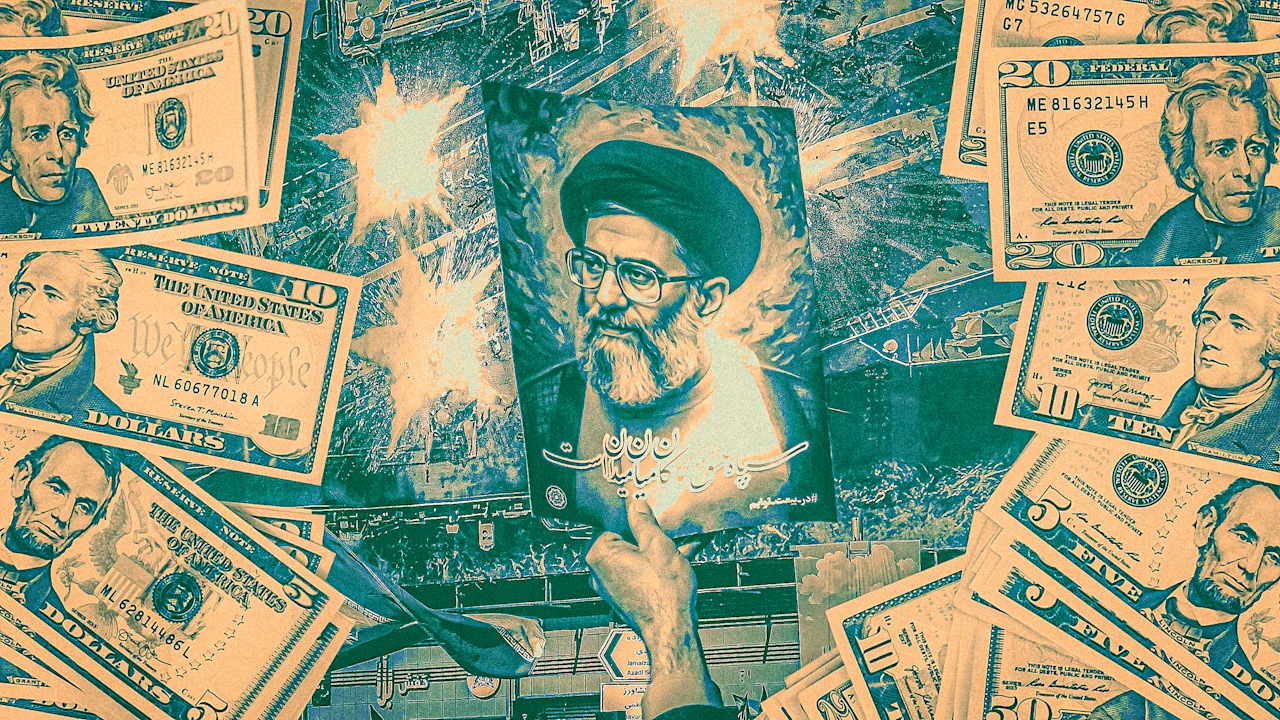
Wagering on war and death is now a “thing,” thanks to prediction markets. So this explains how one trader pocketed more than $500,000 by placing bets on various scenarios related to the U.S. and Israeli strikes on Iran over the weekend.
On Polymarket, one trader with the username “Magamyman” netted more than $195,000 by betting that the U.S. would strike Iran by February 28. And he scored another $123,000 when, ahead of an Israeli strike on Saturday that killed Iran’s supreme leader, he wagered that the Ayatollah Ali Khamenei would be ousted from power. That trader also cashed in from several other well-timed bets that became profitable once the strikes began.
It’s the timing of those trades—plus other bets, including those placed by six newly created or newly funded accounts on the crypto-based platform that earned about $1 million in total—that’s drawing scrutiny from lawmakers who are concerned about the possibility of insider trading.
“PROFITING OFF WAR AND DEATH”
Rep. Mike Levin (D-CA) called attention to the “Magamyman” trades on Saturday, posting on X that the user had placed the first trade only 71 minutes before the news of the strikes on Iran became public. “Prediction markets cannot be a vehicle for profiting off advance knowledge of military action,” Levin wrote.
Other lawmakers have since joined in on the outrage. Reacting to a post from analytics firm Bubblemaps SA that identified the six accounts that struck it big by betting the U.S. would strike Iran, Sen. Chris Murphy (D-CT) posted on X: “It’s insane this is legal. People around Trump are profiting off war and death.”
While Murphy promised to introduce legislation that would ban this type of activity, some of his counterparts on the other side of the aisle have been conspicuously silent—even though they want a similar crackdown on stock trading.
In January, Rep. Bryan Steil (R-WI) introduced legislation that would prohibit members of Congress and their families from purchasing publicly traded stocks. President Donald Trump touted this bill, the “Stop Insider Trading Act,” during last week’s State of the Union address.
Steil hasn’t commented publicly about the allegations of insider trading in the prediction market. The White House has denied that anyone in Trump’s orbit was behind the lucrative trades, according to NPR.
CONTROVERSIES SURROUNDING PREDICTION MARKETS
The Trump administration has embraced prediction markets, most recently backing Polymarket and competitor Kalshi in a legal battle with states that want to shut them down. What’s more, Donald Trump Jr., the president’s son, is a strategic adviser for Kalshi. And last summer, his venture capital firm invested millions in Polymarket, with Trump Jr. now serving on its advisory board.
It’s hardly the first time that the conveniently curious timing of big bets on the Trump administration’s geopolitical dealings has raised alarms. Earlier this year, an anonymous trader made more than $400,000 by betting that former Venezuelan President Nicolás Maduro would be ousted—just hours before President Trump ordered the leader’s capture in January.
In the wake of the fresh scrutiny about the bets related to the strikes on Iran, Polymarket rushed to defend its prediction markets. They have become popular for trading on topics that are arguably more trivial, such as pop culture and whether the Louvre thieves would be arrested, alongside those with more grave consequences, such as the possibility of war.
The New York-based company added a new note atop its “Middle East” markets over the weekend.
“The promise of prediction markets is to harness the wisdom of the crowd to create accurate, unbiased forecasts for the most important events to society. That ability is particularly invaluable in gut-wrenching times like today,” the statement reads. “After discussing with those directly affected by the attacks, who had dozens of questions, we realized that prediction markets could give them the answers they needed in ways TV news and X could not.”
Prediction markets have become a cash cow of sorts, as monthly trading volume surpassed $13 billion at the end of 2025, from less than $100 million in early 2024, according to industry estimates. They’ve also been given stamps of approval by companies more commonly associated with traditional trading markets. Intercontinental Exchange, which owns the New York Stock Exchange, announced in October its plans to invest up to $2 billion in Polymarket.
KALSHI BETS DIFFERENTLY
The weekend’s events are also setting Polymarket and Kalshi apart. On Kalshi, traders wagered more than $54 million betting on the timing of Ali Khamenei’s ousting—though the New York-based prediction market platform paused trading after the leader’s death was confirmed.
Kalshi ultimately opted to reimburse all fees from this particular market, and CEO Tarek Mansour posted a lengthy explanation of the reasoning on X, noting that it interprets the rules differently than Polymarket. Both companies are regulated by the Commodity Futures Trading Commission (CFTC), which is working on new rules for prediction markets.
Mansour acknowledged the frustration of creating a “death carveout” in some markets, particularly because markets, like oil futures, can also be proxy markets for war and death. “But we believe that’s different than having a market directly settling on someone’s death, which is not allowed for U.S. regulated entities,“ he wrote.
Last week, a group of six Democratic senators urged Michael Selig, chairman of the CFTC, to “clearly reiterate that the CFTC will categorically prohibit any contract that resolves upon or closely correlates to an individual’s death.”

