


The Quant

From January to July, news sites made up an average of 29.5% of ChatGPT’s cited sources in the U.K., according to Semrush’s AI Visibility Index shared with me; in the U.S., the number fell to 19.6%. ChatGPT had the highest news share of the four AI platforms each month, in both markets, ahead of Google’s Gemini, AI overviews and AI mode. Moreover, every platform leaned more heavily on news in the U.K.
ChatGPT isn’t necessarily favoring news sites by design, according to Semrush. I sat down with Eli Goodman, Semrush’s svp, product solutions, at its Spotlight event. He said the difference in citations across both the markets is tied to how people in each market consume news. In the U.S., news content is more blended with opinion, and trust in the media has fallen over the past decade or more compared with the U.K., he said.
People in the U.K. consume more news, Goodman added, and because LLMs try to reason like humans, they end up mirroring that behavior. With news accounting for close to 30% of ChatGPT’s U.K. citations, Goodman said, PR has become an important part of how brands are viewed as sources.
Deep Learning: Advertisers Pull Meta Ads That Have Had Unwanted AI Glow-ups
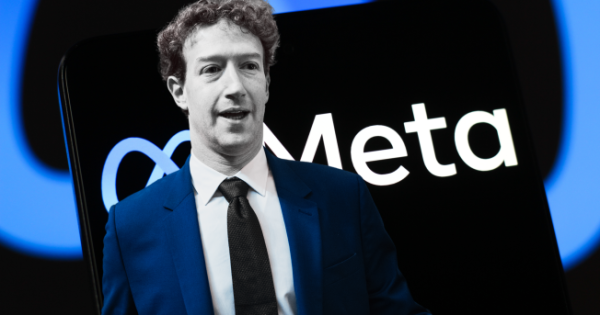
Meta’s AI has been editing advertisers’ ads on its platforms.
Bookshop.org, the online bookseller, found out the hard way. In a post on Threads, the bookseller said that an automated account update from Meta opted it into a generative AI feature, which added an AI-generated illustration to its human-made ad without its knowledge.

“This particular ad was ‘enhanced’ (or ruined, really) by Meta without our knowledge after an account update opted us in to their new ad features last week,” the company wrote on Threads. It has since turned off all of Meta’s AI ad features.

