



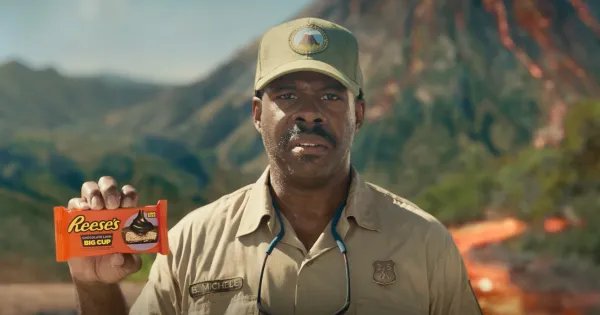

On December 4, 2024, an exuberant Hershey Company announced that “Reese’s is back, baby!” The confectionary giant was referring to its 2025 Super Bowl spot for the Reese’s Chocolate Lava Big Cup, which followed up on its 2024 ad for the Caramel Big Cup.
Well, listen up, baby: Reese’s won’t be back for Super Bowl LX.
Hershey’s corporate confirmed to ADWEEK that it will sit out the big game in February, despite having a presence for the last two years running. It gave no specific reason for the decision.
Big product announcements drove Hershey’s last two Super Bowl efforts—first, the debut of Reese’s Caramel Big Cup, a souped-up version of Reese’s Peanut Butter Cups with Caramel, which first appeared in 2003.
The Caramel Big Cup added a slab of caramel to the classic Peanut Butter Cup, a mainstay of the candy aisle since 1928. (Hershey’s acquired Reese’s in 1963.) The 2024 Super Bowl ad featured loyal fans objecting to the company toying with the Peanut Butter Cup recipe—until they found out that caramel was involved.
In 2025, Hershey’s upped the ante with a Super Bowl spot titled “Don’t Eat Lava,” a plug for Reese’s Chocolate Lava Big Cup, rolled out in August of 2024. The 30-second ad featured Reese’s fans frantic for a taste of the new candy mistaking its “decadent molten chocolatey layer that oozes with every bite” for actual lava, throwing themselves in the path of a volcanic eruption.
Hershey’s decision to sit out the big game this year comes as rival chocolatiers Ferrero
Tough times for chocolate
While it’s not clear exactly why Hershey’s is skipping the Super Bowl in 2026, it’s all too obvious—whether related or not—that 2025 has been tough time to be in chocolate business.
According to a July 2025 analysis by supply-chain management platform Tradlinx, tariffs slapped on cocoa imported from countries including Ghana and Ecuador weighted Hershey down with $100 million in quarterly costs—which “melted Hershey’s margins.” In the company’s second-quarter earnings call on July 30, Hershey CFO Steven Voskuil said that tariffs would cost the company as much as $170 million.
Before that call, Hershey had announced on July 22 that it would raise prices by “low double digits,” though it cited rising cocoa costs from exporting countries like Ivory Coast and Ghana—not tariffs—as the reason.
Fortunately for the company—and, by extension, fans of Reese’s—President Trump signed an executive order on November 14 that will exempt agricultural commodities including coffee, tea, and cocoa from the administration’s reciprocal tariffs announced in April. In a statement Hershey said it was “pleased” by the news.

