





The robots won’t be replacing us, but we will increasingly be working side-by-side with artificial intelligence tools that can then learn from our human expertise.
That’s one conclusion of researchers and engineers who are applying AI to the physical world in transformative ways, from autonomous vehicles to microscopes for detecting malaria to the design of wholly new materials.
And there’s a balance to be struck between automation and human expertise, according to K.T. Ramesh, the Alonzo G. Decker Jr. professor of science of and engineering at Johns Hopkins University and a senior advisor to the university’s president for AI.
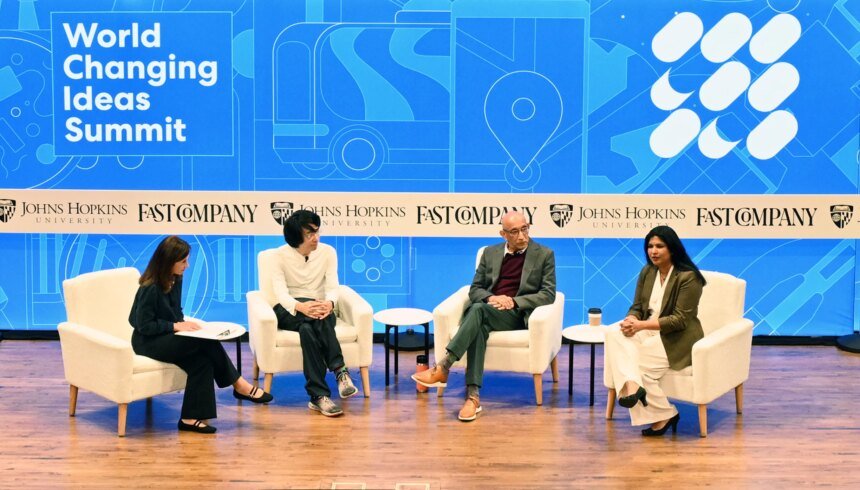
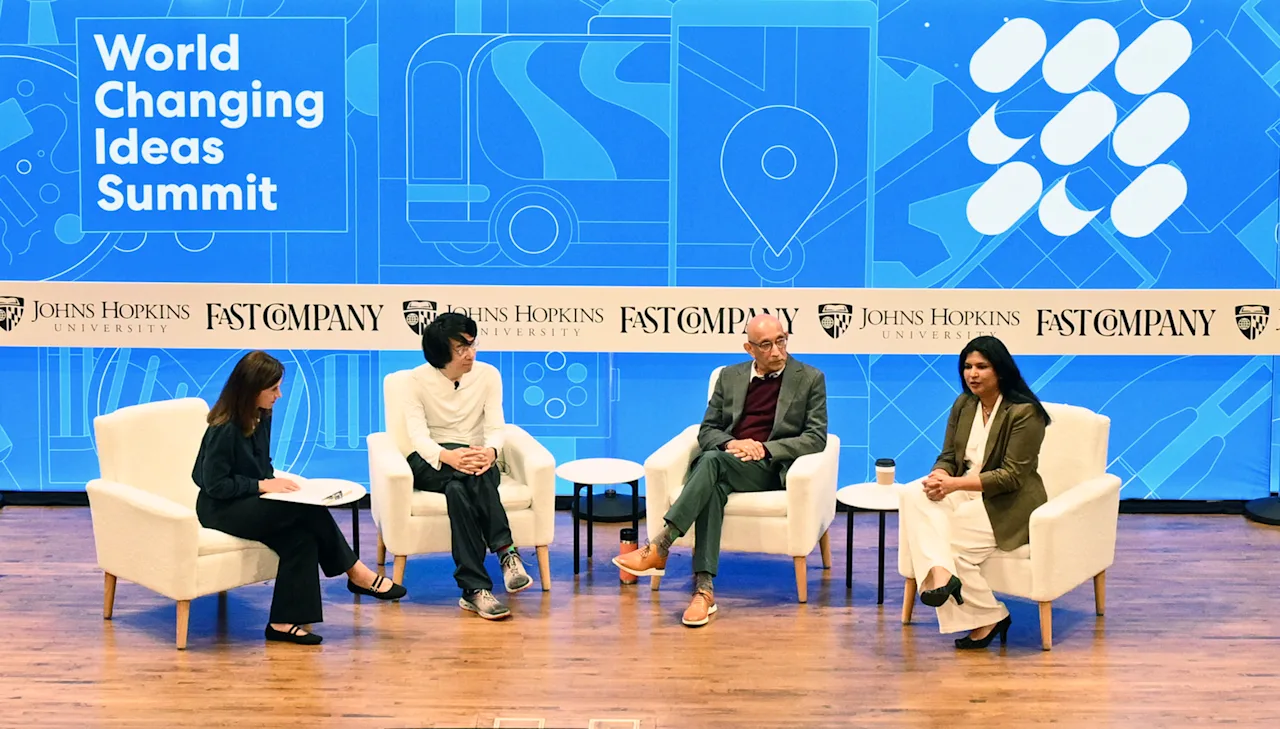
“We can develop autonomous research—which is the way we are going, our research labs are becoming autonomous—but what questions do you ask?” Ramesh said during a panel discussion at last month’s World Changing Ideas Summit, cohosted by Fast Company and Johns Hopkins University in Washington, D.C. “That’s where the human comes in.”
‘A WORLD OF COEXISTING’
Humans are likewise crucial for Cephla, which is deploying AI-powered microscopes in life science research, drug discovery, and diagnostics, said Hongquan Li, cofounder and CEO of the biotech company.
Starting with malaria detection, humans are collecting data for training, annotating images, and providing input on relevant clinical metrics, he said.
“When those machines are deployed, humans operate those microscopes and interact with patients and make the critical clinical decisions,” Li said.
And humans play a critical role at Waymo, which is ”arguably the most mature manifestation of AI in the physical world today,” said Smitha Shyam, the self-driving car company’s senior director of engineering.
AI systems for the physical world must be built to act safely, given the likelihood of chaos or uncertainty, which is why Waymo relies on human safety operators before expanding its fleet of fully autonomous vehicles to new markets, she added.
“AI is informing the choice, but the humans are making the assessment if the driver is ready for the public roads,” Shyam said. “So I think it’s a world of coexisting and leveraging the best of each other.”
The final deadline for Fast Company’s World Changing Ideas Awards is Friday, December 12, at 11:59 p.m. PT. Apply today.

