






Hello and welcome to Modern CEO! I’m Stephanie Mehta, CEO and chief content officer of Mansueto Ventures. Each week this newsletter explores inclusive approaches to leadership drawn from conversations with executives and entrepreneurs, and from the pages of Inc. and Fast Company. If you received this newsletter from a friend, you can sign up to get it yourself every Monday morning.
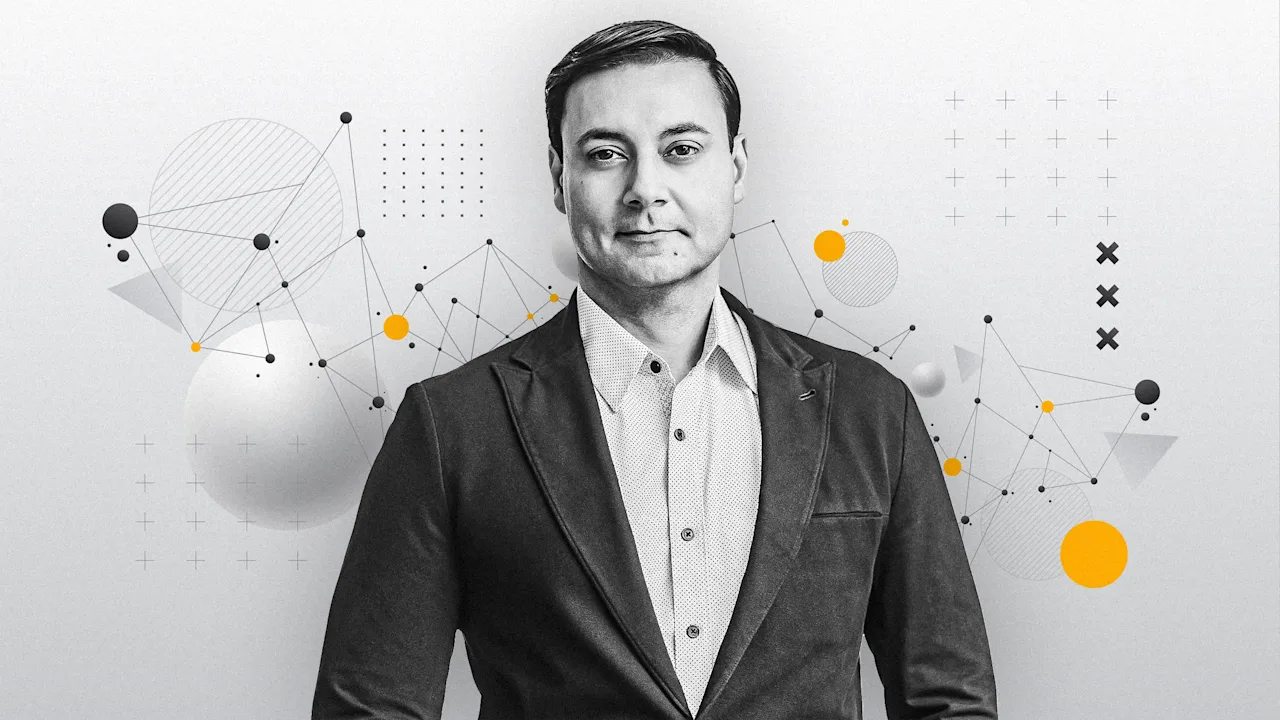
Baiju Shah is constantly bridging different worlds. His formative years were shaped by observing his mother, who trained as a commercial artist, and his father, who was an engineer. As global CEO of agency AKQA, he leads an organization that deploys creativity and technology on behalf of clients such as Nestlé, Nike, and Montblanc. And he teaches graduate students pursuing dual degrees in engineering and business administration at Northwestern University.
Rather than seeing art and science as distinct specialties, Shah argues that companies and brands must take an interdisciplinary approach, especially in the age of artificial intelligence (AI). “Technology without craft is a path to efficient mediocrity,” he tells Modern CEO in his first extended interview since joining AKQA in July.
Exploring the new frontier
Shah believes marrying imagination and technology will not only yield better results but that the union is key to AKQA’s success. He’s positioning the business as a “frontier agency,” which helps clients develop new products and experiences through imagination and advanced AI applications.
AKQA is hardly the only company promising to blend creativity and tech. Shah joined the agency from Accenture Song, which calls itself a “tech-powered creative business.” Nearly all large consultancies and advertising companies also boast agencies that sit at the intersection of digital and design.
Shah’s effort to promote AKQA as a frontier agency comes amid consolidation and turmoil in the advertising world. Earlier this month, Omnicom said it would lay off 4,000 employees and shutter some agencies following its acquisition of rival Interpublic. This year, AKQA parent WPP shuttled creative agency Grey from AKQA to sister agency Ogilvy. As a result of the move, AKQA shrank from 5,500 employees in 2024 to about 2,400 today. AKQA doesn’t disclose its revenue; WPP last year reported revenue of £14.7 billion (about $18.6 billion)—roughly flat from a year earlier.
Preparing for a new playing field
The moves come as the industry grapples with how AI is changing the way advertising is made and distributed.
Shah believes AKQA is well placed to leverage AI—to serve its clients and help WPP build new business models—rather than be disrupted by it. The agency recently launched Nestlé Goodness, an AI-powered service that acts like a personal chef and dietitian for families, helping them plan meals while balancing time, cost, and nutrition. AKQA has developed “generative stores” on Google’s AI platform that clients can use to create real-time personalized storefronts based on individual intent and preferences. And AKQA harnessed AI to build a cultural intelligence engine that uses dozens of AI agents and computer visioning to analyze millions of pieces of content globally, uncovering cultural signals in real time. AKQA is making the engine available for all the agencies in the WPP network to use.
Early in his career, Shah personally witnessed the importance of wedding creativity with technology. While working as a manager at Accenture Labs in the early 2000s, he and a team of developers used advanced analytics to design a system that predicted oil rig failures with extraordinary precision. The technology was superior to existing solutions, but the client’s engineers rejected it.
“Technology by itself, while it’s the most powerful force out there, is incomplete to actually drive innovation and drive change,” Shah says. Accenture Labs supplemented the technical work with a strategist and designers who could build empathy with the users. He says: “That was the only way we could drive the innovation forward. For me that was an unlock.”
The experience prompted him to get an MBA from Northwestern, where he’s now an adjunct professor in a program that awards students with a master’s in design innovation and an MBA. And while his students are opting into the kind of multidisciplinary degree that feels future-proofed, Shah believes that they’ll need to be open to a variety of professional experiences.
“The future is not going to be defined by rigid job titles,” he says. He encourages students to think of careers as a series of steps, each lasting three years—time enough to really dig in, learn something deeply, and make a meaningful contribution. He also urges adaptability, noting that the teams of the future will likely feature a mix of creatives, technologists, and systems thinkers, and some of them may be AI agents instead of humans.
But Shah maintains that human creativity is what will help AI bloom into something more potent than a tool for efficiency. “With every wave of technology, the instinct is always to automate what exists,” he says. “I believe that the brands that grow are not the ones that are just automating yesterday’s thinking. They’re the ones that imagine and are creating what matters next.”
World changing ideas
Is your company or team developing creative or innovative solutions to pressing challenges? Consider applying for Fast Company’s annual World Changing Ideas Awards, which recognizes groundbreaking concepts and projects across industries and company sizes. The final deadline is December 12.
Read more: future-focused brands
- Accenture says elevating creatives gave it a competitive edge
- 121 Brands That Matter in 2025
- Six strategies that turn brands into cultural forces

